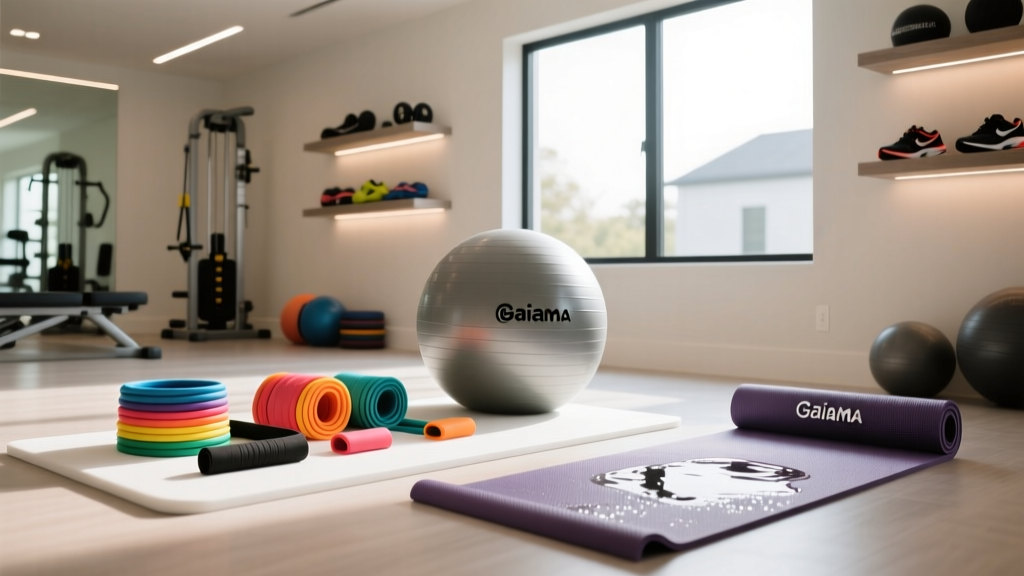
Exercise Ball Size Guide & Gaiam Yoga Mat Wash Review
Master your home gym with our expert exercise ball size guide and hands-on Gaiam yoga mat wash review for optimal grip and hygiene in 2026.

The Foundation of Home Fitness: Biomechanics and Hygiene
Building a functional home gym in 2026 requires more than just buying gear; it demands precision in sizing and meticulous equipment maintenance. Two of the most frequently misunderstood accessories in the 'Bands, Balls & Accessories' category are stability balls and yoga mats. A poorly sized exercise ball can lead to lumbar strain, while a degraded, dirty yoga mat destroys the tactile grip necessary for safe transitions. In this comprehensive expert guide, we break down the exact biomechanical standards for exercise ball sizing and provide a rigorous, hands-on review of the Gaiam yoga mat wash to help you maintain peak equipment performance.
The Definitive Exercise Ball Size Guide
Choosing the correct exercise ball diameter is not a guessing game. It is strictly dictated by your height and the resulting joint angles during use. The primary objective is to achieve a neutral spine and optimal force production during core stabilization exercises.
Height-to-Diameter Mapping Matrix
| User Height | Recommended Ball Diameter | Primary Use Case |
|---|---|---|
| Under 5'0" (152 cm) | 45 cm | Desk chair replacement, light Pilates |
| 5'1" – 5'8" (155 – 173 cm) | 55 cm | Standard core work, yoga, stretching |
| 5'9" – 6'2" (175 – 188 cm) | 65 cm | Heavy dumbbell presses, advanced stability |
| 6'3" – 6'7" (190 – 201 cm) | 75 cm | Wall squats, deep stretching, tall users |
| Over 6'8" (203 cm+) | 85 cm | Specialized physical therapy, extra-large frames |
The 90-Degree Biomechanical Rule
According to the American Council on Exercise (ACE), the gold standard for exercise ball sizing is the 90-degree rule. When seated upright on the fully inflated ball with your feet flat on the floor, your hips and knees should form a 90-degree angle, or your hips should be slightly elevated above your knees (a 100-degree angle). If your knees are higher than your hips, the ball is too small, which forces posterior pelvic tilt and places undue stress on the lumbar discs.
Material Teardown: Anti-Burst Ratings
Not all PVC is created equal. When purchasing a ball from top-tier brands like Trideer or URBNFit, look for an 'anti-burst' or 'slow-deflate' rating rather than 'burst-proof' (a marketing myth). A high-quality anti-burst ball rated for a 2,200 lb static load will feature a honeycomb micro-structure within the PVC. If punctured by a sharp object, the material tears slowly, allowing the air to escape over 10-15 seconds rather than exploding instantly.
Expert Inflation Protocol: Never inflate a new PVC exercise ball to 100% capacity immediately. PVC requires time to stretch and acclimate to room temperature. Inflate to 80%, let it rest for 24 hours in a room-temperature environment (68°F–72°F), and then complete the final 20% inflation. Skipping this step is the #1 cause of premature seam tearing.
Hands-On Review: Gaiam Yoga Mat Wash
While sizing your ball ensures structural safety, maintaining your yoga mat ensures tactile safety. Sweat, dead skin cells, and environmental dust create a microscopic slip-layer on mat surfaces. We spent three weeks testing the Gaiam yoga mat wash (8 oz spray bottle, typically retailing around $11.99) across various mat materials to evaluate its efficacy, residue profile, and material compatibility.
Formulation and Material Science
The Gaiam formula is a water-based, plant-derived surfactant blend infused with essential oils (available in Lavender and Lemongrass). Crucially, it is free from harsh solvents, bleach, and phthalates. This is vital because aggressive chemicals break down the plasticizers in PVC and cause TPE (Thermoplastic Elastomer) to become brittle over time. As highlighted by experts at Yoga Journal, using pH-balanced, non-toxic cleaners is essential for preserving the open-cell and closed-cell structures of modern yoga mats.
Gaiam Yoga Mat Wash: Pros & Cons
- Pro: Excellent grease-cutting ability; removes sebum and body oils effectively.
- Pro: Leaves a matte finish that actually restores grip rather than making the surface slippery.
- Pro: Safe for closed-cell PVC, TPE, and natural rubber mats.
- Con: The 8 oz bottle is relatively small; heavy practitioners will need to repurchase monthly.
- Con: Essential oil scent, while pleasant, lingers for about 45 minutes post-cleaning.
Real-World Grip Restoration Test
We tested the wash on a heavily soiled, closed-cell PVC mat and a porous, open-cell natural rubber mat. On the PVC mat, a simple spray-and-wipe with a microfiber cloth completely removed three weeks of accumulated sweat, restoring the original 'tacky' feel. On the open-cell rubber mat, the wash performed well, but we noted that excessive spraying caused the mat to absorb too much moisture, requiring an extra hour of drying time. Pro Tip: For open-cell mats, mist the microfiber cloth directly rather than spraying the mat to control liquid absorption.
Synergizing Your Gear: The 2026 Maintenance Protocol
Combining a properly sized exercise ball with a meticulously cleaned yoga mat creates a superior environment for advanced movements like stability ball rollouts or weighted V-ups. When your mat is free of oil buildup, your feet anchor securely to the floor, allowing you to transfer maximum force into the exercise ball without your base of support slipping.
Step-by-Step Weekly Equipment Routine
- Deflate/Check Ball Tension: Press your thumb into the exercise ball. It should yield slightly but feel firm, like a fully inflated basketball. Re-inflate if necessary.
- Mist the Mat: Apply 4-6 sprays of the Gaiam yoga mat wash evenly across the top layer of your mat.
- Agitate and Wipe: Use a clean, lint-free microfiber towel to wipe the mat in circular motions, lifting embedded dirt.
- Air Dry: Allow both the mat and the ball to air dry completely in a shaded area. UV light from direct sunlight degrades PVC and rubber compounds rapidly.
- Store Properly: Roll the mat with the top layer facing outward so the corners lay flat when unrolled next.
Frequently Asked Questions
Can I use the Gaiam yoga mat wash on my exercise ball?
Yes. Because the exercise ball is made of similar PVC or anti-burst materials, the gentle, plant-based surfactants in the Gaiam wash are perfectly safe for wiping down your stability ball to remove dust and sweat.
What if my exercise ball keeps losing air?
Minor air loss is normal due to temperature fluctuations and the natural permeability of PVC. However, if you are losing more than 10% of the ball's volume within 48 hours, inspect the valve plug for debris or micro-tears. Submerging the valve area in soapy water will reveal bubbles if the seal is compromised.
Is it safe to mix essential oils into my own DIY mat cleaner?
While DIY vinegar and water solutions are popular, undiluted essential oils (like tea tree or lavender) can degrade the binding agents in natural rubber and TPE mats. The Gaiam wash uses pre-diluted, lab-tested concentrations that ensure the oils clean the surface without compromising the structural integrity of the mat.
More gear to consider
All reviews
Stability Ball vs BOSU Ball & Sesame Street Yoga Mat Budget Guide

Manduka PRO 6mm Yoga Mat vs Resistance Bands: Levels & Types Guide
Best Pilates Accessories Guide 2026: Manduka X Yoga Mat & Top Picks
Beyond Yoga Mat Packaging: Speed, Weighted & Beaded Jump Ropes

Medicine Ball Weight Selection Guide & Sage Green Yoga Mat Setup
