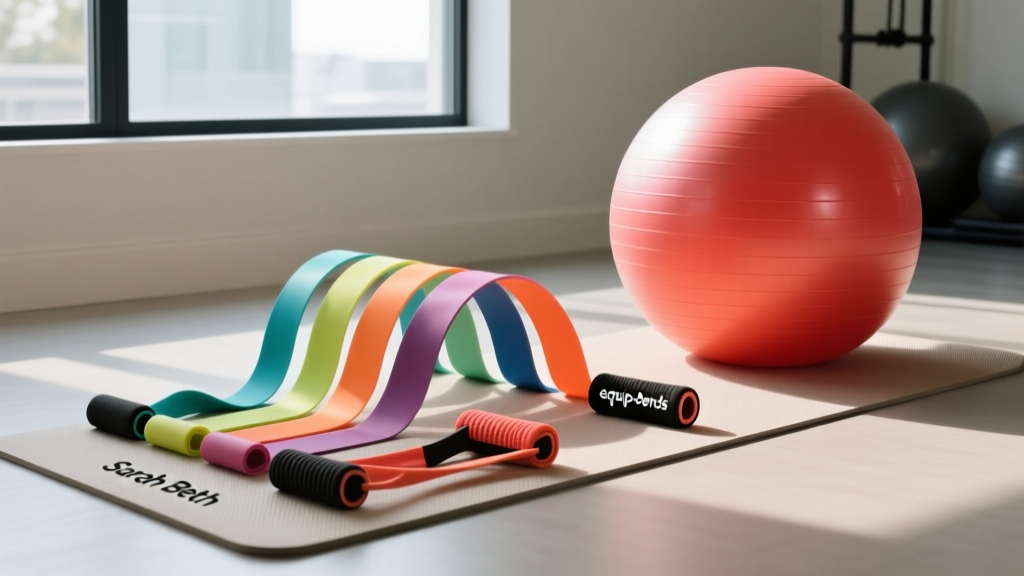
Exercise Ball Size Guide & Care for Sarah Beth Yoga Mat
Master exercise ball sizing, buying tips, and maintenance. Learn how pairing your stability ball with a Sarah Beth yoga mat extends gear longevity.

The Science of Sizing: Finding Your Perfect Fit
Selecting the correct exercise ball diameter is not just about comfort; it is a critical biomechanical decision that affects joint alignment, core engagement, and the physical stress placed on the ball's seams. According to guidelines referenced by the Mayo Clinic's guide to office ergonomics, your hips and knees should form a perfect 90-degree angle when seated on the ball with your feet flat on the floor. If the ball is too small, you force your spine into flexion; if it is too large, you risk pelvic tilt and excessive shear force on the PVC material.
| User Height | Ball Diameter | Primary Use Case | Weight Capacity Standard |
|---|---|---|---|
| Under 5'0" | 45 cm | Rehab, Desk Chair | 300 lbs |
| 5'1" to 5'8" | 55 cm | Core Work, Yoga | 500 lbs |
| 5'9" to 6'2" | 65 cm | Heavy Lifting, Pilates | 1000+ lbs (Anti-Burst) |
| 6'3" to 6'7" | 75 cm | Full-Body Stretching | 1000+ lbs (Anti-Burst) |
Buying Criteria: Burst Ratings and Material Density
When shopping for a stability ball in 2026, ignore marketing fluff and look directly at the burst-rating specifications. The American Council on Exercise (ACE) consistently warns against using unrated PVC spheres for weighted exercises. You want a ball labeled Anti-Burst or Slow-Deflate, typically rated for 1,000 to 2,200 lbs of static weight. Brands like the TheraBand Pro Series (approx. $35) or the Gaiam Pro-Forza (approx. $28) use a thicker, honeycomb-textured PVC that prevents catastrophic explosions if punctured by a sharp object or pet claw.
The Anti-Burst Standard vs. Standard PVC
Standard PVC balls (often priced under $15) are manufactured with single-layer extrusion. If compromised, they pop instantly, which can cause severe spinal injuries if you are performing a decline push-up or weighted crunch. Anti-burst balls are constructed using a foaming agent during the molding process, creating a micro-cellular structure that slowly releases air when the outer shell is breached.
Maintenance Care: Protecting Your Investment
The leading cause of exercise ball degradation is not over-inflation, but micro-abrasions caused by dragging the ball across hardwood, textured tile, or concrete floors. Over time, these microscopic scratches compromise the structural integrity of the bottom hemisphere, creating weak points that eventually lead to slow leaks or seam splitting.
The Sarah Beth Yoga Mat Advantage
To maximize the lifespan of your exercise ball, always perform floor-based routines on a high-density, closed-cell surface. The Sarah Beth Yoga Mat (typically a 6mm thick, high-density TPE model priced around $48) is the ideal protective barrier. Unlike cheap open-cell foam mats that tear easily under the friction of a rolling PVC ball, the Sarah Beth signature TPE material provides a high-friction, non-slip anchor. This prevents the ball from slipping out from under you during Russian twists or plank variations, while simultaneously shielding the ball's surface from abrasive floor textures and household dust that can embed into the PVC pores.
The 3-Stage Inflation Protocol for Maximum Lifespan
Never inflate a cold exercise ball to its maximum diameter in a single session. PVC requires time for the polymer chains to stretch and acclimate. Forcing air into a cold, rigid ball places immense stress on the equatorial seam, leading to premature bulging.
- Acclimation (Hours 0-2): Unbox the ball and lay it flat in a room-temperature environment (68°F to 72°F). Do not attempt to inflate it if it has just arrived in a cold delivery truck, as rigid PVC is highly susceptible to tearing.
- Initial Stretch (Hours 2-24): Inflate the ball to only 80% of its target diameter. For a 65cm ball, inflate it to roughly 52cm. Let it sit undisturbed for 24 hours. This allows the plasticizers to distribute evenly across the membrane.
- Final Sizing (Hour 24+): Inflate the ball to its final, fully expanded diameter. Insert the plug immediately after removing the pump nozzle to minimize air loss.
Cleaning and Chemical Degradation
One of the most common mistakes fitness enthusiasts make is wiping down their exercise balls with harsh household disinfectants. Bleach, ammonia, and alcohol-based wipes (like standard Lysol or Clorox wipes) strip the essential plasticizers from the PVC. This chemical reaction causes the ball to dry out, become brittle, and eventually develop a network of micro-cracks that lead to catastrophic failure.
- Do Use: A damp microfiber cloth with a single drop of mild, pH-neutral dish soap (like Dawn) to wipe away sweat and body oils.
- Do Use: A 50/50 mix of distilled water and white vinegar for light sanitization, followed by a dry towel.
- Never Use: Essential oils, citrus-based cleaners, or abrasive scrubbing pads, which will permanently cloud and weaken the outer shell.
Troubleshooting Common Failure Modes
Even with meticulous care, exercise balls can develop issues. Here is how to diagnose and address the most common problems identified by physical therapists and Cleveland Clinic rehabilitation specialists:
- Equatorial Bulging: If the ball looks slightly wider at the seams than at the poles, it was over-inflated during the initial 24-hour window. Deflate it by 10% and use it for lighter, non-weighted exercises only.
- Slow Air Loss: If you have to top off the air every week, check the plug. The silicone O-ring inside the plug often degrades or collects dust. Remove the plug, wash it in warm soapy water, dry it completely, and reinsert it firmly.
- Sticky Surface: This is a sign of plasticizer migration, usually caused by storing the ball in direct sunlight or near a heating vent. Move the ball to a cool, shaded area and wipe it down with a dry, clean towel to absorb the excess oils.
Frequently Asked Questions
Can I use my Sarah Beth Yoga Mat to store the ball on?
While the Sarah Beth Yoga Mat provides excellent traction during workouts, storing a fully inflated 65cm ball on top of a rolled or folded mat for months can create a permanent indentation in the TPE foam. It is best to store the ball in a breathable mesh bag or a dedicated corner of your room, away from direct UV light.
How often should I replace my exercise ball?
Even with perfect maintenance and proper sizing, the structural integrity of PVC degrades over time due to oxidation and repeated compression cycles. Industry standards dictate replacing your exercise ball every 12 to 24 months if used daily, or immediately if you notice any visible stretching, discoloration, or seam stress.
More gear to consider
All reviews
Mobility Setup: Foam Roller Sizing & Manduka PRO Lite Yoga Mat
Battle Rope Guide: What Thickness Yoga Mat Do I Need?

Loop Band vs Tube Band: Space Layouts & Yoga Mat Length

Yoga Block & Strap Guide + Best Disinfectant Spray for Yoga Mats

Beyond Alo vs Lululemon Yoga Mat: Foam Roller Mistakes
