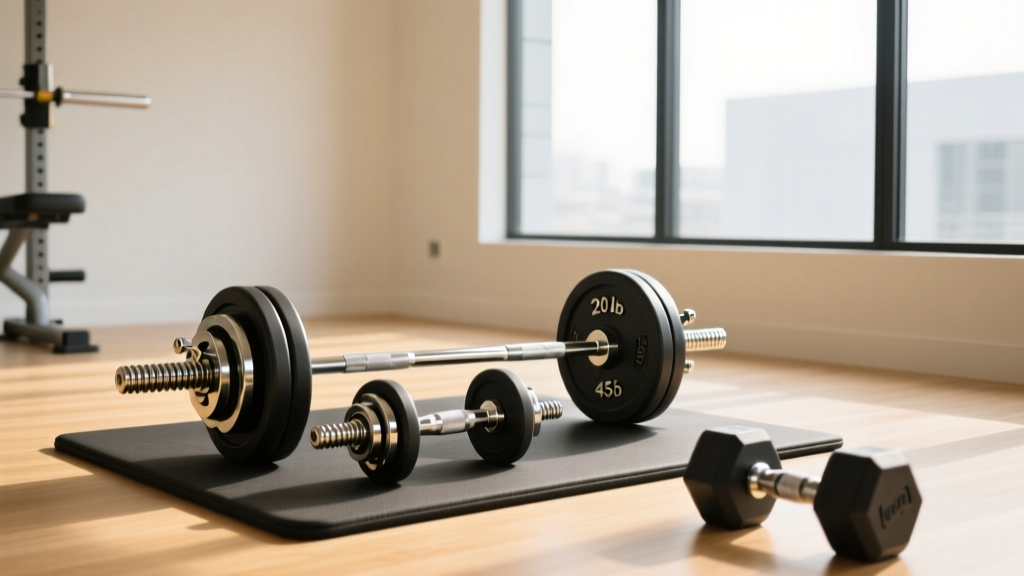
Beyond the Women's Upper Body Dumbbell Workout: Barbell Collars Guide
Transitioning from a women's upper body dumbbell workout to barbells? Master barbell collar types, safety clamps, and secure loading with our 2026 guide.

The Bridge from Dumbbells to Barbells
Most lifters begin their strength journey with a structured women's upper body dumbbell workout. Dumbbells are undeniably fantastic for addressing unilateral muscle imbalances, building crucial stabilizer strength, and learning foundational movement patterns like the chest press, shoulder press, and bent-over row. However, as you progress and your strength increases, the limiting factor of dumbbells often becomes grip fatigue and the sheer awkwardness of kicking up heavy weights into position.
To achieve true progressive overload—especially for major compound upper-body movements like the barbell bench press or overhead press—transitioning to a barbell is inevitable. But with the barbell comes a critical, often overlooked piece of safety equipment: the barbell collar. In this beginner-friendly, step-by-step guide, we will break down the exact types of barbell collars and clamps available in 2026, helping you protect your shins, your floor, and your life.
The Physics of a Barbell Dump: Why Collars Save Lives
When performing a barbell bench press, the distribution of weight is paramount. If you fail a rep and the bar tilts even slightly, the weight plates on the lower side will slide toward the sleeve's end. This creates a rapid, catastrophic shift in the center of gravity, resulting in a 'barbell dump.' The heavy plates crash to the floor, and the opposite end of the bar acts as a lever, violently launching upward into your face or throat.
The Golden Rule of Barbell Training: A barbell without collars is not a loaded barbell; it is a loaded trap. Even if you are only lifting the empty 45 lb (20 kg) bar to practice your form, collars must be applied to secure the technique of locking the sleeves.
Step-by-Step: Selecting and Applying Your Barbell Lock
Choosing the right collar depends on your barbell's anatomy and your specific training style. Follow these steps to ensure you buy and use the correct equipment.
Step 1: Measure Your Barbell Sleeve
Before purchasing any clamp, you must know your sleeve diameter.
- Olympic Barbells: Feature sleeves that are exactly 50mm (1.97 inches) in diameter. This is the standard for almost all commercial gym equipment and high-quality home gym racks.
- Standard Barbells: Feature sleeves that are 25mm (1 inch) in diameter. These are typically found on cheaper, entry-level department store barbells.
Actionable Tip: If you are investing in a home gym in 2026, skip the standard barbells entirely. Buy an Olympic barbell to ensure compatibility with premium safety clamps and calibrated bumper plates.
Step 2: Match the Collar to Your Training Style
Are you doing slow, controlled powerlifting movements (bench, squat), or are you doing dynamic Olympic lifts (cleans, snatches) where the barbell is dropped from overhead? Your training style dictates the clamping force you need.
Step 3: Apply the Collar Flush
The most common beginner mistake is leaving a gap between the innermost weight plate and the collar.
- Load your plates tightly against the inner sleeve lip.
- Slide the collar onto the sleeve.
- Push the collar completely flush against the outermost plate.
- Engage the locking mechanism. If there is a gap, the plates will rattle, shifting your center of mass during the lift.
2026 Comparison Matrix: Collar and Clamp Types
The fitness equipment market has evolved significantly. Below is a comprehensive comparison of the primary barbell locking mechanisms available today, featuring industry-standard models.
| Collar Type | Top 2026 Model | Approx. Price | Clamping Force | Best For | Primary Drawback |
|---|---|---|---|---|---|
| Spring Clip | Rogue Spring Collar | $15 / pair | Low | Light accessories, landmine attachments, empty bar practice | Metal fatigue over time; difficult to squeeze for users with low grip strength |
| Aluminum Clamp | Rogue AB-2 Aluminum | $22 / pair | Medium | General powerlifting, bench press, quick changeovers | Can scratch barbell sleeves if debris is trapped inside the clamp |
| Lever / Pro Clamp | Lock-Jaw Pro Olympic | $35 / pair | High | Heavy squats, deadlifts, and garage gym versatility | Plastic housing can crack if dropped repeatedly on concrete |
| Spinlock Collar | Eleiko Olympic Spinlock | $85 / pair | Maximum | Olympic weightlifting, heavy drops, competitive lifting | Expensive; takes longer to screw on and off between sets |
Deep Dive: Real-World Failure Modes (And How to Avoid Them)
As outlined in extensive gear testing by experts at BarBend, not all collars age gracefully. Understanding how your specific collar type fails will keep you safe in the long run.
Warning: Spring Collar Fatigue
Spring collars rely on metal tension. Over 12 to 18 months of daily use, the steel spring loses its tensile strength (metal fatigue). A spring collar that was tight on day one might slide off a slick zinc-coated sleeve by month twelve. Fix: Replace spring collars annually, or upgrade to aluminum clamps.
Danger: UV and Cold Degradation in Lever Clamps
Popular lever clamps (like the Lock-Jaw) use high-density ABS plastic. If you train in an unheated garage gym in freezing temperatures, or leave your clamps in the sun, the plastic becomes brittle. Dropping a barbell with brittle plastic clamps can shatter the locking mechanism mid-lift. Fix: Store plastic clamps indoors at room temperature.
Upper Body Specifics: Bench Press and Overhead Press
When transitioning from a women's upper body dumbbell workout to barbell pressing, the mechanics of the lift change drastically. Dumbbells move independently; a barbell connects your left and right sides.
The Bench Press Squeeze
During a heavy bench press, the barbell flexes (bends) slightly in the middle. This microscopic flexing can cause plates to shift outward by a millimeter or two. If you are using low-tension spring collars, this repeated shifting will slowly push the collar off the sleeve. For bench pressing, aluminum cam-lever clamps (like the Rogue AB-2) are highly recommended because they bite into the steel sleeve and do not yield to bar flex.
The Overhead Press Rattle
When pressing a barbell overhead, the lockout phase often involves a slight 'bounce' or stabilization shake. Loose plates create a distracting rattle that can break your focus. Spinlock collars or tight lever clamps eliminate this auditory distraction, allowing you to focus entirely on shoulder stability and core bracing.
Maintenance Protocols for Longevity
To ensure your collars last for years and do not damage your expensive barbell sleeves, follow this simple maintenance routine:
- Wipe the Sleeves: Chalk and sweat build up on barbell sleeves. This creates a gritty paste that acts like sandpaper when you slide aluminum clamps on and off. Wipe your sleeves with a microfiber cloth after every session.
- Lubricate Spinlocks: If you use threaded spinlock collars, apply a single drop of 3-in-One oil to the threads once a month to prevent cross-threading and rust.
- Check the Pads: Many premium aluminum clamps feature internal rubber or urethane pads that grip the steel sleeve. Inspect these pads every six months. If the rubber is torn or flattened, the clamp will slip, and it is time to buy a replacement.
Final Thoughts on Your Strength Journey
Moving beyond a foundational women's upper body dumbbell workout and embracing the barbell is a massive milestone in your fitness journey. It unlocks heavier loads, greater central nervous system adaptation, and unparalleled upper-body strength. However, respecting the equipment is just as important as respecting the weight on the bar. By investing $25 to $40 in a high-quality pair of aluminum or lever clamps, you are buying peace of mind, ensuring that your focus remains entirely on the lift, and guaranteeing your safety for years to come.
More gear to consider
All reviews
Olympic Barbell Guide: Upgrading Your Weekly Dumbbell Workout Routine
Olympic vs Standard Plates: Troubleshooting Beyond a Dumbbell Illustration

Rack Care & Storage for Standing Dumbbell Ab Exercises

The Bayesian Curl Dumbbell Hack: Space-Saving Loadable Setups
Space Optimization: Kettlebells, Dumbbell Drag Curls & Gym Layouts
