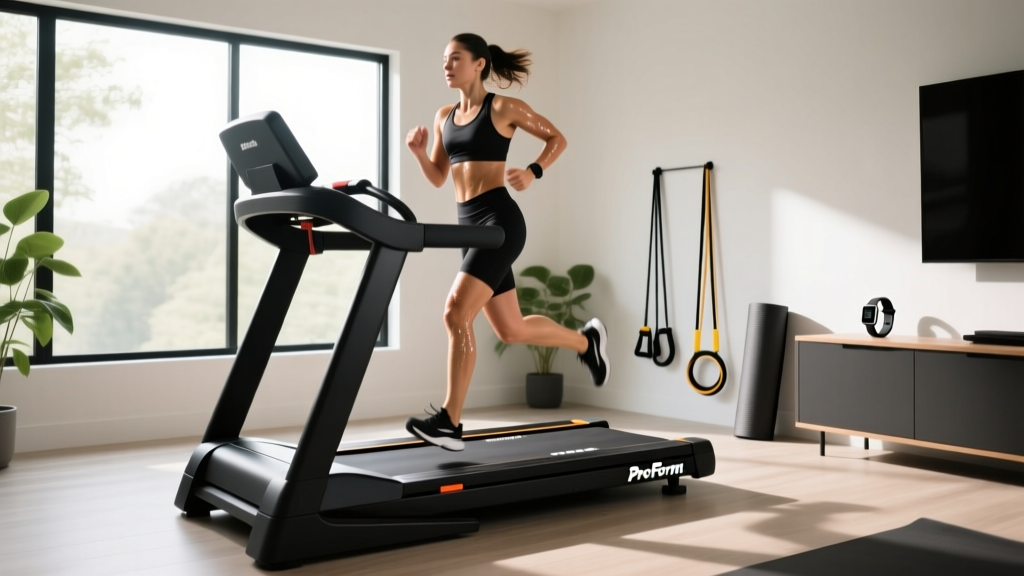
Stationary Bike Types vs Weslo Cadence G 5.9i Folding Treadmill
Deciding between the Weslo Cadence G 5.9i folding treadmill and stationary bikes? We compare upright, recumbent, and spin bikes for your 2026 home gym.

The Home Gym Dilemma: Budget Treadmills vs. Stationary Bikes
When outfitting a home gym in 2026, buyers frequently face a critical crossroads: invest in a budget-friendly walking treadmill or pivot to a specialized stationary bike? The Centers for Disease Control and Prevention (CDC) recommends at least 150 minutes of moderate-intensity aerobic activity weekly, meaning the equipment you choose must align with your biomechanics, space constraints, and fitness goals. While the legacy Weslo Cadence G 5.9i folding treadmill remains a popular baseline for budget-conscious walkers, the diverse world of stationary bikes—specifically upright, recumbent, and spin models—offers distinct physiological advantages. In this expert hands-on review, we break down the biomechanics, spatial footprints, and real-world performance of these cardio modalities to help you make an informed purchase.
Baseline Review: Weslo Cadence G 5.9i Folding Treadmill
Before diving into stationary bike types, we must establish our comparative baseline. The Weslo Cadence G 5.9i folding treadmill is an iconic entry-level machine. Powered by a 1.5 HP continuous-duty motor, it is strictly engineered for walking and light jogging (top speed of 5.0 mph). The 16-inch by 50-inch belt is adequate for walking but feels restrictive for users with a longer running stride.
Expert Insight on the Weslo G 5.9i: As of 2026, Icon Health & Fitness (Weslo's parent company) has largely transitioned away from this specific legacy model in primary retail channels. You will mostly find the G 5.9i on the refurbished or secondary market for $150–$220. It remains a decent budget walking pad alternative, but its manual 2-position incline and basic LCD console lack the smart connectivity and magnetic resistance precision found in modern mid-tier stationary bikes.Stationary Bike Types: Upright, Recumbent, and Spin
If the Weslo Cadence G 5.9i doesn't fit your joint health needs or space requirements, stationary bikes offer highly efficient, low-impact alternatives. The American Academy of Orthopaedic Surgeons (AAOS) frequently recommends cycling modalities for patients managing osteoarthritis or recovering from lower-extremity injuries, as the closed-kinetic-chain movement minimizes ground reaction forces.
1. Upright Bikes: The Compact Cardio Workhorse
Upright bikes mimic the geometry of a traditional outdoor bicycle but feature a wider, more cushioned saddle and a heavier frame for stability. Models like the Schwinn IC4 or Nautilus U618 typically utilize silent magnetic resistance systems, offering up to 100 micro-adjustable tension levels.
- Footprint: Extremely compact (approx. 42" x 20"), making them ideal for apartments.
- Biomechanics: Engages the core and lower back more than recumbent models due to the unsupported torso position.
- Best For: Users seeking a traditional cycling feel with a minimal spatial footprint and moderate joint impact.
- 2026 Pricing: $400 (basic magnetic) to $999 (smart-connected with app integration).
2. Recumbent Bikes: Ergonomic & Joint-Friendly
Recumbent bikes feature a step-through design and a bucket-style seat with a full mesh lumbar backrest. This shifts the user's center of gravity backward, completely removing load from the wrists, shoulders, and lower spine. The Horizon Comfort R and ProForm Recumbent PT are prime examples of this category.
- Footprint: The longest of the bunch (approx. 60" x 25"), requiring significant floor length.
- Biomechanics: Isolates the glutes, hamstrings, and quads while offering zero lumbar strain. The American College of Sports Medicine (ACSM) notes that recumbent ergometers are optimal for clinical populations and seniors due to their inherent fall-risk mitigation.
- Best For: Seniors, individuals with chronic lower back pain, and rehabilitation patients.
- 2026 Pricing: $600 to $1,200 for commercial-grade home models.
3. Spin Bikes (Indoor Cycles): High-Intensity Studio Replicas
Spin bikes are built for aggressive, high-cadence interval training (HIIT). They feature a heavy flywheel (often 30–40 lbs) positioned at the front or rear, paired with a micro-adjustable friction or magnetic brake. The geometry demands a forward-leaning, aerodynamic posture. The Keiser M3i and Peloton Bike+ dominate this space.
- Footprint: Moderate (approx. 48" x 22"), but requires vertical clearance for standing climbs.
- Biomechanics: Allows for out-of-the-saddle sprints and heavy resistance climbs, yielding the highest peak caloric expenditure of the three bike types.
- Best For: Athletes, HIIT enthusiasts, and users who want studio-style group fitness at home.
- 2026 Pricing: $1,495 to $2,995 for premium smart bikes with integrated screens.
Head-to-Head Comparison Matrix
To visualize how the legacy Weslo treadmill stacks up against modern stationary bike types, review the data matrix below:
| Feature | Weslo Cadence G 5.9i | Upright Bike | Recumbent Bike | Spin Bike |
|---|---|---|---|---|
| Primary Use | Walking / Light Jog | Steady-State Cardio | Rehab / Low-Impact | HIIT / Climbing |
| Joint Impact | Moderate (High if jogging) | Low | Ultra-Low | Low (High muscle fatigue) |
| Noise Level | High (Motor + Footstrikes) | Silent (Magnetic) | Silent (Magnetic) | Low (Belt drive) / Med (Chain) |
| Maintenance | High (Belt lubrication, tension) | Minimal | Minimal | Low to Moderate |
Expert Decision Framework: Matching Equipment to Your Physiology
Choosing between a budget folding treadmill and a stationary bike isn't just about price; it's about long-term adherence and injury prevention. Use this framework to finalize your 2026 purchase:
- Choose the Weslo Cadence G 5.9i (or modern equivalent) if: You are strictly a walker, you prefer weight-bearing exercise to maintain bone density, and you have the floor space to accommodate a 68-inch length when unfolded.
- Choose an Upright Bike if: You live in a multi-story home or apartment where treadmill motor noise and footstrike vibrations will disturb neighbors, and you want a balanced, full-leg workout without sacrificing floor space.
- Choose a Recumbent Bike if: You suffer from sciatica, lumbar herniations, or balance issues. The step-through design and backrest guarantee you can complete your 150 weekly CDC-recommended minutes without exacerbating spinal compression.
- Choose a Spin Bike if: Your goal is athletic performance, VO2 max improvement, or high-caloric burn in short 30-minute windows. The heavy flywheel momentum allows for standing intervals that a treadmill or recumbent bike simply cannot replicate.
Frequently Asked Questions
Is the Weslo Cadence G 5.9i good for running?
No. The 1.5 HP motor and 16" x 50" belt are severely under-specced for sustained running. Attempting to run at the 5.0 mph max speed will cause the motor to overheat and the belt to stutter, creating a significant tripping hazard. It is strictly a walking machine.
Which stationary bike type burns the most calories?
Spin bikes generally yield the highest caloric expenditure (often 400–600 calories per 45-minute session) due to the ability to perform high-resistance standing climbs and rapid cadence sprints. Recumbent bikes, while excellent for cardiovascular health, typically result in a 15-20% lower caloric burn due to the lack of core and upper-body stabilization required.
Do magnetic resistance bikes require maintenance?
Unlike the Weslo treadmill, which requires periodic silicone belt lubrication and deck tensioning, magnetic resistance bikes (upright, recumbent, and magnetic spin bikes) are virtually maintenance-free. The resistance is generated by magnets moving closer to or further from the metal flywheel without physical contact, eliminating friction-based wear and tear.
More gear to consider
All reviews
Getting Your Ass on the Treadmill: Curved Manual vs Motorized
Stair Climber Guide & Matrix PLED C Treadmill Troubleshooting
Air Bike vs Assault Bike: Weighing Treadmill Uses Advantages in 2026
Under Desk Treadmill Review: Care and NordicTrack Comparison Chart

2026 Office Trend: Under Desk Treadmills vs Spirit XT285 Treadmill