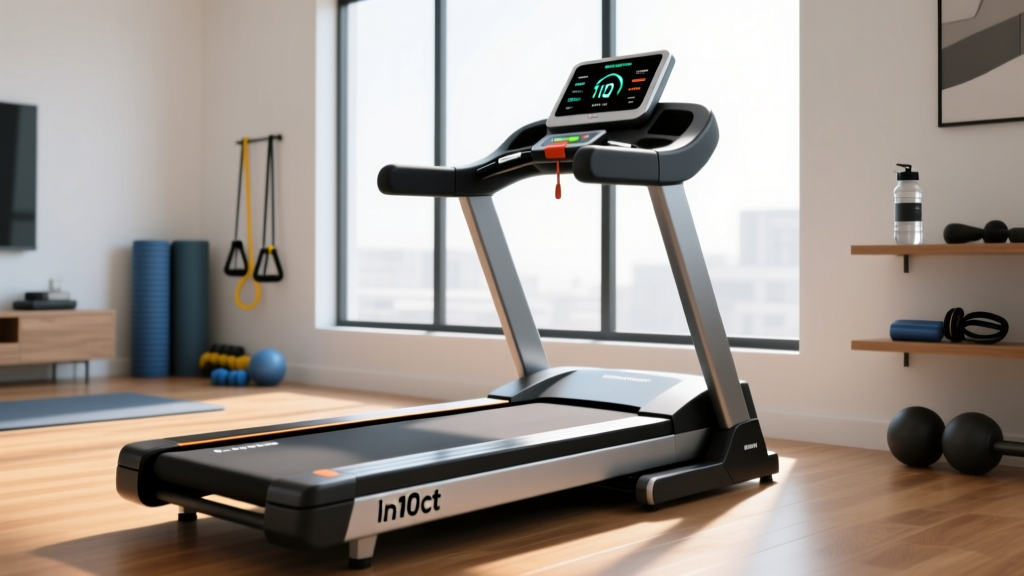
Wellfit Treadmill Review: Step-by-Step Buying Guide
Read our Wellfit treadmill review and step-by-step buying guide. Compare motors, belt sizes, and warranties to find the best cardio machine for your home.

Introduction: Navigating the Budget Treadmill Market
When setting up a home gym in 2026, the sheer volume of compact, budget-friendly cardio machines can be overwhelming. Among the most frequently searched entry-level options is the Wellfit folding treadmill. In this comprehensive Wellfit treadmill review, we will use this popular budget model as a baseline to teach you exactly how to evaluate any treadmill on the market. Whether you are considering a $250 compact walker or a $1,500 commercial-grade runner, this step-by-step buying guide will equip you with the technical knowledge to make a smart, joint-friendly investment.
Beginner's Quick Summary
- Wellfit Profile: Best for light walking, small spaces, and users under 180 lbs.
- Core Limitation: Advertised "Peak" HP is misleading; lacks the continuous horsepower (CHP) needed for running.
- Our Recommendation: Excellent for casual walking pads, but serious runners should look at mid-tier alternatives.
Step 1: Decode the Motor (Peak HP vs. Continuous HP)
The most common marketing trap in the budget treadmill space is the horsepower (HP) specification. Many entry-level Wellfit models advertise a "2.5 HP Motor." However, as a beginner, you must learn the critical distinction between Peak HP and Continuous Duty Horsepower (CHP).
Peak HP is the maximum power the motor can draw for a fraction of a second before overheating. CHP is the power the motor can sustain indefinitely during a workout. A Wellfit treadmill advertising 2.5 Peak HP typically operates at a continuous 1.25 to 1.5 CHP.
Why CHP Matters for Your Workout
If you weigh over 180 lbs or plan to jog at speeds above 5.0 mph, a 1.25 CHP motor will struggle. The belt will hesitate with every footstrike, causing the motor to overheat and eventually burn out. According to fitness equipment standards, walkers need a minimum of 2.0 CHP, while runners require at least 3.0 CHP. For sustained cardiovascular health and consistent pacing, understanding this metric is your first line of defense against buying an underpowered machine.
Step 2: Measure the Belt and Weight Capacity
The running surface dictates your safety and stride mechanics. Budget treadmills like the Wellfit typically feature a belt size of 15 inches wide by 43 inches long. While this is sufficient for a stationary walking pad setup under a standing desk, it becomes a safety hazard for running.
When you run, your natural stride lengthens. A 43-inch belt forces you to subconsciously shorten your stride (known as "stride clipping") to avoid stepping on the front motor housing or falling off the back. The ergonomic gold standard for home treadmills is a 20-inch by 55-inch belt. Furthermore, budget models usually cap weight capacities at 220 to 250 lbs. Exceeding 80% of a treadmill's maximum weight capacity drastically accelerates belt friction and motor degradation.
Additionally, examine the belt ply thickness. Budget models use a thin 1-ply belt that curls at the edges and generates excess heat, requiring frequent silicone lubrication. Mid-tier and premium models use 2-ply or 4-ply orthopedic belts with a woven nylon underside, reducing friction and extending the life of the motor.
Step 3: Feature Comparison Matrix
To put the Wellfit into perspective, let us compare its core specifications against two benchmark models in the mid-range and premium categories for 2026.
| Feature | Wellfit (Budget Tier) | Horizon T202 (Mid-Tier) | Sole F80 (Premium Tier) |
|---|---|---|---|
| Estimated Price | $250 - $350 | $599 - $699 | $999 - $1,199 |
| Motor (CHP) | ~1.25 CHP (2.5 Peak) | 2.75 CHP | 3.5 CHP |
| Belt Dimensions | 15" x 43" | 20" x 55" | 22" x 60" |
| Max User Weight | 220 lbs | 325 lbs | 375 lbs |
| Top Speed | 7.5 mph | 12 mph | 12 mph |
| Incline | None (Fixed) | 0% - 10% (Auto) | 0% - 15% (Auto) |
| Warranty (Motor) | 1 Year Limited | Lifetime | Lifetime |
Step 4: Evaluate Shock Absorption and Joint Health
Cardio should not destroy your joints. The deck cushioning system is where budget and premium treadmills diverge sharply. Entry-level models typically use a rigid MDF deck with four small elastomer rubber bumpers. This provides minimal force reduction compared to running on asphalt.
Premium models utilize multi-zone variable cushioning—softer at the front (where your foot strikes) and firmer at the back (where you push off). This ergonomic design reduces joint impact by up to 40%. As noted by experts at the Cleveland Clinic, managing repetitive impact forces is essential for long-term cartilage health and preventing patellofemoral pain syndrome. If you have a history of knee or lower back issues, skipping a premium cushioning system to save $400 upfront will cost you significantly more in physical therapy down the line.
"Walking is one of the most accessible and effective cardiovascular exercises, but the surface you walk on dictates the repetitive stress placed on your lumbar spine and knees. A properly cushioned treadmill deck absorbs the kinetic energy that would otherwise travel up your skeletal structure." — Adapted from Mayo Clinic fitness guidelines.
Step 5: Calculate the "Cost-Per-Use" and Warranty Reality
Beginners often fixate on the initial purchase price, ignoring the total cost of ownership. The Wellfit treadmill comes with a standard 1-year limited warranty that often excludes labor costs. If the motor control board fails in month 14, you are responsible for both the $120 part and the $150 technician visit, effectively totaling the machine.
The 5-Year Decision Framework
Let us break down the math for a user who exercises 4 days a week (208 workouts per year):
- Budget Route ($300 Wellfit): Expected lifespan of 1.5 to 2 years under regular use. Cost-per-year = $150. High risk of electronic failure and belt fraying.
- Premium Route ($1,000 Sole F80): Expected lifespan of 10+ years, backed by a lifetime frame and motor warranty. Cost-per-year = $100. Includes free in-home labor for the first year.
When you amortize the cost over a realistic lifespan, the "expensive" treadmill is actually the more financially sound investment for dedicated home gyms.
Furthermore, consider the console technology. In 2026, fitness tracking integration is standard. While budget models offer basic LED readouts and a simple 3.5mm audio jack, mid-tier options feature Bluetooth FTMS (Fitness Machine Service) protocols that sync directly with apps like Zwift or Kinomap, allowing your treadmill to automatically adjust speed and incline based on virtual terrain.
Final Verdict: Who is the Wellfit Treadmill For?
Our Wellfit treadmill review concludes that this machine serves a very specific, narrow demographic. It is an excellent, space-saving solution for apartment dwellers, seniors focusing on low-impact daily step goals, or remote workers who want a walking pad for under-desk use. Its lightweight frame and foldability are genuine assets for small spaces.
However, if your fitness goals include interval training, jogging, incline walking, or if you weigh over 200 lbs, the Wellfit's mechanical limitations will hinder your progress and compromise the machine's lifespan. Use the comparison matrix above to identify the exact motor and belt dimensions your body requires, and invest in a mid-tier machine that will safely support your fitness journey for years to come.
More gear to consider
All reviews
Elliptical vs Treadmill Space Guide & Nordic Track Treadmills Reviews
Cardio Machine Noise Comparison: Glute Workout on Treadmill Fixes

Rowing Machine Guide and Technique vs Horizon T101 Folding Treadmill

Cycling Machine vs Treadmill: Air & Assault Bike Guide
Treadmill Motor & Setup Guide for a Weight Loss Treadmill Workout