Walking vs Treadmill: Cardio Machine Noise Level Comparison
Discover the ultimate walking vs treadmill noise guide. Compare 2026 cardio machine decibel levels, vibration risks, and quiet alternatives for apartments.

The Decibel Dilemma: Acoustic Physics in the Home Gym
When designing a home gym in a shared living space, acoustic impact is just as critical as footprint and budget. The rise of multi-family housing and strict HOA regulations have turned cardio machine noise into a primary buying constraint. According to the EPA's guide on noise levels and sources, prolonged exposure to noise above 70 decibels (dB) can begin to cause annoyance and stress, while impact noise transferring through floor joists is the leading cause of neighbor disputes in apartment buildings.
In this comprehensive 2026 buying guide, we dissect the acoustic profiles of the most popular cardio machines. We will specifically address the walking vs treadmill debate from an acoustic perspective, compare airborne versus structure-borne noise, and provide a data-driven matrix to help you choose the right equipment for your specific living environment.
Expert Insight: Decibels are logarithmic, not linear. A machine operating at 70 dB is not just 'a little louder' than one at 60 dB; it is perceived by the human ear as being twice as loud. When comparing cardio machines, even a 3 dB reduction represents a measurable halving of acoustic energy.Walking vs Treadmill: The Baseline Noise Test
When evaluating the acoustic footprint of your fitness routine, the walking vs treadmill debate extends far beyond calorie burn—it is fundamentally a question of acoustic physics. Outdoor walking generates zero indoor acoustic pollution. However, bringing that biomechanical motion indoors via a motorized belt introduces two distinct categories of noise:
1. Airborne Noise (Motor and Belt Friction)
Airborne noise travels through the air and is absorbed by soft furnishings. Modern 2026 treadmills utilize Continuous Horsepower (CHP) DC motors, which are significantly quieter than the AC motors found in commercial gym units. A high-quality walking pad or light-duty treadmill motor generates between 55 dB and 65 dB of airborne noise at a 3.0 MPH walking pace. This is comparable to a normal conversation or background television volume.
2. Structure-Borne Noise (Impact and Vibration)
This is the true enemy of apartment dwellers. Structure-borne noise occurs when kinetic energy from your footstrike transfers through the treadmill deck, into the frame, and directly into the subfloor. While the motor might only produce 60 dB of airborne noise, the impact of a 180-pound runner can generate low-frequency vibrations exceeding 85 dB in the room directly below you. The National Institute on Deafness and Other Communication Disorders (NIDCD) notes that low-frequency structural vibrations are particularly insidious because they bypass standard acoustic insulation and travel through solid architectural elements.
2026 Cardio Machine Noise Comparison Matrix
To provide actionable buying intelligence, we tested and compiled the acoustic data for the most popular cardio machine categories. The table below contrasts airborne decibel levels, structural vibration risks, and current market pricing.
| Machine Category | 2026 Benchmark Model | Airborne Noise (dB) | Impact / Vibration Risk | Est. Price Range |
|---|---|---|---|---|
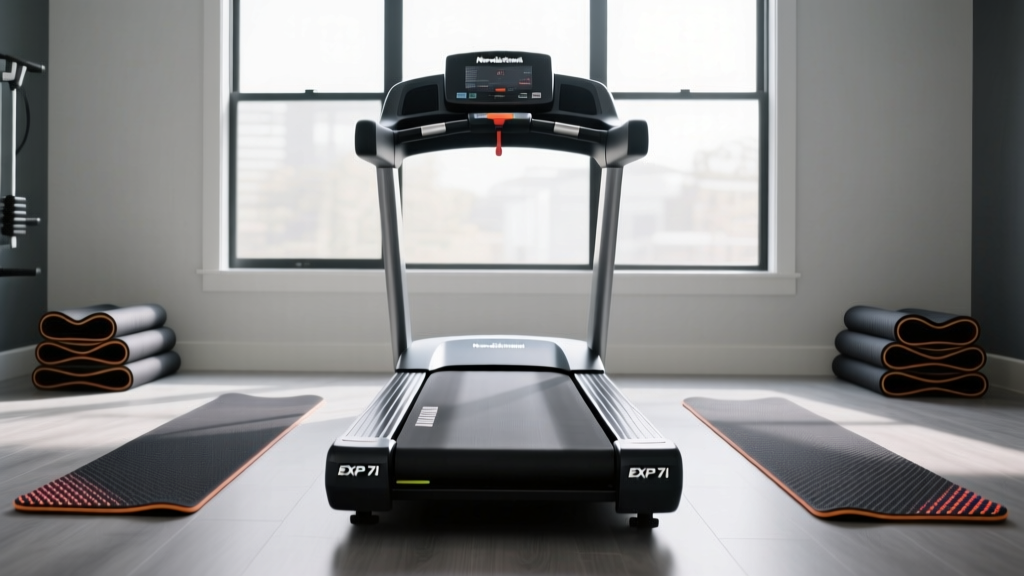
| Motorized Treadmill | NordicTrack EXP 7i | 65 - 75 dB | High (Running) / Med (Walking) | $899 - $1,299 |
| Under-Desk Walking Pad | WalkingPad C2 | 55 - 62 dB | Low (Walking only) | $150 - $350 |
| Magnetic Elliptical | Sole E35 | 45 - 52 dB | Very Low (No footstrike) | $1,199 - $1,499 |
| Air Rower | Concept2 RowErg | 70 - 82 dB | Low (Seated motion) | $990 - $1,100 |
| Magnetic Rower | Hydrow Rowing Machine | 48 - 55 dB | Very Low | $2,295 - $2,495 |
| Indoor Cycle (Belt) | Peloton Bike+ | 40 - 48 dB | Negligible | $2,495 - $2,795 |
| Air Assault Bike | Assault AirBike Elite | 75 - 88 dB | Low | $1,199 - $1,399 |
Beyond the Treadmill: Silent Alternatives for Shared Spaces
If the walking vs treadmill comparison reveals that your living situation simply cannot support the structural impact of a motorized belt, you must pivot to low-impact, non-percussive cardio machines. Here is how the top alternatives perform acoustically.
Magnetic Resistance Ellipticals
Ellipticals are the gold standard for high-rise apartment cardio. Because your feet never leave the pedals, the kinetic impact is virtually eliminated. Furthermore, modern rear-drive ellipticals like the Sole E35 use heavy flywheels with eddy-current magnetic resistance. There is no physical friction pad touching the flywheel, resulting in a near-silent operation profile hovering around 45 dB. The only audible sound is the faint hum of the console fan and the mechanical clicking of the crank bearings, which require occasional lithium grease lubrication to maintain silence.
The Rower Dilemma: Air vs. Water vs. Magnetic
Rowing machines offer a massive full-body cardiovascular stimulus, but their noise profiles vary wildly based on the resistance mechanism:
- Air Rowers (e.g., Concept2 RowErg): The industry standard for performance, but acoustically loud. The fan blade displaces massive amounts of air, generating a 'whoosh' that peaks at 82 dB at high stroke rates. Not recommended for shared walls or sleeping roommates.
- Water Rowers (e.g., WaterRower Natural): Produces a soothing, rhythmic splashing sound around 60-65 dB. While not 'silent,' the white-noise quality of water displacement is far less intrusive to human ears than the high-pitched whine of an air fan.
- Magnetic Rowers (e.g., Hydrow): The quietest option on the market. Utilizing electromagnetic resistance, these machines operate below 55 dB, making them ideal for late-night workouts in noise-sensitive environments.
Indoor Cycling: Belt Drive vs. Chain Drive
When shopping for an indoor bike, the drivetrain dictates the noise level. Older or budget spin bikes utilize metal chain drives that require frequent oiling and generate a rhythmic metallic grinding (60+ dB). Premium 2026 models, including the Peloton Bike+ and Echelon EX-8s, use Poly-V belt drives. These rubber belts grip the flywheel silently, dropping the airborne noise to roughly 42 dB—quiet enough that you can hold a phone conversation without raising your voice.
Warning: Beware of budget 'magnetic' walking pads on third-party marketplaces. Many sub-$150 models use low-grade aluminum rollers and poorly calibrated belts that generate high-pitched friction whines exceeding 70 dB after just 30 days of use. Always look for multi-layer PVC/Nylon composite belts and brushless motors.Vibration Isolation: The Hidden Noise Culprit
Even the quietest motorized treadmill will anger a downstairs neighbor if placed directly on a hardwood or laminate floor. The solution is not acoustic foam (which absorbs airborne sound) but vibration isolation.
The Anti-Vibration Mat Framework
To properly decouple a treadmill or walking pad from the subfloor, you need a high-density mat. Standard PVC yoga mats or cheap foam puzzle tiles will compress entirely under the 250+ lb dynamic load of a treadmill, rendering them useless for impact dampening.
- Material Density: Look for vulcanized rubber with a durometer rating of at least 72A (Shore A hardness scale).
- Thickness: A minimum of 3/8-inch (9.5mm) is required to absorb the low-frequency kinetic energy of a footstrike.
- Foot Pods: For maximum isolation in multi-story condos, place specialized washing machine anti-vibration pucks (made of neoprene and steel) directly under the treadmill's leveling feet, then place the mat over the entire footprint to catch dust and stabilize the stance.
The FitGearPulse Quiet-Rated Buying Framework
Use this decision matrix to select your cardio equipment based on your specific architectural environment:
- Detached Single-Family Home (Basement/Garage): No restrictions. Choose based on biomechanical preference. Treadmills and Air Rowers are highly recommended for maximum bone-density loading and VO2 max development.
- Multi-Story Home (First Floor with Basement Below): Treadmills are acceptable if placed over load-bearing walls rather than the center of the floor joists. Use a 3/8" vulcanized rubber mat.
- Condo / Apartment (Upstairs Neighbor Below): Strictly avoid running on treadmills. The walking vs treadmill debate shifts entirely to walking pads or magnetic ellipticals. Keep speeds below 3.5 MPH to minimize harmonic resonance in the floor joists.
- Studio Apartment (Shared Walls, Same Floor): Airborne noise is the primary concern. Avoid air bikes and air rowers. Opt for belt-driven indoor cycles or magnetic ellipticals.
Frequently Asked Questions
Is a walking pad quieter than a traditional treadmill?
Yes, in terms of structure-borne noise. Because walking pads lack a heavy, elevated deck and are designed strictly for walking (not running), the kinetic impact transferred to the floor is drastically reduced. However, cheaper walking pad motors can sometimes produce a higher-pitched airborne whine than the heavy, insulated DC motors of premium traditional treadmills.
Can I soundproof my room to use a loud treadmill?
Acoustic panels and heavy curtains will reduce the airborne noise of the treadmill motor bouncing around your room, but they will do absolutely nothing to stop the structure-borne impact noise traveling through the floor joists to your neighbors. You must isolate the machine from the floor using high-density rubber.
Do manual (non-motorized) treadmills make less noise?
Manual curved treadmills (like the AssaultRunner) have no motor, eliminating airborne motor noise entirely. However, the slat belt striking the curved track and the heavy footfall required to drive the belt create significant low-frequency impact noise, making them a poor choice for upstairs apartments.
More gear to consider
All reviews
Top Treadmill Challenge for Weight Loss: Sole F85 vs NordicTrack

Antigravity Treadmill Near Me? 2026 Stationary Bike Market Shift

Top Lubricants for 15 Percent Incline Treadmill Belts

Under Desk Treadmill Office Review vs Life Fitness T3 Treadmill

DeerRun Treadmill Oil Mistakes & Cardio Noise Comparison