Walking Pad vs Treadmill: Choosing the Right Treadmill Tread (2026)
Compare walking pads and traditional treadmills with our 2026 beginner guide. Learn how to choose the right treadmill tread size for your space and stride.

The Ultimate Beginner's Guide: Walking Pad vs. Traditional Treadmill
If you are stepping into the world of home cardio in 2026, you have likely encountered the great debate: should you buy a compact walking pad or invest in a traditional full-size treadmill? While marketing materials often focus on motor size or digital screens, the most critical factor for your comfort, safety, and long-term consistency is the treadmill tread.
The treadmill tread—specifically the belt's length, width, and material thickness—dictates whether you will feel like you are strolling in your living room or balancing on a tightrope. This step-by-step guide will walk you through exactly how to evaluate the treadmill tread, compare top 2026 models, and make a confident purchasing decision based on your biomechanics and available space.
💡 Expert Definition: The "treadmill tread" refers specifically to the usable belt surface area (length × width) and its material thickness (ply count), not the total footprint of the machine's frame or handrails.Step 1: Understand Your Space vs. Treadmill Tread Footprint
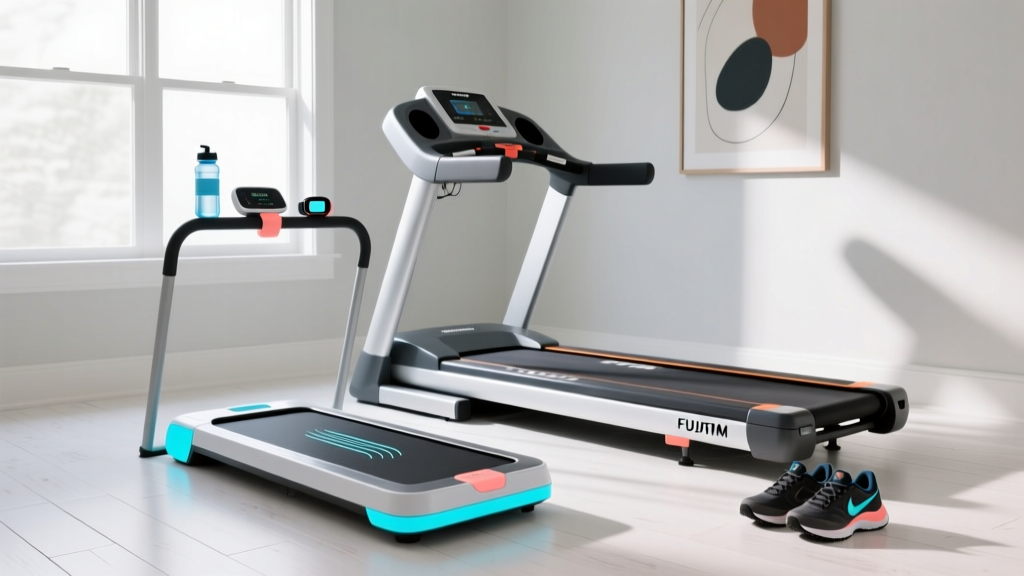
Beginners often confuse the machine footprint (the total floor space the device occupies) with the treadmill tread (the actual area your feet strike). A traditional treadmill might take up 70 x 30 inches of floor space but only offer a 20 x 55-inch tread. Conversely, a folding walking pad might have a 50 x 20-inch frame but a restricted 15 x 40-inch tread.
Actionable Advice: Measure your dedicated workout space, but subtract at least 20 inches from the length and width to find your maximum allowable treadmill tread size. Always leave a minimum 2-foot clearance behind the machine for safety fall zones.
Step 2: Compare Belt Dimensions Across 2026's Top Models
To understand how the treadmill tread varies between categories, let's look at exact specifications from top-rated walking pads and traditional treadmills currently on the market.
| Model (2026) | Category | Treadmill Tread Size | Belt Ply | Est. Price |
|---|---|---|---|---|
| King Smith WalkingPad X21 | Walking Pad | 47" L x 17" W | 1-Ply | $499 |
| UREVO Strol 2E | Walking Pad | 38" L x 15" W | 1-Ply | $259 |
| Sole F63 | Traditional | 60" L x 20" W | 2-Ply | $899 |
| Horizon Fitness 7.4 | Traditional | 60" L x 22" W | 2-Ply | $1,199 |
The Width Trap
Notice the width discrepancy. A 15-inch wide tread (like the UREVO) forces you to walk in a perfectly straight line. If you naturally sway or have a wider gait, you will constantly step on the side rails, which is a leading cause of beginner frustration and ankle strain. For comfortable walking, a minimum treadmill tread width of 17 inches is highly recommended.
Step 3: Match Your Stride Length to the Treadmill Tread
According to Mayo Clinic's research on walking biomechanics, your stride length naturally increases as your walking pace transitions into a power walk or light jog. If your treadmill tread is too short, you will subconsciously shorten your stride, leading to poor posture and inefficient cardiovascular output.
- Measure your natural stride: Walk normally for 10 steps on a sidewalk, measure the distance, and divide by 10. The average adult walking stride is roughly 2.5 feet (30 inches), while a running stride can exceed 4 feet.
- Apply the 1.5x Rule: Your treadmill tread length should be at least 1.5 times your natural stride length to account for acceleration, deceleration, and slight drifting.
- Height Guidelines: If you are under 5'7", a 45-inch treadmill tread (common in premium walking pads) is sufficient for walking. If you are over 5'9" and plan to jog, you absolutely need a 55-inch to 60-inch tread found on traditional treadmills.
Step 4: Evaluate Belt Thickness and Motor Friction
The physical makeup of the treadmill tread directly impacts the machine's motor and your joint health. This is where the distinction between 1-ply and 2-ply belts becomes vital.
1-Ply Treads (Standard on Walking Pads)
Walking pads utilize 1-ply belts because they must be thin enough to fold 180 degrees in half.
- Pros: Allows for ultra-compact storage under beds or sofas.
- Cons: Less shock absorption. The thin tread transfers more impact to your knees and generates higher friction against the deck, requiring more frequent lubrication.
- Failure Mode: 1-ply treads are prone to stretching and edge-curling after 300-400 miles if the user exceeds the weight limit (often capped at 220-240 lbs).
2-Ply Treads (Standard on Traditional Treadmills)
Traditional treadmills like the Sole F63 use a 2-ply belt (a rubber top layer for grip and a fabric underlayer to reduce friction).
- Pros: Superior joint cushioning, highly durable, and naturally resists stretching.
- Cons: Cannot be folded in half, making the machine permanently bulky.
Expert Insight: If you are buying a walking pad for a standing desk setup, the 1-ply tread is perfectly adequate for low-speed (under 3.5 MPH) use. However, the American Heart Association's physical activity guidelines recommend moderate-to-vigorous intensity for optimal heart health. To achieve a vigorous heart rate, you will need the speed and tread length of a traditional 2-ply machine.
Step 5: Budgeting for Treadmill Tread Maintenance
Beginners rarely factor in the ongoing maintenance of the treadmill tread. The belt and deck create friction, which generates heat and degrades the motor over time. Here is your step-by-step maintenance framework:
- Silicone Lubrication: You must apply 100% silicone treadmill lubricant under the tread. For 1-ply walking pads, do this every 130 miles or 3 months. For 2-ply traditional belts, every 300 miles or 6 months.
- Tension Adjustments: If the treadmill tread slips when your foot strikes, locate the rear roller bolts. Turn both the left and right bolts exactly one-quarter turn clockwise to tighten the tread. Never overtighten, as this will burn out the motor.
- Replacement Costs: A replacement 1-ply walking pad tread costs between $40 and $70. A heavy-duty 2-ply traditional treadmill tread replacement costs $100 to $180, plus the labor or time to install it.
Final Decision Matrix: Which Treadmill Tread is Right for You?
Use this quick checklist to finalize your 2026 cardio equipment purchase:
Choose a Walking Pad Tread If:
- Your primary goal is reaching 8,000–10,000 daily steps while working.
- You are under 5'9" tall and have a shorter natural stride.
- You have less than 15 square feet of dedicated floor space.
- Your top speed requirement is 4.0 MPH (brisk walking).
Choose a Traditional Treadmill Tread If:
- You want to incorporate jogging, running, or high-intensity intervals.
- You are over 5'9" or have a wide, swaying walking gait.
- You require advanced shock absorption to protect aging joints.
- You want a machine that can safely support users over 250 lbs.
Summary
Choosing between a walking pad and a traditional treadmill ultimately comes down to the physical realities of the treadmill tread. While walking pads offer unparalleled convenience and space-saving benefits for low-intensity daily movement, their narrow, short, 1-ply treads limit biomechanical efficiency at higher speeds. Traditional treadmills demand more space and a higher upfront investment, but their expansive 2-ply treads provide the safety, durability, and stride freedom necessary for true cardiovascular conditioning. Measure your space, measure your stride, and select the tread that supports your long-term health goals.
More gear to consider
All reviews
How to Oil a Treadmill: Setup Walkthrough & Buying Guide Feature Comparison

NordicTrack Treadmill T5zi vs Ellipticals: Home Cardio Guide 2026
Sole Treadmill F63 vs F65 or Under-Desk Treadmill? Office Use Review
Mythbusters Airplane Treadmill Myth vs. Folding Treadmill Value

1 Month Treadmill Results: Best Small Space Folding Treadmills
