Walking Pad vs Treadmill: Fixing the Treadmill Tail (Kelsey Kane)
Compare walking pads and treadmills. Fix the 'treadmill tail' posture fault popularized by Kelsey Kane with our step-by-step beginner guide for 2026.

The "Treadmill Tail" Explained: Kelsey Kane's Biomechanics Warning
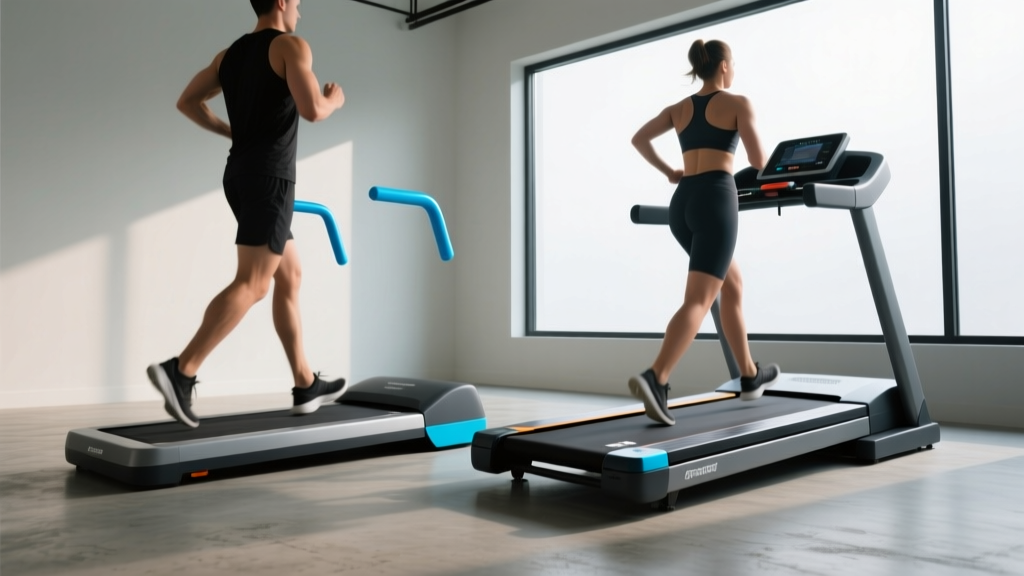
If you have recently transitioned to a home cardio setup, you have likely encountered the viral biomechanics critiques surrounding automated walking belts. Specifically, movement coaches and fitness experts like Kelsey Kane frequently highlight a postural fault known as the "treadmill tail." This occurs when a user subconsciously leans backward and tucks their pelvis (posterior pelvic tilt) to compensate for the moving belt, resulting in a trailing leg drag that resembles a tucked tail. This fault severely limits glute activation and places undue shear stress on the lumbar spine.
💡 Callout: What is the Treadmill Tail?
The "treadmill tail" is a colloquial kinesiology term for posterior pelvic tilt combined with a shortened, dragging stride on a motorized belt. According to Mayo Clinic's guide to walking mechanics, improper pelvic alignment during repetitive walking can lead to chronic lower back pain and diminished caloric output. Kelsey Kane's methodology emphasizes "ribs over hips" and driving through the heel to neutralize this fault, a technique that requires specific machine dimensions to execute properly.
Choosing between a compact walking pad and a traditional treadmill is not just about space and budget; it is fundamentally about how the machine's deck length and motor response dictate your pelvic alignment. This step-by-step beginner guide will help you select the right equipment for 2026 and fix your stride mechanics.
Step 1: Walking Pad vs. Traditional Treadmill (The Core Differences)
Before making a purchase, you must understand how the physical constraints of these machines affect your biomechanics. Walking pads are engineered for low-speed, under-desk use, while traditional treadmills are built for dynamic, full-stride locomotion.
| Feature | Standard Walking Pad | Traditional Treadmill | Impact on "Treadmill Tail" |
|---|---|---|---|
| Belt Length | 40" - 47" | 55" - 62" | Short belts force a tucked pelvis to avoid stepping off the rear deck. |
| Motor Type | 1.0 - 1.5 CHP (DC) | 2.5 - 4.0 CHP (DC/AC) | Weak motors lag during heel-strike, causing users to lean back. |
| Handrails | None or minimal front bar | Full wrap-around console rails | Holding rails exacerbates the posterior pelvic tilt (the "tail" tuck). |
| Incline | Fixed flat or manual 2% | Motorized 0% - 15% | Incline naturally forces a forward lean, curing the treadmill tail. |
Step 2: Top 2026 Models Reviewed for Posture and Stride
To maintain the neutral pelvic alignment advocated by biomechanics experts, you need a machine that accommodates your natural stride length. As noted by Harvard Health Publishing, an unrestricted stride is vital for engaging the posterior chain and maintaining cardiovascular efficiency. Here are the top models for 2026 that address these biomechanical needs.
1. KingSmith WalkingPad X21 (Best for Compact Spaces)
Price: $599 | Belt: 47" x 17" | Motor: 1.25 CHP
The X21 features a dual-fold design and an upgraded 1.25 continuous horsepower motor. While 47 inches is generous for a walking pad, users over 5'8" will still need to consciously shorten their stride to avoid the rear deck. Pro Tip: To avoid the treadmill tail on the X21, keep your speed under 3.5 MPH. At higher speeds, the short belt forces a posterior pelvic tuck.
- Pros: Ultra-quiet brushless motor, app integration, folds to 8 inches thick.
- Cons: No incline; belt length restricts full hip extension for taller users.
2. Sole F63 (Best for Full Stride Mechanics)
Price: $1,199 | Belt: 60" x 20" | Motor: 3.0 CHP
If your primary goal is to fix the "treadmill tail" and achieve full glute activation, the Sole F63 is the gold standard for home use. The 60-inch belt allows for complete hip extension, and the 15% motorized incline naturally forces your torso forward, neutralizing the pelvic tuck. The Cushion Flex Whisper Deck reduces joint impact by up to 40% compared to asphalt.
- Pros: 60" belt accommodates runners up to 6'4"; lifetime frame warranty; 3.0 CHP motor prevents belt lag.
- Cons: Heavy (250 lbs footprint); requires a dedicated 15-amp circuit.
Step 3: How to Fix Your Stride and Avoid the "Tail" Tuck
Whether you are using a walking pad under your standing desk or a full-size treadmill, follow Kelsey Kane's step-by-step biomechanical cues to eliminate the treadmill tail.
- Establish the "Ribs Over Hips" Baseline: Stand tall on the side rails. Before starting the belt, stack your ribcage directly over your pelvis. Squeeze your glutes lightly to find a neutral spine. Do not arch your lower back.
- Initiate the Heel-Strike: As the belt moves, reach forward with your heel, not your toe. A toe-first strike naturally pushes your hips backward into the dreaded "tail" position.
- Drive Through the Glute: As your foot passes beneath your center of mass, actively push the belt backward using your glute and hamstring. Imagine you are scooting a skateboard backward.
- Utilize the 1% Rule: If your treadmill allows it, set the incline to 1% or 2%. This slight gradient mimics outdoor wind resistance and naturally shifts your center of gravity forward, making a posterior pelvic tilt biomechanically impossible.
- Check Your Cadence: Aim for 100-110 steps per minute. A slow, plodding cadence on a walking pad encourages leaning back and dragging the feet. Increase the speed slightly and take shorter, quicker steps to maintain pelvic neutrality.
Common Failure Modes & Edge Cases
Beginners often encounter specific mechanical and physical failure modes when transitioning to home cardio equipment. Be aware of these edge cases:
- The "Desk Lean" (Walking Pads): When using a walking pad under a standing desk, users often rest their forearms on the desk edge. This shifts the upper body weight forward but causes the hips to jut backward, creating a severe treadmill tail. Fix: Raise your desk height so your elbows are at a 90-degree angle without bearing weight.
- Motor Thermal Shutdown: Walking pads use small DC motors designed for continuous walking. If a user attempts to jog at 5.0 MPH on a 1.25 CHP walking pad, the motor will overheat and trigger a thermal shutoff within 20-30 minutes. Fix: Reserve jogging for machines with a minimum 2.5 CHP rating.
- Belt Friction Drag: If a walking pad is not lubricated with 100% silicone treadmill oil every 40-50 miles, the friction between the belt and deck increases. This causes the belt to "stick" momentarily during heel-strike, throwing off your balance and forcing a reactive pelvic tuck.
Frequently Asked Questions
Can I fix my treadmill tail on a walking pad if I am over 6 feet tall?
It is highly challenging. Users over 6'0" typically have a natural walking stride that exceeds 30 inches. On a 43-inch walking pad, this leaves only inches of margin before your heel strikes the rear plastic deck. Your brain will subconsciously force a posterior pelvic tilt (the treadmill tail) to shorten your stride and protect your heel. Tall users should opt for a traditional treadmill with at least a 55-inch belt.
Does holding the handrails cause the treadmill tail?
Yes. Holding onto the front console or side rails shifts your center of gravity backward and locks your torso in place. Because your upper body is anchored, your hips compensate by tucking under to reach the moving belt. Always swing your arms naturally to maintain proper pelvic alignment and increase caloric burn by up to 15%.
How often should I lubricate my walking pad to maintain smooth biomechanics?
Most 2026 walking pad models require 100% silicone lubrication every 30 to 50 miles of use. A dry belt creates micro-stutters during the belt's rotation. These micro-stutters disrupt your proprioception, causing you to tense your lower back and tuck your pelvis in anticipation of a slip.
More gear to consider
All reviews
Stair Climber Guide: Why 4 mph on Treadmill Pacing Causes Mistakes

Spirit XT685 Treadmill Belt Maintenance: Cost & Value Breakdown
Lubricating NordicTrack Treadmills for Home: Belt Maintenance Guide
Elliptical vs Treadmill Care: Maintaining Your HIIT Program Treadmill
ProForm 995 Treadmill Setup & Noise Level Comparison Guide