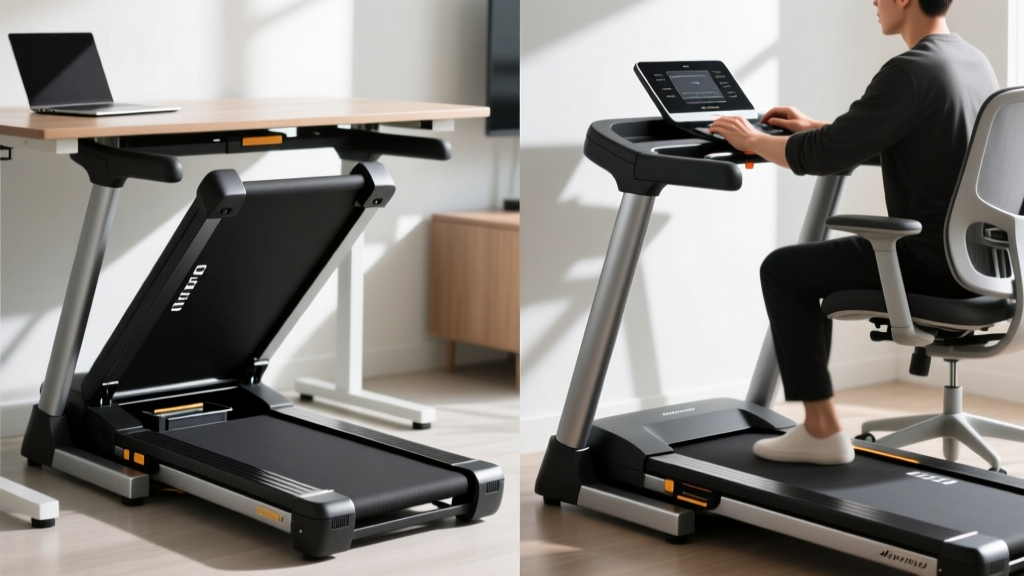
Walking Pad vs Treadmill: Duke Treadmill Score Calculator Guide
Compare walking pads and treadmills for 2026. Troubleshoot cardio plateaus, review top models, and explore the Duke Treadmill Score Calculator metrics.

The Great Cardio Misconception: Steps vs. Cardiovascular Stress
In 2026, the home fitness market is saturated with ultra-slim walking pads, driven by the work-from-home culture and the obsession with closing daily step rings. However, a massive troubleshooting gap exists in how consumers evaluate these machines. Millions of buyers mistakenly equate accumulating steps with improving cardiovascular health. To understand why this is a critical error, we must look at clinical cardiology—specifically, the metrics used in a Duke Treadmill Score calculator.
The Duke Treadmill Score (DTS) is a prognostic tool used by cardiologists to assess cardiovascular risk based on exercise stress testing (typically the Bruce Protocol). The formula is: Exercise Time (mins) - (5 x ST deviation) - (4 x Angina Index). For healthy individuals without ischemia, the score is entirely dependent on exercise time at high metabolic equivalents (METs). Surviving Stage 3 of the Bruce Protocol requires walking at 3.4 mph on a 14% incline, generating roughly 10 METs.
Here is the harsh reality: no walking pad on the market can replicate this. If you are using a walking pad to train for cardiovascular longevity, you are likely troubleshooting a plateau because your hardware physically cannot generate the MET ceiling required to mimic clinical stress tests. Let us break down the hardware differences, review the top models, and troubleshoot your home cardio routine.
Hardware Review: Walking Pads vs. Standard Treadmills
To understand your limitations, we must compare the biomechanical and mechanical ceilings of both machine categories. Below is a 2026 comparison matrix of top-selling models in both categories.
| Feature | UREVO Strol 2E (Walking Pad) | KingSmith WalkingPad X21 | Sole F63 (Standard Treadmill) | Horizon T202 (Standard Treadmill) |
|---|---|---|---|---|
| Motor (HP) | 2.5 HP (Peak) | 1.5 HP (Continuous) | 3.0 HP (Continuous) | 2.75 HP (Continuous) |
| Max Speed | 7.6 mph | 6.2 mph | 12.0 mph | 12.0 mph |
| Incline Capability | 0% (Flat only) | 0% (Flat only) | 0% - 15% Power Incline | 0% - 12% Power Incline |
| Max MET Ceiling | ~6.5 METs (Running flat) | ~5.0 METs (Brisk walk) | ~14+ METs (Incline run) | ~12 METs (Incline jog) |
| Deck Length | 47 inches | 45 inches | 60 inches | 60 inches |
| Price Range | $359 - $399 | $449 - $499 | $799 - $899 | $699 - $799 |
The Biomechanical Deficit of Flat Walking
According to the Mayo Clinic's guidelines on exercise intensity, moderate activity sits between 3.0 and 5.9 METs, while vigorous activity is 6.0 METs or higher. A standard walking pad maxing out at 4.0 mph on a flat surface yields roughly 4.3 METs. You are permanently capped in the 'moderate' zone unless you break into a jog on a 45-inch deck, which introduces severe safety and joint-stability risks.
Troubleshooting Common Home Cardio Mistakes
If you own a walking pad and feel your fitness stagnating, you are likely falling victim to one of these three common mistakes. Here is how to troubleshoot and fix them.
Mistake #1: Chasing 10,000 Steps Instead of Heart Rate Zones
The Problem: Walking 10,000 steps on a pad at 2.5 mph takes about 100 minutes but barely elevates your heart rate above resting baseline. It burns calories via NEAT (Non-Exercise Activity Thermogenesis) but does not strengthen the myocardium.
The Fix: Shift your focus to Zone 2 cardio. The American Heart Association recommends a target heart rate of 50-70% of your maximum for moderate-intensity conditioning. If your walking pad maxes out at 4.0 mph and your heart rate remains below 110 BPM, you must add external resistance.
Actionable Step: Wear a 15-20 lb weighted vest. Adding 10% of your body weight to a flat walk increases the metabolic cost by roughly 15-20%, pushing you into a vigorous cardiovascular zone without needing to jog on a short deck.
Mistake #2: Ignoring the 'Duke Protocol' Incline Requirement
The Problem: As noted when analyzing variables in a Duke Treadmill Score calculator, incline is the primary driver of cardiovascular stress at walking speeds. By relying on a 0% incline pad, you miss the posterior chain activation (glutes, hamstrings, calves) required for functional fitness.
The Fix: If you cannot upgrade to a standard treadmill like the Sole F63, you must simulate incline through interval cadence drills.
Actionable Step: Perform 1-minute 'sprints' at the pad's max speed (e.g., 6.0 mph) followed by 2 minutes of recovery walking. This interval spikes the heart rate, mimicking the cardiovascular demand of an inclined walk, though it requires careful attention to the short belt length.
Mistake #3: Overheating the Walking Pad Motor
The Problem: Users attempt to 'hack' their walking pad into a running machine. Running on a 1.5 HP continuous motor causes extreme belt friction and motor overheating, triggering the machine's thermal shutoff switch.
The Fix: Respect the duty cycle. Walking pads are engineered for continuous low-draw amperage.
Actionable Step: Lubricate the silicone belt every 40 hours of use. If the machine routinely shuts down after 20 minutes of jogging, the internal PWM (Pulse Width Modulation) controller is failing due to heat. Stop running on it; the deck lacks the elastomer shock absorption of a standard treadmill, leading to medial tibial stress syndrome (shin splints).
Clinical Context: Why the Bruce Protocol Matters at Home
Cardiologists use the exercise stress test to uncover hidden ischemic heart disease. The Bruce Protocol progresses every 3 minutes, increasing both speed and grade. Stage 2 requires a 12% grade. Stage 3 requires a 14% grade.
When healthy users input their data into a Duke Treadmill Score calculator, a high score (greater than +5) indicates a low risk of cardiovascular mortality. Achieving this score requires sustaining high MET outputs for 9 to 12 minutes. A walking pad physically cannot facilitate this. Therefore, if your primary 2026 fitness goal is maximizing your VO2 Max, improving your lactate threshold, or training for cardiovascular longevity metrics akin to the DTS, a walking pad is an insufficient tool. It is a supplement for NEAT, not a replacement for vigorous aerobic conditioning.
The Final Verdict: Which Machine Do You Actually Need?
Choose a Walking Pad (e.g., UREVO Strol 2E) If:
- Your primary goal is combating the sedentary nature of a desk job.
- You live in a small apartment (under 600 sq ft) and need foldable, under-bed storage.
- You want to increase daily caloric expenditure via NEAT without triggering excessive central nervous system fatigue.
- You understand that this machine will not significantly improve your VO2 Max.
Choose a Standard Treadmill (e.g., Sole F63 or Horizon T202) If:
- You want to replicate clinical stress-test intensities (high METs via incline).
- You suffer from joint pain and require a 60-inch deck with multi-zone elastomer cushioning.
- You plan to do Zone 2 steady-state cardio, HIIT, or marathon training.
- You want to progressively overload your cardiovascular system over the next 5-10 years.
Expert Takeaway: Do not let marketing confuse 'movement' with 'training.' A walking pad is a brilliant tool for movement. But if you are analyzing your fitness through the lens of clinical longevity metrics—like those evaluated by a Duke Treadmill Score calculator—you must invest in a machine capable of manipulating both speed and incline to truly stress and strengthen the human heart.
More gear to consider
All reviews
How to Apply Treadmill Lube: 2026 Maintenance Trends & Guide
Rowing Machine Buying Guide: The 'Plane on a Treadmill' Resistance Myth

Is Running on a Treadmill Bad for You? The Rowing Fix

Under Desk Treadmill Review vs NordicTrack Commercial 1750 Treadmill
Aviron Treadmill Subscription Cost, Layouts & Belt Maintenance