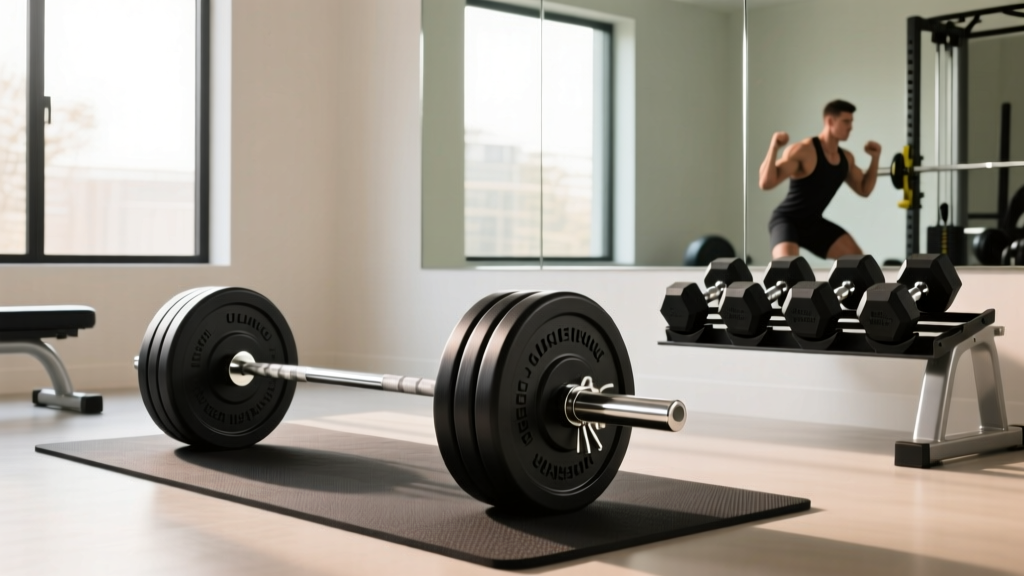
Upgrade Your Dumbbell Arm Routine: Barbell Weight & Knurl Guide
Outgrow your dumbbell arm routine? Discover how Olympic barbell weight and knurling profiles impact heavy bicep curls and tricep presses.

The Limits of the Standard Dumbbell Arm Routine
Every well-rounded physique relies on a solid dumbbell arm routine for unilateral balance, peak contraction isolation, and joint-friendly articulation. However, as you advance into intermediate and elite lifting tiers, dumbbells present a distinct mechanical bottleneck for arm hypertrophy. Progressive overload on biceps and triceps eventually hits a ceiling with dumbbells due to grip fatigue, the immense stabilization required to hoist 100+ lb dumbbells, and the sheer awkwardness of getting heavy bells into position for exercises like the incline dumbbell curl or heavy tricep extension.
To break through these hypertrophy plateaus, advanced lifters turn to heavy barbell curls, close-grip bench presses, and JM presses. This transition requires an Olympic barbell. But not just any barbell will suffice. When your primary goal is arm isolation and heavy pressing, the weight of the bar (20kg vs. 15kg) and the specific knurling pattern dictate whether you can maintain a supinated grip during heavy curls without the bar slipping or tearing your calluses.
Why Barbell Weight Matters for Arm Hypertrophy
When transitioning from a dumbbell arm routine to barbell work, the starting weight of the barbell is a critical, often overlooked variable. A standard Olympic barbell weighs 20kg (44 lbs). For strict, chest-supported, or standing bicep curls, adding 45 lbs of plates to a 44 lb bar means your minimum working weight is 89 lbs. For many lifters focused on strict form and time-under-tension, this is simply too heavy to begin a mesocycle.
The 20kg (44 lb) Standard Olympic Bar
The 20kg bar is the gold standard for close-grip bench presses, weighted dips, and heavy skull crushers. Its 28mm to 29mm shaft diameter provides a solid base for tricep dominance. However, for strict bicep curls, a 20kg bar can force you into a 'cheat curl' mechanics pattern, utilizing hip flexion and lower back extension to move the weight, thereby removing tension from the biceps brachii.
The 15kg (33 lb) and Specialty Arm Bars
For dedicated arm work, a 15kg (33 lb) women's Olympic bar or a specialized 10kg to 15kg Olympic curl bar is vastly superior. The 15kg bar typically features a 25mm shaft diameter. This thinner shaft is significantly easier to grip during supinated (palms-up) bicep curls, reducing forearm flexor fatigue and allowing you to target the biceps directly. According to American Council on Exercise (ACE) guidelines on progressive overload, matching the implement's weight to the muscle group's isolated capacity is vital for preventing connective tissue strain in the distal biceps tendon.
Decoding Barbell Knurling for Heavy Curls and Presses
Knurling is the diamond-patterned machining cut into the steel shaft of a barbell to increase friction. When you are executing a heavy barbell curl, your hands are fully supinated, and sweat acts as a lubricant. If your barbell lacks adequate knurling, the bar will roll down your fingers mid-rep, leading to catastrophic grip failure or torn skin.
⚠️ The Grip-Failure Edge Case: Lifters transitioning from dumbbells often underestimate barbell rotation. Unlike hex dumbbells, Olympic barbells spin on bushings or bearings. If you use a bar with aggressive 'mountain' knurling and needle bearings (designed for Olympic weightlifting), the bar will aggressively spin and tear your palms during the eccentric phase of a heavy bicep curl. For arm routines, you want a bar with bushings and medium volcano knurling to provide grip without excessive spin.Volcano vs. Mountain vs. Hill Knurling
- Volcano Knurling: The peaks of the diamonds are 'cratered' or flattened slightly. This provides a massive surface area for grip without acting like a cheese grater on your hands. It is the undisputed king for high-rep arm work and close-grip pressing.
- Mountain Knurling: Sharp, pointed peaks. Excellent for heavy deadlifts where chalk and aggressive grip are needed, but it will shred your hands during high-volume bicep routines.
- Hill Knurling: Rounded, smooth peaks. Common on cheap, entry-level bars. It feels comfortable but offers virtually zero grip security when your hands get sweaty during heavy tricep extensions.
Knurl Profile Comparison Matrix
| Knurl Type | Profile Shape | Best For Arm Training? | Callus Tearing Risk | Recommended Bar Type |
|---|---|---|---|---|
| Volcano | Cratered Peaks | Excellent (High Grip, Low Tear) | Low | Powerlifting / Multi-Purpose |
| Mountain | Sharp, Pointed Peaks | Poor (Too Aggressive for Supination) | High | Olympic Weightlifting |
| Hill | Rounded, Smooth Peaks | Fair (Slips When Sweaty) | Very Low | Entry-Level / Technique Bars |
| Stainless Steel (Uncoated) | Varies (Usually Volcano) | Superior (Chalk grips directly to steel) | Low | Premium Bare-Steel Bars |
Top Olympic Barbell Picks for Upper Body & Arm Focus (2026 Market)
Based on current 2026 market pricing, tensile strength ratings, and knurling suitability for arm hypertrophy, here are the top Olympic barbell investments to supplement your training.
1. Rogue Fitness Ohio Bar (Stainless Steel Edition)
Price: ~$325.00 | Weight: 20kg | Shaft: 28.5mm | Knurl: Medium Volcano
The Rogue Ohio Bar remains the benchmark for multi-purpose home gym bars. The stainless steel edition is particularly vital for arm routines because stainless steel naturally grips chalk and skin far better than zinc or black oxide coatings. As noted in Rogue Fitness's official specifications, the 190,000 PSI tensile strength shaft provides the perfect amount of stiffness. You do not want a 'whippy' bar for strict curls; the Ohio bar's stiffness ensures that when you initiate the curl, the weight moves immediately without a delayed, bouncy transfer of kinetic energy.
2. American Barbell SS Curl Bar
Price: ~$245.00 | Weight: 15kg (approx) | Shaft: Ergonomic Angles | Knurl: Medium Volcano
If you are strictly upgrading your arm routine, a dedicated Olympic curl bar is a game-changer. The angled shaft places the wrists and elbows in a semi-supinated, biomechanically neutral position, drastically reducing the risk of medial epicondylitis (golfer's elbow) during heavy skull crushers and bicep curls. American Barbell's machining is legendary, and their SS (Stainless Steel) curl bar offers aggressive enough grip to hold 100+ lbs of plates securely without destroying your palms. BarBend's comprehensive guide to barbell knurling frequently highlights American Barbell's consistency in knurl depth, ensuring you get the exact same grip feel on every batch.
3. Eleiko OP PowerLock Bar
Price: ~$850.00+ | Weight: 20kg | Shaft: 29mm | Knurl: Aggressive Powerlifting Knurl
For the elite powerlifter whose arm routine consists entirely of heavy, low-rep close-grip bench presses and board presses, the Eleiko OP is the pinnacle. The 29mm shaft is thicker, providing immense stability for heavy tricep lockouts. The knurling is aggressive, designed to bite through a t-shirt and lock into your palms during 400+ lb presses. It is overkill for high-rep bicep curls, but unmatched for raw tricep pressing power.
Frequently Asked Questions
Can I just use my cheap 7-foot Olympic bar for heavy curls?
You can, but cheap bars (typically priced under $150) feature 'hill' knurling and low tensile strength (under 165k PSI). Under the torque of a heavy, off-center bicep curl, these bars can permanently bend. Furthermore, the lack of knurling depth will force you to squeeze the bar excessively hard, leading to premature forearm fatigue before your biceps actually reach muscular failure.
Should I use an EZ Curl bar or a straight Olympic bar?
A straight Olympic bar forces full supination, which targets the short head of the biceps and the brachialis heavily. However, it places high torque on the wrists. An EZ Curl bar (or specialty Olympic curl bar) allows a semi-supinated grip, shifting some emphasis to the brachioradialis and saving your wrists. For a complete arm routine, owning both a straight 15kg bar and an angled curl bar is the optimal 2026 home gym setup.
Does barbell whip matter for arm exercises?
Whip is highly desirable for squats and deadlifts, but detrimental to arm isolation. A 'whippy' bar (usually 25mm or 28mm shafts designed for weightlifting) will oscillate at the top of a heavy curl or the bottom of a skull crusher, forcing your stabilizers to work overtime and ruining the mind-muscle connection. Always choose a stiffer powerlifting or multi-purpose bar with a thicker shaft (28.5mm to 29mm) or a dedicated, rigid curl bar for arm training.
More gear to consider
All reviews
RDL Exercise with Dumbbells vs. Barbell: 2026 Knurling Guide

EZ vs Straight Bar: Gym Layouts & Dumbbell Thrusters GIF Guide

Olympic vs Standard Plates: Mistakes & Dumbbell Toe Touches

Barbell Collar Comparison & One Arm Dumbbell Tricep Extension Safety
Barbell Collar Guide: Heavy Lifts & Dumbbell Spider Curl
