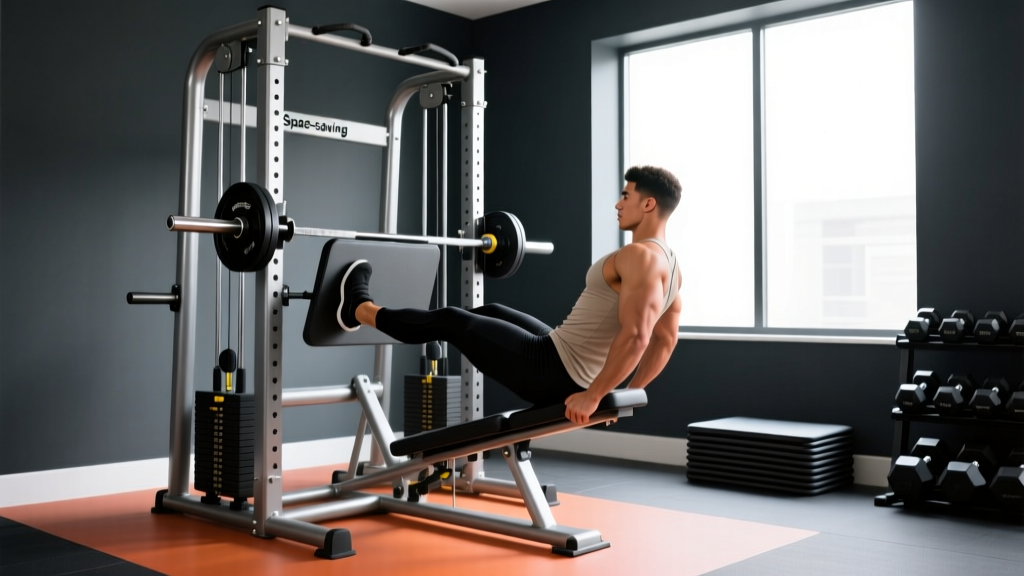
How to Unlock Leg Press Machine Limits: Space-Saving Squat Racks
Ditch the bulky sled. Learn how to unlock leg press machine limits by designing a space-optimized squat rack and power cage layout for maximum gains.

The Spatial and Mechanical Case Against the Traditional Leg Press
When outfitting a home or boutique garage gym, the 45-degree leg press is often a tempting purchase. It feels safe, it isolates the quadriceps, and it requires zero balancing. However, as the fitness industry moves into 2026, space optimization and biomechanical efficiency have become the gold standards for facility design. The traditional plate-loaded leg press is a spatial nightmare, typically demanding a footprint of 85 inches long by 45 inches wide—eating up over 26 square feet of valuable floor space for a single movement pattern.
Beyond the massive footprint, there is a notorious mechanical flaw inherent to many commercial and home sleds: the safety latch mechanism. If you have ever found yourself trapped under a heavy load, frantically searching your phone for how to unlock leg press machine safety pins because the weight distribution jammed the release handles, you have experienced this critical failure mode. The rotational torque of heavy sleds frequently binds the steel locking pins against their brackets, making them nearly impossible to disengage under duress. This is where transitioning to a space-optimized power cage or squat rack completely transforms your leg training environment.
Why a Power Cage is the Ultimate Space-Optimized Leg Trainer
A power cage or squat rack is the undisputed king of lower-body training efficiency. By utilizing a standard 7-foot Olympic barbell, a single rack facilitates back squats, front squats, hack squats, belt squats, Romanian deadlifts, and calf raises. According to biomechanical analyses featured in the ExRx Exercise Directory, free-weight squats elicit significantly higher stabilizer muscle activation and functional core engagement compared to the fixed-path, seated nature of a leg press sled.
💡 Space-Saving Insight: A standard power cage occupies roughly 16 square feet of floor space but offers vertical utility up to 84 inches. By utilizing wall-mounted folding racks or compact half-racks, you can reduce the permanent footprint to as little as 4 square feet when the equipment is not in use, a layout strategy that is dominating 2026 home gym designs.Footprint vs. Functionality Matrix
| Equipment Type | Avg. Footprint | Ceiling Req. | Price Range (2026) | Leg Exercise Versatility |
|---|---|---|---|---|
| 45-Degree Leg Press | ~26 sq. ft. | 84"+ | $1,200 - $3,500 | Low (Sled press only) |
| Full Power Cage (e.g., Rogue R-3) | ~16 sq. ft. | 90"+ | $850 - $1,500 | Extremely High |
| 3x3 Half Rack (e.g., Rep PR-4000 Half) | ~12 sq. ft. | 84"+ | $600 - $900 | High (Requires spotter arms) |
| Wall-Mounted Folding Rack | ~4 sq. ft. (folded) | 84"+ | $350 - $650 | Moderate (Limited clearance) |
Designing Your Space-Efficient Leg Training Layout
To replace the leg press with a free-weight alternative, your layout must account for barbell clearance, plate loading, and safe bailing zones. A standard 45-pound Olympic plate has a diameter of 17.7 inches. This means your barbell sleeves will sit roughly 9 inches off the ground at the bottom of a squat. Your rack must be centered on a platform with at least 24 inches of lateral clearance on both sides to allow for loading and unloading bumper plates without scraping your walls.
The 6x8 Foot Optimal Zone
For a highly optimized layout, designate a 6-foot by 8-foot zone (48 square feet). This single zone will house your rack, your spotter arms, and your plate storage.
- Flooring: Use 3/4-inch thick vulcanized rubber mats (commonly sold as horse stall mats). They provide the necessary density to absorb dropped weights during heavy Romanian deadlifts or failed squats, protecting your concrete subfloor.
- Plate Storage: Instead of using a standalone plate tree (which wastes 4 square feet), utilize bolt-on plate storage pegs on the rear uprights of your power cage. This acts as a counterweight, increasing the rack's stability while keeping your lateral footprint tight.
- Safety Spotter Straps vs. Steel Pins: Ditch the traditional steel pin-and-pipe safety catches. Heavy squats dropped onto steel pins will destroy your barbell's knurling and bend the pins. Invest in UHMW-lined spotter arms or heavy-duty nylon safety straps. Straps catch the bar silently, absorb the kinetic energy, and take up virtually zero visual space.
Essential Attachments for Lower Body Domination
To truly replicate the isolation and heavy-loading capabilities of a leg press, your power cage needs specific modular attachments. This is where the magic of modern gym engineering shines.
- The Belt Squat Attachment: If you love the leg press for its ability to load the quads and glutes without axially loading your spine, a belt squat attachment is mandatory. Devices like the Rogue Monster Belt Squat mount directly to your rack's uprights and use a pulley system to pull weight from your hips. It requires less than 2 feet of forward clearance and completely eliminates spinal compression.
- Monolift Hooks: For heavy squats where walking the weight out of the J-cups risks tipping a lightweight rack, monolifts allow you to unrack the bar and immediately descend into the squat. They swing out of the way and require zero extra floor space.
- Landmine Attachments: A simple $40 landmine base inserted into your rack's base gusset opens up a world of unilateral leg training. Landmine split squats and reverse lunges provide incredible quad and glute activation, mimicking the single-leg press machine without requiring a $2,000 piece of dedicated equipment.
⚠️ Warning on Ceiling Heights: Before purchasing a standard 90-inch power cage, measure your ceiling joists. If you are 6 feet tall and squat with a 7-foot barbell, the bar will reach roughly 86 inches at the top of your lockout. If your ceiling is exactly 84 inches (7 feet), you must opt for a "short" 82-inch rack or risk driving your barbell through the drywall on heavy reps.
Frequently Asked Questions
Q: I keep searching 'how to unlock leg press machine' mid-set because the safety pins jam. Why does this happen, and how does a rack fix it?
This happens because of rotational friction. When you fail a rep on a 45-degree sled, the carriage often twists slightly on its linear bearings. This misalignment binds the steel safety pins against their locking brackets, making the release handles incredibly stiff or impossible to pull. A power cage eliminates this risk entirely. By using safety spotter straps set just one inch below your lowest squat depth, a failed rep simply rests on the nylon straps. There are no mechanical latches to unlock, no pins to unbind, and zero risk of being trapped under the load.
Q: Can I still isolate my quads without a leg extension machine or leg press?
Yes. By utilizing a power cage, you can perform Poliquin step-ups (using a low bumper plate as a step) or front-foot-elevated split squats (FFESS). Elevating the front foot on a 45lb plate while holding dumbbells or a barbell in the rack creates a massive stretch in the quadriceps, providing the same localized hypertrophy stimulus as a leg extension machine, while simultaneously training your stabilizers and saving 15 square feet of gym space.
Q: What is the best rack for a low-ceiling garage gym?
For ceilings under 84 inches, look into 72-inch or 82-inch "short" power cages. The Rep Fitness PR-4000 offers an 80-inch height option that perfectly accommodates average-height lifters in low-clearance environments, allowing for full squats and overhead pressing without spatial anxiety.
More gear to consider
All reviews
Beyond For Beginners: Advanced Fit Principles, Material Science, and Real-World Legwear Performance

Amazon Leg Press Machine Guide: Horizontal vs 45-Degree (2026)
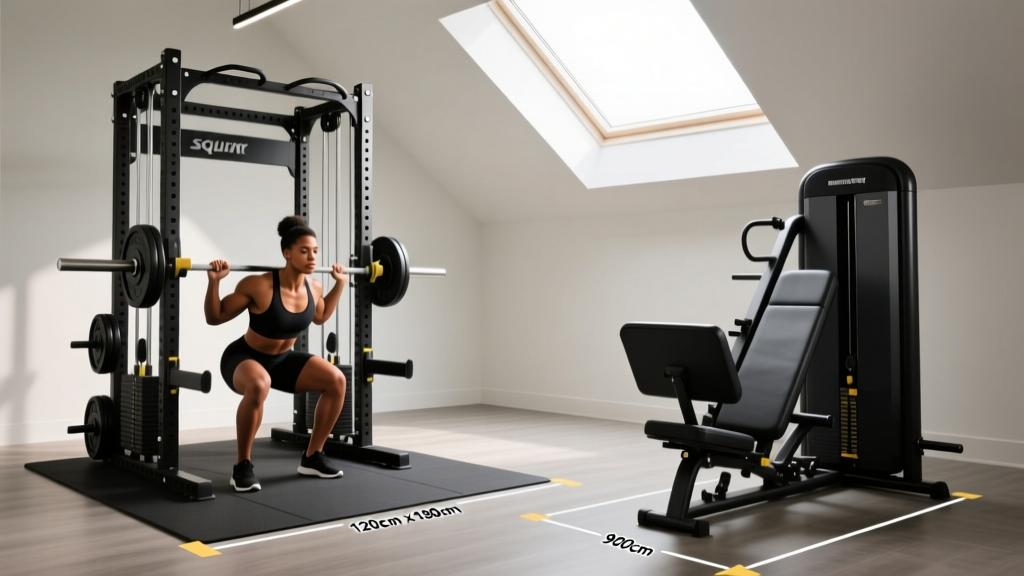
Optimizing Gym Layouts: Squat Racks & Leg Press Workout Machines

Squat Rack vs Hammer Strength Leg Press Machine Space Layouts
Matrix Leg Press Machine Weight Without Plates & Cable Leg Care
