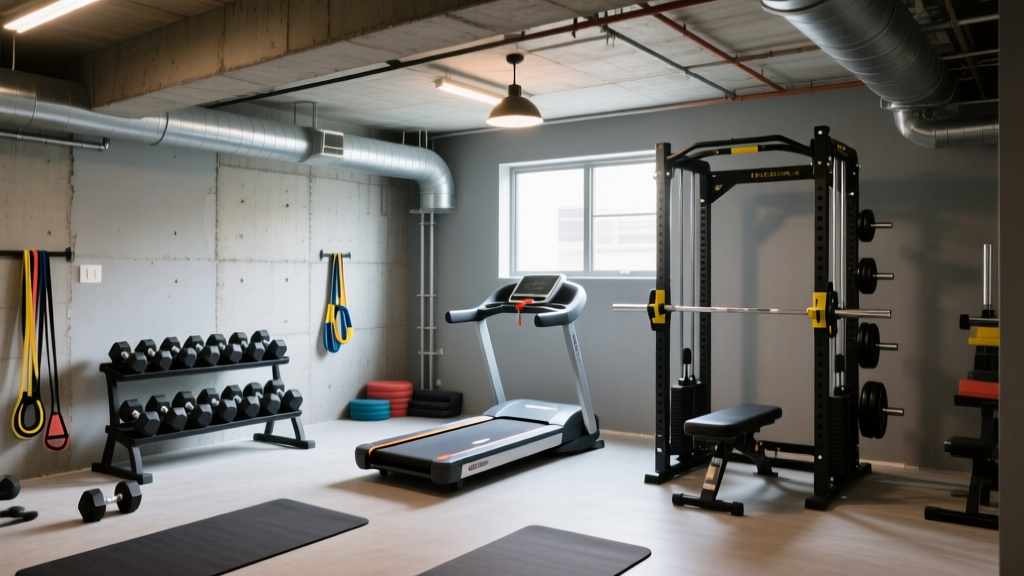
Unfinished Basement Home Gym: Budget Breakdown & Remodel Costs
Discover the true costs of building an unfinished basement home gym. Get a detailed budget breakdown, remodel tips, and value analysis for your setup.

The True Cost of an Unfinished Basement Home Gym
Transforming a raw, concrete space into a high-performance training facility is one of the most cost-effective ways to build a home gym. However, an unfinished basement home gym presents unique environmental challenges that can destroy expensive fitness equipment and compromise your health if ignored. According to the U.S. Environmental Protection Agency (EPA), basements are highly susceptible to moisture accumulation and mold growth due to the "stack effect" and ground seepage.
This comprehensive budget breakdown and value analysis will walk you through the exact remodeling costs, material specifications, and hidden failure modes of building a basement gym in 2026. We are analyzing a standard 400-square-foot footprint (e.g., 20x20 feet), which is the ideal size for a power rack, free weights, and a single piece of motorized cardio equipment.
Quick Cost Summary (400 Sq. Ft.):- Barebones (Sweat Equity): $1,200 - $1,800
- Mid-Range (Functional & Safe): $3,500 - $5,200
- Premium (Commercial-Grade Buildout): $8,000 - $12,500+
Phase 1: Moisture Control and Infrastructure (The Non-Negotiables)
Before you buy a single bumper plate, you must address the concrete slab. Bare concrete is porous and constantly wicks moisture from the soil. If you place rubber flooring directly on an unsealed basement floor, you will trap moisture, leading to concrete spalling, mildew, and a ruined subfloor.
The Vapor Barrier and Sealing Protocol
For a budget-friendly but highly effective moisture barrier, apply a penetrating silane-siloxane concrete sealer (like RadonSeal or Ghostshield). This costs approximately $0.25 to $0.40 per square foot. For the walls, the U.S. Department of Energy recommends rigid foam insulation (XPS) rather than fiberglass batts, which trap moisture and harbor mold.
| Material / Service | Specification | Estimated Cost | Value Rating |
|---|---|---|---|
| Concrete Sealer | Silane-Siloxane Penetrating | $100 - $160 | Essential |
| Wall Insulation | 1.5" XPS Rigid Foam Board | $350 - $500 | High Value |
| Dehumidifier | 50-Pint Energy Star (e.g., Midea) | $250 - $320 | Essential |
| Continuous Drainage | Vinyl tubing to floor drain/sump | $20 - $40 | High Value |
Phase 2: Subfloor and Flooring Systems
The biggest mistake DIYers make when building an unfinished basement home gym is laying 3/4-inch horse stall mats directly onto the concrete. While vulcanized rubber mats (like those from American Made Mats or Tractor Supply) are the gold standard for impact absorption, they must be elevated.
The Subfloor Decision Matrix
- The Budget Route (Plywood Sleepers): Lay pressure-treated 2x4s on edge every 16 inches, cover with 3/4-inch tongue-and-groove plywood, and top with rubber mats. Cost: ~$1.80/sq ft. Risk: Reduces ceiling height by 1.5 inches and requires extensive cutting.
- The Premium Route (Modular Subfloor Tiles): Products like DRIcore Subfloor panels feature an OSB top layer bonded to a high-density polyethylene moisture barrier base. Cost: ~$3.50 - $4.50/sq ft. Benefit: Allows airflow, provides thermal insulation, and levels minor concrete imperfections.
Expert Insight: If your basement ceiling is already close to the 7-foot minimum building code requirement, skip the plywood sleeper system. Use a thin 2mm EVA foam underlayment beneath your 3/4" rubber mats to provide a micro-barrier against moisture without sacrificing critical overhead clearance for pull-ups and Olympic lifts.
Phase 3: Electrical, Lighting, and Climate
Basements typically lack sufficient lighting and dedicated electrical circuits. Running a 15-amp shared circuit to a motorized treadmill (which draws 12-15 amps at peak incline) and a space heater will trip the breaker mid-workout.
Electrical and Lighting Specifications
According to the National Fire Protection Association (NFPA 70 / National Electrical Code), heavy-draw appliances require dedicated circuits. You must hire a licensed electrician to pull a dedicated 20-amp circuit specifically for your cardio zone. Expect to pay between $500 and $850 for this upgrade, depending on the distance from your main panel.
For lighting, abandon the single 60-watt bulb in the center of the room. You need 50 to 75 lumens per square foot for safe lifting. For a 400-square-foot space, you need roughly 20,000 to 30,000 total lumens. Install four to six 4-foot LED wraparound shop lights (4000K to 5000K daylight temperature) directly over the lifting platform and rack area. Avoid placing lights directly above the bench press to prevent blinding glare during lifts.
The 400-Square-Foot Budget Breakdown (2026 Pricing)
Below is a realistic value analysis of what it costs to properly remodel a 400-square-foot unfinished basement into a functional gym space, excluding the cost of the actual fitness equipment.
| Remodel Category | Barebones ($) | Mid-Range ($) | Premium ($) |
|---|---|---|---|
| Moisture & Insulation | $150 (Sealer only) | $600 (Sealer + XPS walls) | $1,800 (Full waterproofing + framing) |
| Subfloor & Flooring | $450 (Mats on concrete) | $1,200 (Plywood sleeper + mats) | $3,200 (DRIcore + rolled rubber) |
| Electrical Upgrades | $0 (Use existing) | $650 (1x 20-amp dedicated) | $2,500 (Panel upgrade + multiple circuits) |
| Lighting | $120 (Clamp lights) | $400 (LED wraparound panels) | $1,500 (Recessed LED + dimmers) |
| Climate & Air Quality | $250 (Portable dehumidifier) | $800 (Dehumidifier + exhaust fan) | $2,500 (Mini-split HVAC system) |
| Walls & Mirrors | $100 (Painted block) | $450 (Paint + shatterproof mirrors) | $2,000 (Drywall + wall-to-wall mirrors) |
| TOTAL REMODEL COST | $1,070 | $4,100 | $13,500 |
Hidden Costs and Remodeling Failure Modes to Avoid
When planning your unfinished basement home gym, budget for the edge cases that derail projects. Failing to account for these will result in damaged gear or unusable spaces.
- The Sump Pump Failure: If your basement relies on a sump pump to stay dry, a power outage during a heavy storm will flood your gym, ruining thousands of dollars of equipment. Solution: Budget $200-$300 for a battery-backed sump pump system or a small backup generator.
- Ceiling Clearance Miscalculations: Standard power racks are 84 to 90 inches tall. If your basement ceiling joists sit at 82 inches, you cannot safely perform pull-ups or overhead presses. Solution: Purchase a "short" rack (72-80 inches) and use shorter Olympic bars, or dig out the concrete floor (a $3,000+ endeavor).
- Acoustic Transfer: Dropping 200 lbs on a concrete basement floor creates low-frequency vibrations that travel up the foundation walls, shaking the entire house. Solution: Build a dedicated deadlift platform using layered 3/4-inch plywood and high-density crumb rubber to decouple the impact from the slab.
FAQ: Unfinished Basement Gym Remodeling
Do I need a building permit for a basement gym?
If you are simply laying down interlocking mats and bringing in freestanding equipment, no permit is required. However, if your remodel involves pulling new electrical circuits, framing walls, adding HVAC, or altering plumbing, your local municipality will require permits and inspections to ensure compliance with building codes.
What is the best flooring for an uneven concrete basement floor?
Do not use thin interlocking foam or PVC tiles on uneven concrete; they will separate under heavy loads. Use a modular subfloor system like DRIcore to bridge minor dips and cracks, then top it with 3/4-inch vulcanized rubber mats. For severe slopes (greater than 1 inch over 10 feet), you must use self-leveling concrete compound before installing any flooring.
How do I stop my basement gym from smelling like a locker room?
Basements lack natural cross-ventilation. Install a high-CFM inline exhaust fan vented directly to the exterior to pull out stale air and humidity. Pair this with a commercial-grade HEPA air purifier (like the Coway Airmega or Alen BreatheSmart) to capture airborne chalk dust and neutralize sweat odors.
More gear to consider
All reviews
Small Space Pacific Fitness Home Gym: Apartment Setup Guide

Great Home Gym Ideas: Complete Setup & Floor Plans

BioForce Home Gym vs. Cable Machines: 2026 Remodel Guide
Building a Home Gym: How Much Weight You Actually Need

Home Gym Basics: Step-by-Step Setup and Floor Plan Guide
