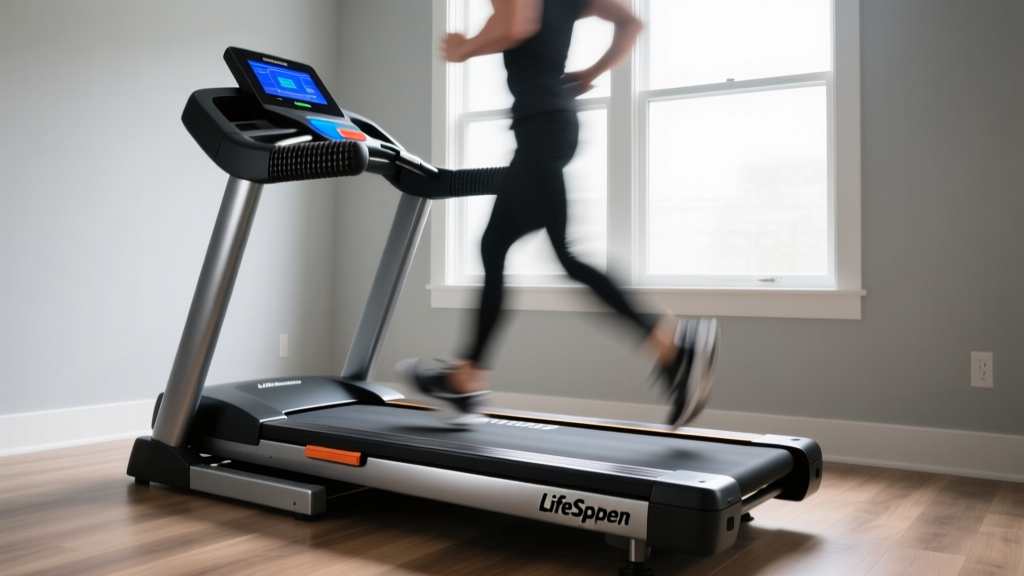
True M50 Treadmill Review: Top Folding Pick for Small Spaces
Discover if the True M50 treadmill is the best folding treadmill for small spaces in 2026. We analyze its footprint, motor, and market value.

The 2026 Micro-Gym Trend: Why Premium Folding Treadmills Are Surging
The home fitness landscape has shifted dramatically over the last few years. While the early 2020s saw a rush for ultra-cheap under-desk walking pads and flimsy budget folders, the 2026 market is defined by a demand for 'micro-gym' premiumization. Urban dwellers and suburban homeowners alike are rejecting the false economy of sub-$1,000 treadmills that break down within 18 months. Instead, the focus is on commercial-grade durability packed into a collapsible footprint. According to industry analyses tracked by Consumer Reports, buyers are increasingly willing to pay a premium for folding mechanisms that do not compromise on motor size or belt length.
Enter the True M50 treadmill. Manufactured by True Fitness, a brand with deep roots in commercial health club equipment, the M50 is positioned as a high-end folding treadmill for small spaces. But does its spatial efficiency actually hold up in a real-world apartment or tight home gym? In this comprehensive review and market analysis, we dissect the True M50's engineering, spatial footprint, and long-term viability to determine if it earns its premium price tag.
True M50 Treadmill: Specifications and Spatial Footprint
To evaluate any folding treadmill for small spaces, we must look past the marketing brochures and examine the raw geometry. The True M50 is not a 'compact' treadmill in the sense of a walking pad; it is a full-sized running machine that happens to fold. Here is the exact data you need to plan your floor space.
| Specification | True M50 Metric | Small Space Implication |
|---|---|---|
| Unfolded Dimensions | 78" L x 32" W x 56" H | Requires a dedicated 6.5 ft x 3 ft rectangle during use. |
| Folded Dimensions | 36" L x 32" W x 70" H | Folds vertically; reduces length by over 50%, but height increases. |
| Machine Weight | 285 lbs | Heavy enough to be stable, but requires two people or careful leverage to move. |
| Motor | 3.0 HP Continuous Duty | Commercial-grade cooling; prevents overheating in enclosed, poorly ventilated rooms. |
| Running Surface | 20" x 55" | Adequate for most, but tall runners (over 6'1") may feel constrained. |
| User Weight Capacity | 300 lbs | Robust steel frame typical of non-folding commercial units. |
The 'Small Space' Reality Check: Clearance and Swing Radius
The most common edge-case failure when buying a folding treadmill is ignoring the 'swing radius' and ceiling clearance. When the True M50 is folded, its height reaches 70 inches (5'10"). If you plan to store it in a closet or under a sloped attic ceiling, you must verify vertical clearance. Furthermore, the hydraulic folding mechanism requires a 3-foot clearance behind the machine to safely lower the deck without striking than hitting a wall or furniture. Runner's World consistently advises buyers to measure their ceiling height and rear-wall clearance before purchasing any vertical-folding treadmill, a rule that strictly applies to the M50.
Performance vs. Compromise: Does Folding Mean Weaker?
Historically, the trade-off for a folding hinge was a weaker motor and a shorter, narrower belt. The True M50 actively fights this stigma. Equipped with a 3.0 CHP (Continuous Horsepower) motor, it matches the output of many non-folding residential models in the $3,000 tier. The 3.0 CHP rating is critical for small-space users who might be running in warmer, less ventilated rooms; a larger motor runs cooler and draws fewer amps, reducing the risk of tripping a standard 15-amp household breaker.
Expert Insight: The True M50 features the brand's proprietary SoftSelect cushioning system. Unlike static shock-absorption pads, this system uses a physical dial on the deck to adjust the firmness from 'soft' (high impact reduction) to 'firm' (road-like response). This is a rare feature in the folding market and allows multiple users in a household to customize the deck without tools.
However, the 20" x 55" belt is where the 'small space' compromise reveals itself. While 20 inches wide is standard, the 55-inch length is slightly shorter than the 60-inch belts found on premium non-folding units. If your primary user is taller than 6'1" and runs with a long stride at speeds over 7.0 MPH, the 55-inch belt will feel restrictive. For walking, jogging, and runners under 6'0", the belt is perfectly adequate.
Market Positioning: True M50 vs. Competitors in the $3K-$4K Tier
How does the True M50 stack up against other premium folding treadmills dominating the 2026 market? Below is a comparative analysis of its closest rivals based on current street pricing and spatial efficiency.
- True M50 ($3,299 - $3,799): Best for users prioritizing mechanical durability, adjustable deck cushioning, and a straightforward console without mandatory monthly subscriptions.
- Sole F85 ($2,299 - $2,499): Features a slightly longer 22" x 60" belt and a heavier 4.0 HP motor, but its folded footprint is bulkier, and the console technology feels a generation behind the M50.
- NordicTrack Commercial 1750 (Folding Variant) ($1,999 - $2,299): Wins on interactive programming and HD touchscreen integration, but requires a mandatory monthly subscription for full functionality. The frame is also noticeably lighter and more prone to lateral wobble during high-speed sprints compared to the True M50.
As noted in recent fitness equipment roundups by Forbes Health, the market is splitting between 'entertainment-first' treadmills (like NordicTrack) and 'performance-first' treadmills (like True and Sole). The M50 firmly sits in the latter camp, appealing to purists who want a machine that simply runs flawlessly without needing a Wi-Fi connection.
Known Failure Modes and Long-Term Maintenance
No treadmill is immune to wear, and folding models have specific mechanical vulnerabilities. Based on long-term service data and technician reports, here are the edge cases and maintenance requirements for the True M50:
⚠️ Warning: The Ribbon Cable Pinch Point
The most frequently reported user-induced failure on the M50 involves the console ribbon cable. This cable runs through the upright hinge to connect the lower motor control board to the display. If the treadmill is folded or unfolded too aggressively, or if the safety latch is bypassed, the cable can pinch against the steel hinge bracket. Over time, this causes micro-tears in the wiring, leading to console flickering or total power loss to the screen. Actionable Advice: Always use two hands to guide the upright down slowly, and never let the hydraulic strut 'slam' the deck into the locked position.
Hydraulic Strut Degradation: The M50 uses a heavy-duty hydraulic piston to assist with lifting the 150+ lb deck. While robust, hydraulic struts naturally lose pressure over 5 to 7 years of daily use. If the deck becomes too heavy to lift manually, the strut can be replaced for roughly $80 to $120, a standard maintenance cost for any folding treadmill.
Lubrication Schedule: Despite the 'maintenance-free' wax-infused belts marketed by some competitors, the M50's belt requires 100% silicone lubricant every 150 miles or every 3 months (whichever comes first). Neglecting this in a small, dry, climate-controlled apartment will cause the deck to overheat and void the warranty.
Final Verdict: Who Should Buy the True M50?
The True M50 treadmill is not a budget space-saver; it is a commercial-grade running machine engineered to collapse when not in use. It commands a premium price (typically hovering around $3,499 at authorized dealers), but it justifies this cost through its 3.0 CHP motor, adjustable SoftSelect cushioning, and rock-solid steel frame that eliminates the side-to-side wobble common in cheaper folders.
✅ The Ideal Buyer Profile
- The Urban Professional: You live in a condo or apartment where the treadmill must be folded away after morning runs, but you refuse to sacrifice motor power and stability.
- The Joint-Conscious Runner: You need the SoftSelect dial to customize deck firmness for recovery days versus speedwork.
- The Subscription Skeptic: You want a premium machine with built-in HRC (Heart Rate Control) and standard programs without being locked into a $39/month mandatory app ecosystem.
Skip it if: You are taller than 6'2" (the 55" belt will frustrate you), or if your ceiling clearance is under 72 inches, preventing safe vertical storage.
More gear to consider
All reviews
Walking Pad Setup Guide & ProForm Treadmill Troubleshooting Tips

Reebok Treadmill Belt Maintenance: Optimizing Room Layout

Treadmill Workout to Lose Belly Fat: Belt Maintenance & Cost Analysis

How Much Time on Treadmill Is 10k Steps vs. Stair Climber Guide

Elliptical vs Treadmill: 12-3-30 Routine & How Many Days a Week?