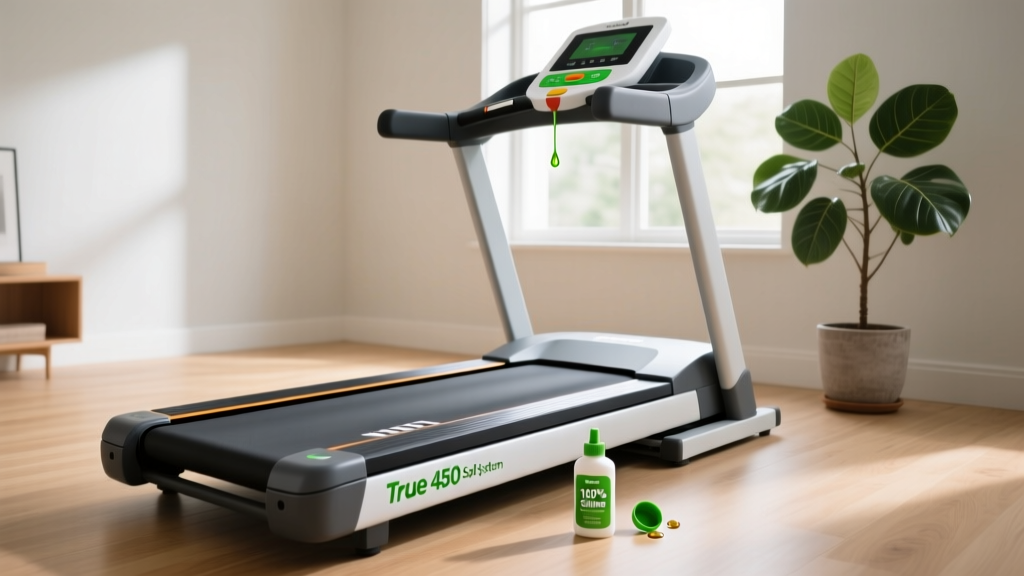
True 450 Soft System Treadmill Belt Maintenance & Lube Guide
Master True 450 Soft System treadmill belt maintenance. Learn exact tension specs, 100% silicone lubrication steps, and how to prevent motor failure.

Preserving a Legacy: True 450 Soft System Belt Care in 2026
The True 450 Soft System treadmill remains a legendary piece of home cardio equipment. Renowned for its proprietary elastomer cushioning and heavy-duty continuous horsepower (CHP) motors, this machine was built to last. However, as we navigate the fitness landscape in 2026, many original owners are finding that replacement parts for legacy True Fitness models are becoming increasingly scarce following the brand's corporate restructuring. This reality makes proactive, meticulous maintenance not just a recommendation, but an absolute necessity.
At the heart of the machine's longevity is the running belt and deck interface. Neglecting your true 450 soft system treadmill belt maintenance leads to excessive friction, which triggers a cascade of expensive failures—from burnt-out motor control boards to permanently grooved phenolic decks. This comprehensive guide provides the exact specifications, tensioning protocols, and lubrication procedures required to keep your machine running flawlessly.
⚠️ Critical Warning: The Petroleum Prohibition
Never use WD-40, 3-in-One oil, or any petroleum-based lubricant on your treadmill belt. Petroleum products will chemically dissolve the phenolic resin coating on the True 450's deck, turning it into a sticky, unusable mess within 48 hours. According to equipment repair experts at The Treadmill Doctor, petroleum-induced deck ruin is the number one cause of premature treadmill death. Only use 100% pure silicone treadmill lubricant.
The Biomechanics of the Soft System Deck
Unlike standard slat-belt or rigid-deck treadmills, the True 450 utilizes a specialized cushioning system designed to reduce joint impact by up to 30%. This system relies on a precise coefficient of friction between the belt and the deck. If the belt is over-tensioned, it compresses the elastomer bumpers beneath the deck, effectively neutralizing the 'Soft System' shock absorption and transferring that kinetic energy directly into your knees and the machine's frame.
Conversely, an under-tensioned or under-lubricated belt causes the motor to work harder. A healthy True 450 motor should draw between 4 to 6 amps under a 175-pound user load. If friction increases due to poor maintenance, amp draw can spike above 12 amps, eventually tripping the thermal cutoff or frying the PWM (Pulse Width Modulation) motor controller—a part that now costs upwards of $280 on the secondary market.
Step-by-Step Belt Tension and Alignment Protocol
Before applying any lubricant, you must ensure the belt is properly tensioned and centered. An off-center belt will fray against the side rails, destroying the seam binding.
- The Deflection Test: Turn off and unplug the treadmill. Stand beside the machine and lift the running belt from the center of the deck. You should achieve exactly 2 to 3 inches of vertical lift. If it lifts higher than 3 inches, it is too loose. If you cannot lift it 2 inches, it is over-tensioned.
- Locate the Adjustment Bolts: Move to the rear of the treadmill. The True 450 typically utilizes 8mm hex bolts on the left and right end caps of the rear roller.
- Adjusting Tension: Using an 8mm Allen wrench, turn both the left and right bolts clockwise by exactly one-quarter (1/4) turn to tighten, or counter-clockwise to loosen. Never adjust one side more than the other when setting tension.
- Centering the Belt: Plug the machine in and start it at 3.0 MPH. If the belt drifts to the left, turn the left rear bolt clockwise by 1/8th of a turn. If it drifts right, adjust the right bolt. Allow the belt to run for 30 seconds between micro-adjustments to let the tracking settle.
Deep-Dive: Lubricating the True 450 Belt
Proper lubrication reduces the friction coefficient, protecting both the deck and the motor. While some modern treadmills feature maintenance-free belts, the True 450 requires manual silicone application.
Materials Needed
- 100% pure liquid silicone treadmill lubricant (avoid aerosol sprays, as the propellants can degrade rubber)
- Microfiber towels
- A vacuum with a crevice tool
The Application Procedure
- Clean the Deck Edge: Use the vacuum crevice tool to remove dust, pet hair, and debris from under the belt edges and inside the motor hood. Debris trapped under the belt acts like sandpaper on the deck.
- Loosen the Belt (Slightly): Loosen the rear roller bolts by two full turns to create slack, allowing you to lift the belt easily.
- Apply the Silicone: Lift the left edge of the belt and squeeze a continuous 1/2-inch wide line of liquid silicone down the center-left of the deck, stopping about 12 inches from the front and rear rollers. Repeat on the right side. You should use approximately 1/2 ounce of silicone total.
- Re-Tension and Spread: Re-tighten the rear bolts to your previous setting (restoring the 2-3 inch deflection). Turn the treadmill on to 2.0 MPH and walk on it slowly for 3 minutes. Your body weight will press the belt into the deck, spreading the silicone evenly across the phenolic surface.
"The biggest mistake owners make is overlubricating. Flooding the deck with excess silicone causes it to seep onto the walking surface, creating a dangerous slip hazard, and can drip onto the drive motor, attracting dust that ruins the motor's internal cooling fan."
— Senior Fitness Equipment Technician, ACE Certified
Maintenance Schedule & Cost Avoidance Matrix
Adhering to a strict maintenance schedule is the most cost-effective way to manage legacy cardio equipment. Below is a data-driven matrix outlining the financial impact of neglect versus proactive care for the True 450.
| Maintenance Task | Frequency | Tool / Supply | Cost if Ignored (Est.) |
|---|---|---|---|
| Belt Lubrication | Every 150 miles / 3 months | 100% Liquid Silicone | $280 (Motor Control Board) |
| Tension & Alignment Check | Monthly | 8mm Allen Wrench | $140 (Replacement Belt) |
| Deck Inspection | Annually | Flashlight / Hand feel | $190 (Phenolic Deck) |
| Motor Hood Vacuuming | Every 60 days | Vacuum crevice tool | $450+ (Drive Motor Burnout) |
Troubleshooting Common True 450 Belt Issues
Even with meticulous care, aging components can present specific failure modes. Here is how to diagnose and address the most common True 450 belt anomalies.
1. Belt Slippage Underfoot
Symptom: When you plant your foot heavily during a sprint or incline walk, the belt hesitates or stutters, but the front roller keeps spinning smoothly.
Diagnosis: This is almost always a tension issue, not a motor issue. The drive belt (connecting the motor to the front roller) is gripping, but the walking belt is slipping on the front roller.
Fix: Perform the deflection test. If the belt lifts more than 3 inches, tighten the rear roller bolts by 1/4 turn on each side until the 2-inch threshold is met.
2. The 'Hesitation' or 'Surge' Effect
Symptom: The treadmill speed fluctuates rhythmically, slowing down and speeding up without user input.
Diagnosis: This indicates high friction causing the motor controller to overcompensate, or a failing speed sensor. First, check your lubrication. If the deck feels dry or hot to the touch after a 10-minute walk, apply silicone. If lubrication is adequate, inspect the optical speed sensor located near the motor flywheel for dust accumulation.
3. Frayed Belt Seams
Symptom: The edges of the belt are unraveling or showing white stress marks.
Diagnosis: Chronic misalignment causing the belt to rub against the stationary side rails, or the belt has been over-tensioned, stretching the internal Kevlar/Aramid cords.
Fix: Realign the belt immediately. If the structural integrity of the seam is compromised (you can see the inner cords), the belt must be replaced. Operating a frayed belt risks it snapping mid-stride, which is a severe safety hazard.
Final Thoughts on Equipment Longevity
Owning a legacy machine like the true 450 soft system treadmill in 2026 is a testament to the enduring quality of early-2000s commercial-grade fitness engineering. By respecting the precise tension tolerances, strictly utilizing 100% silicone lubricants, and keeping the motor compartment free of debris, you can easily extend the operational life of this machine for another decade. Treat your belt and deck with care, and the Soft System will continue to protect your joints and deliver premium cardio performance for years to come.
More gear to consider
All reviews
ProForm Crosswalk Treadmill 380 vs 2026 Compact Cardio Options

NordicTrack Treadmill Models: 2026 Small-Space Folding Review
Rowing Machine Setup: Better Than Cheap Treadmills for Home

Treadmill Porn: Head-to-Head Walking Pad Comparison 2026
Folding Treadmill, Scooter, Bike: Small Space Review & Care
