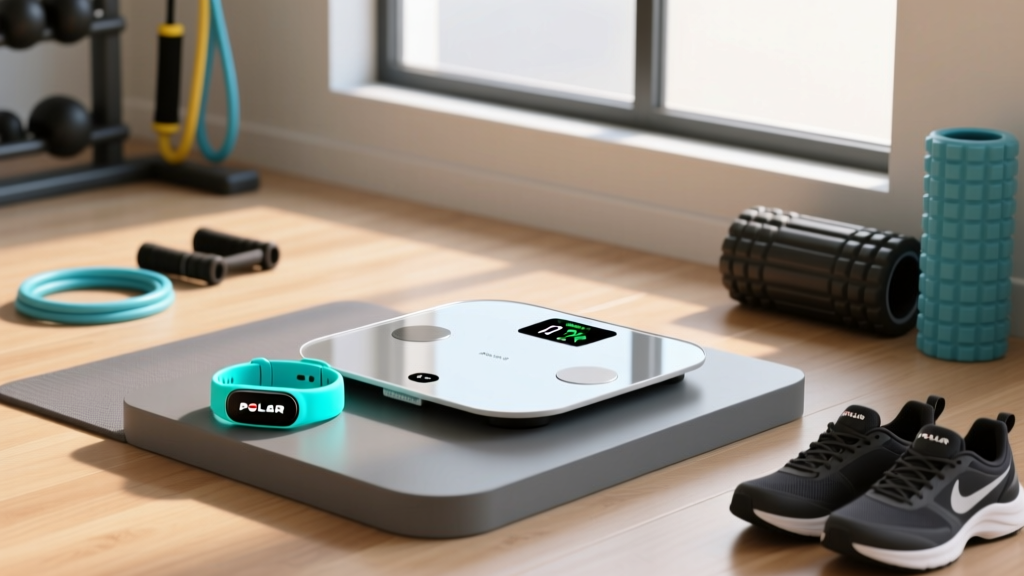
Fitness Tracker Polar Loop 2 to Smart Scale Accuracy Guide
Discover how to upgrade from the fitness tracker Polar Loop 2 and troubleshoot body composition scale accuracy issues with our 2026 expert reviews.

Beyond the Step Counter: The Biometric Upgrade Path
For many fitness enthusiasts, the fitness tracker Polar Loop 2 served as a reliable introduction to daily activity monitoring. However, as wearable technology has evolved into the 2026 era of hyper-personalized health data, basic wrist-based step counters fall drastically short of providing a complete physiological picture. Transitioning from a legacy activity band to a modern ecosystem requires integrating dedicated biometric tools—most notably, smart body composition scales. Yet, this upgrade path is fraught with user errors, sync failures, and fundamental misunderstandings of Bioelectrical Impedance Analysis (BIA). This guide addresses the most common mistakes and troubleshooting steps for achieving true body composition scale accuracy.
Expert Insight: Relying solely on BMI algorithms derived from basic wrist trackers is a critical error. True health tracking requires segmental body composition data, which measures visceral fat, skeletal muscle mass, and intracellular water—metrics that older optical sensors simply cannot capture.The Science of BIA: Common Mistakes Ruining Your Data
Smart scales operate using Bioelectrical Impedance Analysis. They send a微弱 (weak), imperceptible electrical current through your lower body to measure resistance. Because muscle contains high water content and fat contains low water content, the scale calculates your body fat percentage based on this resistance. According to the Cleveland Clinic's guide on body composition analysis, while BIA is highly effective for tracking trends, it is exquisitely sensitive to environmental and physiological variables.
Mistake 1: Measuring at the Wrong Hydration State
The most frequent troubleshooting complaint we see in user forums is wild fluctuations in body fat percentage from day to day. This is almost always a hydration error. If you weigh yourself after drinking a large glass of water, the current travels faster through the newly ingested fluid in your stomach (which the scale misinterprets as lean muscle mass), artificially lowering your body fat reading. Conversely, waking up dehydrated will spike your body fat reading.
- The Fix: Establish a strict measurement protocol. Weigh yourself immediately after waking, after using the restroom, and before consuming any food or water.
Mistake 2: Ignoring Foot Calluses and Skin Temperature
BIA requires a closed electrical circuit through the soles of your feet. Thick calluses act as electrical insulators, increasing impedance and causing the scale to overestimate body fat. Furthermore, cold feet restrict peripheral blood flow, altering conductivity.
- The Fix: If you have heavily callused heels, lightly dampen the soles of your feet with a wet towel before stepping on the scale. Ensure the scale is kept in a temperature-controlled room, not on a cold garage or basement floor.
Mistake 3: Single-Frequency vs. Multi-Frequency BIA Ignorance
Many users buy budget scales and wonder why their muscle mass readings don't align with their gym progress. Budget scales use single-frequency BIA (typically 50 kHz), which only measures extracellular water. To accurately measure intracellular water (and thus true skeletal muscle mass), you need multi-frequency BIA that penetrates cell membranes. The American Heart Association notes that precise body composition tracking is vital for cardiovascular and metabolic health assessments, making multi-frequency tools a necessary investment for serious athletes.
2026 Smart Scale Accuracy Reviews & Data Matrix
When migrating away from legacy apps like Polar Flow to modern health hubs, choosing a scale with robust API integrations and medical-grade sensors is paramount. Below is our 2026 accuracy matrix comparing the top-tier smart scales on the market.
| Scale Model | BIA Technology | Price (2026) | Key Metric Differentiator | App Ecosystem Sync |
|---|---|---|---|---|
| Withings Body Scan | Multi-Frequency (8 frequencies) | $399 | Segmental fat/muscle analysis via retractable handle | Apple Health, Garmin, Strava |
| Garmin Index S2 | Dual-Frequency | $149 | Color display with trend graphs; bone mass estimation | Garmin Connect (Native) |
| Renpho Smart Scale Pro | Single-Frequency (50 kHz) | $59 | Budget-friendly ITO glass coating; no metal nodes | Renpho Health, Apple Health |
Troubleshooting Sync and API Errors
One of the most frustrating aspects of upgrading your tech stack is data migration and sync failures. If you are moving from an older ecosystem where you may have manually logged weights alongside a fitness tracker Polar Loop 2, automated Wi-Fi syncing can present unique hurdles.
Step-by-Step Wi-Fi Handshake Troubleshooting
Smart scales are notorious for failing to connect to modern home networks. This is rarely a hardware defect and almost always a network protocol mismatch.
- Verify the 2.4GHz Band: 95% of smart scales only support 802.11b/g/n on the 2.4GHz spectrum. If your router uses a unified SSID for both 2.4GHz and 5GHz, the scale will fail to handshake. You must temporarily split your router bands or use a dedicated 2.4GHz IoT network.
- Disable WPA3 Enterprise: Most scale firmware lacks the processing overhead for WPA3 encryption. Temporarily downgrade your IoT network security to WPA2-Personal (AES) during the initial provisioning phase.
- Check MAC Address Filtering: If your network utilizes MAC address whitelisting, the scale's MAC address (found on the sticker under the battery compartment) must be added to your router's allowlist before attempting to pair via the companion app.
- API Token Refresh: If the scale connects to Wi-Fi but fails to push data to Apple Health or Garmin Connect, the OAuth token has likely expired. Force-close the companion app, navigate to Settings > Third-Party Integrations, disconnect the health hub, and re-authenticate to generate a fresh API token.
Interpreting the Data: Visceral Fat vs. Subcutaneous Fat
Once your scale is accurately calibrated and syncing, the next common mistake is misinterpreting the output. Many users panic when their overall body fat percentage remains stagnant despite intense training. This is where segmental analysis proves its worth.
"Weight is merely a measure of your relationship with gravity. Body composition is a measure of your metabolic health. A stagnant scale weight combined with a 2% drop in visceral fat and a 1.5% increase in skeletal muscle mass is a massive physiological victory, even if the mirror hasn't caught up yet."
Visceral fat (the fat surrounding internal organs) is highly metabolically active and responds quickly to cardiovascular conditioning and dietary changes. Subcutaneous fat (under the skin) is stubborn and takes longer to mobilize. High-end scales like the Withings Body Scan isolate these metrics, allowing you to troubleshoot your diet and training regimen based on actual tissue changes rather than arbitrary gravitational pull.
Final Verdict: Leaving the Legacy Tech Behind
While the fitness tracker Polar Loop 2 holds a nostalgic place in the history of wearable tech, the 2026 fitness landscape demands granular, actionable biometric data. By understanding the physiological variables that affect BIA, investing in multi-frequency hardware, and properly troubleshooting your network integrations, you can transform your daily weigh-in from a source of anxiety into a precise tool for metabolic optimization.
More gear to consider
All reviews
Jawbone UP Fitness Tracker Longevity & Sport-Specific Wearable Care

Xiaomi Mi Band 6 Fitness Tracker vs Cycling Computers: Sensor Guide
Sauna Equip Body Arms Essentials: Functional Wearables for Heat Therapy Recovery

Apple Watch Fitness Tracking Value: 2026 Budget Guide

Hume Fitness Tracker Buying Guide: Band vs Body Pod for 2026
