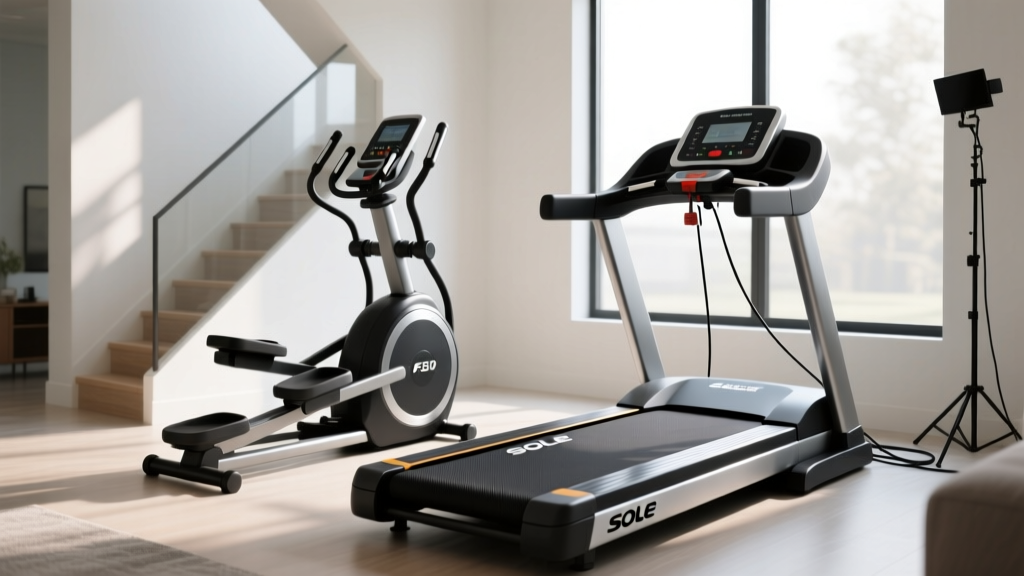
What Speed Should I Run on a Treadmill? Buyer's Pacing Guide
Discover what speed you should run on a treadmill based on your goals, and learn which motor and belt specs you need to buy to match your target pace.

Decoding Your Pace: What Speed Should I Run on a Treadmill?
When stepping onto a cardio deck, the most common question beginners and intermediate athletes ask is, "What speed should I run on a treadmill?" The answer is never a single number. Your ideal treadmill speed is dictated by your target heart rate zone, biomechanics, and specific fitness objectives. According to the American Heart Association, exercise intensity should be measured by how your heart rate responds to the workload, rather than just the digital MPH readout on the console.
However, understanding your target speed is only half the equation. As a fitness equipment reviewer, I see countless buyers purchase treadmills that are mechanically incapable of sustaining their target running speeds. A machine built for a 3.5 MPH brisk walk will violently stutter and overheat if forced to maintain an 8.0 MPH tempo run. Below, we map out the exact speed zones for your training, followed by the specific treadmill hardware specifications you must buy to support those paces safely in 2026.
The 2026 Treadmill Pacing & Heart Rate Matrix
| Training Zone | Speed Range (MPH) | Pace (Min/Mile) | RPE (1-10) | Primary Fitness Goal |
|---|---|---|---|---|
| Active Recovery / Walk | 2.5 - 3.5 MPH | 24:00 - 17:08 | 2 - 3 | Blood flow, warm-up, joint mobility |
| Fat-Burn / Brisk Walk | 3.5 - 4.5 MPH | 17:08 - 13:20 | 4 - 5 | Zone 2 cardio, lipid oxidation |
| Light Jog / Easy Run | 4.5 - 6.0 MPH | 13:20 - 10:00 | 5 - 6 | Aerobic base building, endurance |
| Tempo / Threshold Run | 6.0 - 8.0 MPH | 10:00 - 07:30 | 7 - 8 | Lactate threshold improvement |
| VO2 Max / Sprint Intervals | 8.0 - 12.0+ MPH | 07:30 - 05:00 | 9 - 10 | Anaerobic capacity, fast-twitch recruitment |
Note: The Centers for Disease Control and Prevention (CDC) recommends at least 150 minutes of moderate-intensity (brisk walking/light jogging) or 75 minutes of vigorous-intensity (tempo/sprinting) aerobic activity per week for optimal cardiovascular health.
Why Your Target Speed Dictates Your Treadmill Purchase
Knowing what speed you should run on a treadmill directly informs the Continuous Horsepower (CHP) and belt dimensions you need to look for in a buying guide. Many budget brands advertise "Peak Horsepower," which only measures the motor's maximum output for a few seconds before overheating. For sustained running, you must look at CHP.
⚠️ The Under-Powered Motor Failure Mode:If a 220 lb user runs at 8.0 MPH on a treadmill with only a 2.5 CHP motor, the motor controller (which uses Pulse Width Modulation to deliver current) will draw excessive amperage to maintain belt momentum. Within 45 minutes, the internal thermal sensor will trip, shutting the machine down to prevent a fire hazard. Over time, this degrades the drive belt and warps the motor brushes.
Hardware Comparison: Matching Specs to Your Speed Profile
Use this comparison matrix to filter treadmill features based on the speed zones you identified in the previous table.
| User Profile | Target Speed | Required Motor (CHP) | Minimum Belt Length | Top 2026 Model Recommendation | Estimated Price |
|---|---|---|---|---|---|
| Walkers / Light Joggers | Up to 5.0 MPH | 2.5 - 2.75 CHP | 55 inches | Horizon Fitness 7.4 | $999 |
| Daily Runners (Tempo) | Up to 8.0 MPH | 3.0 - 3.25 CHP | 58 inches | Sole Fitness F63 | $1,199 |
| Advanced / Sprinters | 8.0 - 12.0 MPH | 3.5 - 4.0 CHP | 60 inches | NordicTrack Commercial 1750 | $1,999 |
| Elite / Oversized Runners | 12.0+ MPH | 4.0+ CHP (AC/DC) | 62+ inches | Matrix Fitness T7xe | $3,499+ |
Biomechanics and Belt Dimensions: The Hidden Speed Factor
When researching what speed to run on a treadmill, buyers often ignore the physical space required to execute that speed safely. As your pace increases from a 5.0 MPH jog to an 8.0 MPH run, your biomechanics change drastically. Your knee drive increases, and your foot strike moves from a mid-foot landing to a forefoot strike.
"At 8.0 MPH, the average adult's stride length opens up to roughly 48 to 52 inches. If you are running on a 55-inch belt, you have less than two inches of margin for error before your heel clips the rear plastic end cap. For any speed over 7.0 MPH, a 60-inch belt is a non-negotiable safety requirement."
Real-World Testing: 2026 Top Contenders for High-Speed Running
If your goal is threshold training or sprint intervals (8.0+ MPH), here is how the top-tier machines handle high-velocity impact:
- NordicTrack Commercial 1750 (3.5 CHP): Features a 60" x 22" belt and a uniquely powerful motor controller that prevents the micro-stutters common at 10+ MPH. The -3% to 15% incline/decline allows you to simulate outdoor wind resistance, effectively increasing your effort without needing to max out the 12 MPH speed limit.
- Sole F80 (3.5 CHP): Known for its heavy-duty 130 lb frame. At high speeds, lighter treadmills experience lateral sway. The F80's welded steel uprights and 3.5 CHP motor maintain absolute belt tension stability, even for users over 250 lbs running at 9.0 MPH.
- ProForm Pro 9000 (3.6 CHP): Offers a slightly wider 20" x 60" belt and integrates automatic speed adjustments via iFIT. The motor runs remarkably cool, utilizing an advanced internal cooling fan that directs air specifically over the PWM motor controller during sustained 8+ MPH sessions.
Troubleshooting High-Speed Belt Stuttering
Even if you buy the correct treadmill for your target speed, you may eventually experience "belt stuttering"—a jerking sensation where the belt momentarily slows down underfoot and then snaps forward. This is incredibly dangerous at speeds above 7.0 MPH. Before assuming the motor is dead, perform this expert-level maintenance check:
- Test the Tension: With the machine off, lift the running belt from the center of the deck. It should rise exactly 2 to 3 inches. If it lifts higher, it is too loose.
- Check for Over-Lubrication: Many users dump liquid silicone under the belt. Excess lube creates hydroplaning between the deck and the belt, causing the roller to spin without gripping the belt. Wipe the deck clean with a microfiber towel.
- Adjust the Rear Rollers: Locate the tension bolts at the very back of the treadmill. Using the provided Allen wrench, turn both the left and right bolts exactly one-quarter turn clockwise. Pro Tip: Never adjust one side more than the other, or you will force the belt to track off-center and fray the edges against the side rails.
- Re-test at 6.0 MPH: Walk on the belt at a moderate pace. If the stuttering persists, the drive belt (connecting the motor to the front roller) may be stretched and requires replacement—a $15 part that takes 20 minutes to swap.
Final Verdict: Aligning Pace with Hardware
Ultimately, answering "what speed should I run on a treadmill" requires looking inward at your cardiovascular goals and outward at your equipment budget. If you are strictly targeting Zone 2 fat-burning walks at 3.5 MPH, a $999 compact treadmill with a 2.5 CHP motor and 55-inch belt will serve you perfectly for years. However, if you are chasing lactate threshold PRs and need to sustain 8.5 MPH tempo runs, investing in a 3.5+ CHP machine with a 60-inch commercial-grade deck is mandatory for both your safety and the longevity of the machine.
More gear to consider
All reviews
Treadmill Belt Maintenance 2026: Standard Lube vs KAT VR Treadmill

Stationary Bike Types vs GoPlus SuperFit Treadmill: 2026 Trends
The Cost Advantage of Curved Treadmill Belt Maintenance Explained
Air Bike vs Assault Bike: Better Than Treadmill Running Workouts?

Beyond Treadmill Pictures: Top Folding Models for Small Spaces 2026