How Fast Is 6.5 On A Treadmill? Curved vs Motorized Guide
Discover how fast 6.5 on a treadmill really is. This beginner guide compares hitting 6.5 MPH on motorized vs. curved manual treadmills with step-by-step tips.

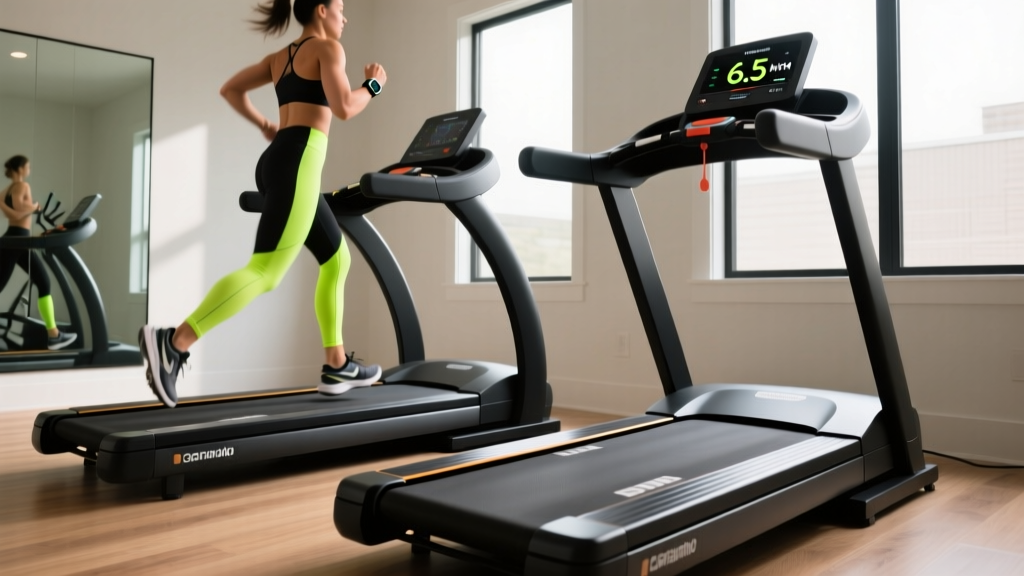
When beginners step onto a treadmill and punch 6.5 into the console, they are often met with a sudden, jarring reality. But exactly how fast is 6.5 on a treadmill? In practical terms, 6.5 miles per hour (MPH) translates to a 9-minute and 14-second mile pace. This specific speed represents the critical biomechanical threshold where a brisk, bouncy jog transitions into a dedicated, steady-state run.
However, the experience of running at 6.5 MPH changes drastically depending on the machine beneath your feet. Hitting this pace on a traditional motorized treadmill (like the Sole F80) is a fundamentally different physiological challenge than maintaining it on a curved manual treadmill (like the AssaultRunner Elite). This step-by-step guide will break down the exact metrics of a 6.5 MPH pace and teach you how to safely conquer it on both machine types.
The 6.5 MPH Baseline Metrics
- Pace: 9:14 per mile (1.53 minutes per kilometer)
- Intensity: Vigorous. The Centers for Disease Control and Prevention (CDC) classifies any treadmill pace above 5.0 MPH as vigorous-intensity aerobic activity.
- Target Heart Rate: Typically 70-85% of your maximum heart rate. The American Heart Association (AHA) recommends monitoring this zone to ensure cardiovascular safety during vigorous efforts.
- Average Cadence: 160 to 175 steps per minute (SPM).
The Biomechanics: Motorized vs. Curved Manual at 6.5 MPH
To understand how to train at this speed, you must understand the mechanical differences between the two primary treadmill categories. A motorized treadmill pulls your foot backward, requiring you only to lift and place your foot forward. A curved manual treadmill has no motor; you must actively push the belt down and back using your hamstrings and glutes.
| Metric | Motorized Treadmill (6.5 MPH) | Curved Manual Treadmill (6.5 MPH) |
|---|---|---|
| Belt Mechanics | Motor pulls belt; user keeps up. | User pushes belt; requires posterior chain engagement. |
| Metabolic Cost | Baseline (approx. 10.8 METs for 155lb runner). | +20% to 30% higher oxygen consumption and caloric burn. |
| Foot Strike | Often encourages heel-striking due to belt pull. | Naturally forces midfoot/forefoot strike on the curve. |
| Wind Resistance | Zero (requires 1% incline to simulate outdoors). | Simulated by the physical effort of moving the heavy belt. |
Step-by-Step: Safely Reaching 6.5 MPH on a Motorized Treadmill
For beginners using a motorized model like the Horizon 7.4 or NordicTrack Commercial 1750, the primary danger at 6.5 MPH is overstriding. Because the belt pulls you, it is easy to reach your foot too far forward, acting as a braking mechanism that sends shockwaves up your shins.
- The 1% Incline Rule (Minutes 0-3): Start your warm-up at 3.5 MPH, but immediately set the incline to 1.0%. Biomechanical studies show that a 1% incline on a motorized treadmill accurately offsets the lack of wind resistance, simulating outdoor running mechanics and preparing your Achilles tendon for the load.
- Cadence Calibration (Minutes 3-6): Bump the speed to 5.5 MPH. Do not focus on your stride length; focus on your stride frequency. Count your steps for 30 seconds and multiply by two. Aim for 80-85 steps per minute per foot. This high cadence prevents the dangerous heel-strike overstriding.
- The 6.5 Transition (Minutes 6-10): Increase the speed to 6.5 MPH. Keep your torso upright with a slight forward lean from the ankles, not the waist. Your arms should drive forward and back, not across your chest, to counterbalance the leg drive.
- Sustaining the Pace (Minutes 10+): Fix your eyes on a point straight ahead. Looking down at the console alters your cervical spine alignment and restricts oxygen intake. Trust your peripheral vision to monitor the speed dial.
Step-by-Step: Tackling 6.5 MPH on a Curved Manual Treadmill
Curved treadmills like the AssaultRunner Elite ($3,299) or the TrueForm Runner ($5,495) do not have speed buttons. You are the motor. Hitting and holding exactly 6.5 MPH requires spatial awareness and precise foot placement on the curve.
- Posture and Placement: Step onto the treadmill and stand in the lowest part of the curve (the 'saddle'). Stand tall, engaging your core. Hold the front handles only for initial balance; you must release them to run properly.
- The Push-Off Phase: Begin walking, pushing the ball of your foot down and back into the slats. The further up the front curve you place your foot, the faster the belt will accelerate. To reach 6.5 MPH, you will need to drive your knees higher and push aggressively into the upper-mid section of the curve.
- Locking in the Speed: Glance at the magnetic resistance console. Once you hit 6.5 MPH, shift your foot strike slightly backward toward the lowest point of the saddle. Finding this 'sweet spot' allows you to maintain the 6.5 MPH pace without continuously accelerating.
- Managing the Deceleration: On a curved treadmill, if you stop pushing, the heavy belt stops immediately. To cool down, gradually move your foot strike further back onto the rear upward curve, which acts as a natural mechanical brake.
Expert Insight: Beginners often experience rapid calf and Achilles fatigue on curved treadmills. Because the belt requires a forceful forefoot push, the calf complex works up to 30% harder than on a motorized belt. Always perform 3 minutes of dynamic calf stretches before attempting 6.5 MPH on a curved machine.
Failure Modes & Injury Prevention at 6.5 MPH
Running at a 9:14 mile pace introduces specific failure modes depending on your equipment. Recognizing these edge cases will keep you injury-free.
Motorized Failure Modes
- Shin Splints (Medial Tibial Stress Syndrome): Caused by overstriding and heavy heel-striking as the belt pulls the leg forward.
- IT Band Friction: Occurs if the user drifts to one side of the belt, creating asymmetrical hip loading.
- The 'Fly-Off' Effect: If a beginner loses focus and their cadence drops below the belt speed, they are pushed off the back.
Curved Manual Failure Modes
- Achilles Tendinopathy: Resulting from the constant forefoot striking and lack of heel-drop cushioning.
- Hamstring Strains: The posterior chain must actively pull the belt; cold hamstrings will tear under the sudden load of a 6.5 MPH push.
- Postural Breakdown: Leaning too far forward to generate speed causes lower back hyperextension and lumbar pain.
Which Machine Should a Beginner Choose?
If your primary goal is to comfortably learn how to sustain a 6.5 MPH pace while watching a screen or following a guided app, a motorized treadmill is the superior choice. Models in the $1,000 to $2,500 range offer excellent shock absorption (like the Sole F80's cushioned flex deck) which mitigates joint impact while you build your cardiovascular base.
However, if you are an athlete looking to maximize caloric burn, improve your sprint mechanics, and eliminate the electrical footprint of your home gym, a curved manual treadmill is unmatched. Be prepared for a steeper learning curve and a significantly higher financial investment (starting around $3,000), as well as the physical reality that 6.5 MPH on a curved machine will feel like 7.5 MPH or higher on a motorized one.
Frequently Asked Questions
Is 6.5 MPH considered running or jogging?
In the fitness industry, the transition from jogging to running is generally accepted to occur around 6.0 MPH (a 10-minute mile). Therefore, 6.5 MPH is definitively classified as a slow, steady-state run. It requires a distinct 'flight phase' where both feet are off the belt simultaneously, unlike walking or jogging.
Can a beginner run 6.5 MPH on their first day?
While a beginner might be able to sprint at 6.5 MPH for 30 seconds, sustaining it for a continuous cardiovascular workout requires weeks of tendon and ligament adaptation. Beginners should utilize interval training—alternating 1 minute at 6.5 MPH with 2 minutes at 3.5 MPH—before attempting continuous miles.
Do I need special shoes for curved manual treadmills?
Yes. Because curved treadmills force a midfoot/forefoot strike and lack the thick, padded heels of traditional running shoes, you should opt for 'low-drop' or 'zero-drop' running shoes with a wide toe box. Maximalist shoes with massive heel stacks can cause ankle instability on the curved slats.
More gear to consider
All reviews
Maintaining Stationary Bike Types & Sunny Health and Fitness Treadmill SF-T4400

Quiet Cardio: Noise Levels & Calories Burned Treadmill 30 Minutes

Walking Pad vs Treadmill: Does Elliptical Burn More Calories Than Treadmill?
Air Bike vs Assault Bike: Trading Treadmill Time for Better Value

ProForm Front Runner Treadmill Review: Best for Small Spaces?