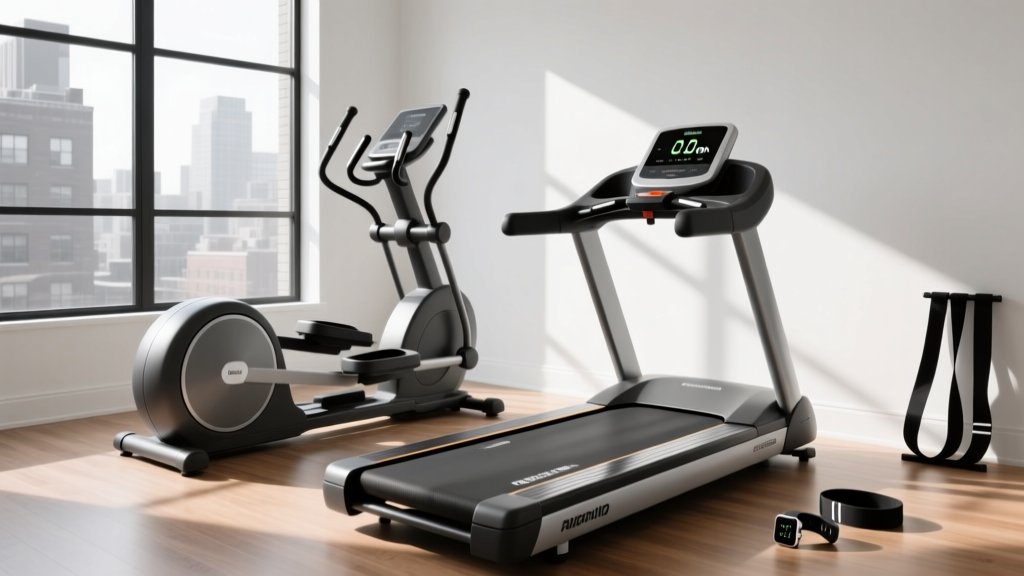
Maintaining a Treadmill for Seniors Walking: Belt Lubrication
Learn essential belt lubrication and maintenance tips for a treadmill for seniors walking. Ensure smooth, safe, and jerk-free workouts at home.

The Hidden Safety Risks of a Dry Treadmill Belt
When evaluating the best treadmill for seniors walking routines, smooth and predictable operation is absolutely non-negotiable. While most buyers focus on step-up height, handrail stability, and shock absorption, the most critical safety feature is often hidden beneath the deck: belt lubrication. A poorly maintained treadmill belt doesn't just degrade the machine; it introduces severe physical risks for older adults.
As the walking belt rubs against the wooden or composite deck without adequate silicone lubrication, kinetic friction generates immense heat. This friction forces the drive motor to work significantly harder. On a well-lubricated treadmill, a motor drawing 4 to 6 amps during a 2.5 mph walk might spike to 12 to 15 amps when the deck is dry. Eventually, the motor's internal thermal breaker will trip to prevent a fire, causing the treadmill to stop abruptly without warning.
⚠️ Fall Risk Alert: According to the National Institute on Aging (NIA), sudden changes in momentum or environmental stability are primary catalysts for falls in older adults. An unexpected thermal shutoff or a 'jerky' belt hesitation can easily compromise the balance of a senior walker, leading to severe injuries.To ensure your home cardio equipment remains a safe haven rather than a hazard, mastering belt maintenance and lubrication is essential. This guide provides a comprehensive, expert-level protocol for keeping your treadmill deck frictionless and your workouts uninterrupted.
Diagnostic Matrix: Is Your Belt Dry, Loose, or Worn?
Before applying lubricant, you must accurately diagnose the issue. Not all belt anomalies are caused by a lack of silicone. Use the diagnostic matrix below to pinpoint the exact failure mode affecting your machine.
| Symptom Observed | Root Cause | Required Action |
|---|---|---|
| Belt hesitates or 'stutters' underfoot when stepping down. | Loose belt tension; slipping on the front drive roller. | Tighten rear roller adjustment bolts (1/4 turn each). |
| Motor sounds strained; belt stops suddenly mid-walk. | Excessive deck friction due to dried-out lubricant. | Apply 100% silicone treadmill lubricant immediately. |
| Belt drifts consistently to the left or right edge. | Misaligned rear roller or uneven floor leveling. | Adjust rear tension bolts asymmetrically to re-center. |
| Visible fraying on belt edges; deck feels rough underneath. | End-of-life belt and deck wear (usually past 5-7 years). | Replace both the walking belt and the underlying deck. |
Selecting the Correct Lubricant (And What to Avoid)
The chemical composition of your lubricant dictates the lifespan of your treadmill. The fitness equipment industry universally mandates 100% pure silicone for PVC and rubber walking belts. Silicone provides a high-viscosity, non-evaporating barrier that withstands the continuous heat generated by low-speed, high-weight walking.
Approved Lubricants
- Spot On Treadmill Lubricant: A highly rated, 100% silicone liquid with an angled applicator tube ($14 - $18). Ideal for reaching the center of the deck without fully removing the belt.
- Horizon Fitness 3-Pack Silicone Oil: OEM-approved by one of the top brands for senior-friendly treadmills like the Horizon T101. Comes in pre-measured 0.5 oz squeeze bottles ($15).
- Godora Treadmill Belt Lubricant: Features a specialized hose attachment that threads directly into the belt gap, ensuring even distribution across the entire walking surface ($12).
The WD-40 Warning
Never use standard WD-40, 3-in-One oil, or any petroleum-based lubricants. Petroleum distillates will chemically react with the rubber compounds in the walking belt, causing it to stretch, warp, and ultimately disintegrate. Using petroleum products will also void the manufacturer's warranty on almost every major brand, including NordicTrack, ProForm, and Sole Fitness.
The 6-Step Belt Lubrication Protocol
For seniors relying on a treadmill for seniors walking daily, maintenance should be a precise, measured process. Follow this exact procedure to ensure optimal distribution without over-saturating the deck.
- Power Down and Secure: Turn off the master power switch (usually located near the floor base) and unplug the machine from the wall. Remove the safety key to prevent accidental startup.
- Loosen the Belt Tension: Using the correct Allen wrench (typically 5mm or 6mm), turn the left and right rear roller adjustment bolts counter-clockwise. Count the exact number of turns (e.g., 3 full turns) so you can return them to their original tension later. You should be able to slide your hand comfortably under the belt.
- Apply the Silicone: Lift the belt on one side and insert the applicator tube as close to the center of the deck as possible. Squeeze exactly 0.5 ounces (half a standard bottle) in a zigzag pattern. Repeat on the opposite side with another 0.5 ounces. Do not exceed 1 ounce total; excess silicone will leak out the sides and create a slipping hazard on your floor.
- Distribute the Lubricant: Pull the belt toward you manually, rotating the entire belt loop to spread the silicone evenly across the deck. Use your hand on the outside of the belt to press the liquid outward toward the edges.
- Restore Tension: Tighten the rear roller bolts clockwise, matching the exact number of turns you counted in Step 2.
- The Walk-Test: Plug the machine back in. Start the treadmill at 1.0 mph and walk on it for 3 minutes. This allows the heat and movement to bond the silicone to the deck and belt backing. Increase to 3.0 mph and observe for any edge-drifting.
Calibrating Belt Tension for Older Walkers
Proper belt tension is uniquely important for older adults. If the belt is too tight, it creates excessive rolling resistance, which can strain the user's Achilles tendons and knees, while simultaneously overloading the motor. If it is too loose, the belt will slip underfoot during the push-off phase of the walking gait, creating a severe fall hazard.
💡 The 3-Inch Rule: With the treadmill turned off, reach into the center of the walking belt (midway between the front and rear rollers) and lift it straight up. The belt should lift exactly 2 to 3 inches off the deck. If it lifts higher than 3 inches, it is too loose. If it resists lifting past 1.5 inches, it is over-tensioned.For heavier users or those utilizing a treadmill with a narrower 18-inch belt width, aim for the lower end of the spectrum (2 inches) to prevent lateral slipping during wider stances.
Establishing a Longevity Maintenance Schedule
A reactive approach to treadmill maintenance leads to premature motor failure and deck warping. The Consumer Reports treadmill buying and maintenance guidelines emphasize that proactive care drastically extends the life of the machine's electronics and moving parts. Use the schedule below based on your weekly walking volume.
| Weekly Walking Volume | Lubrication Interval | Tension & Alignment Check | Deck Inspection |
|---|---|---|---|
| Under 3 hours / week | Every 12 months | Every 6 months | Annually |
| 3 to 6 hours / week | Every 6 months | Every 3 months | Every 12 months |
| Over 6 hours / week | Every 3 months (or 130 miles) | Monthly | Every 6 months |
Summary: Protecting Your Investment and Your Health
Key Takeaways for Senior Treadmill Maintenance
- Safety First: A dry belt causes motor thermal shutoffs, leading to sudden stops that increase fall risks for older adults.
- Chemistry Matters: Only use 100% pure silicone lubricant. Never use petroleum-based sprays like WD-40.
- Precision Application: Apply exactly 0.5 oz per side (1 oz total) directly to the center of the deck.
- Tension Calibration: Ensure the belt lifts 2 to 3 inches at the midpoint to balance joint comfort with motor efficiency.
By integrating these belt lubrication and maintenance protocols into your home gym routine, you ensure that your treadmill for seniors walking remains a reliable, joint-friendly, and exceptionally safe tool for cardiovascular longevity in 2026 and beyond.
More gear to consider
All reviews
Treadmill Motor Guide: Picking the Right CHP for Free Treadmill Apps

Budget Folding Treadmills: 10 Incline on Treadmill in Degrees

Elliptical Machine vs Treadmill: Setup & Feature Guide

Virtuix Omni One Treadmill vs Standard: Belt Maintenance Cost Analysis

Walking Pad vs Assault Treadmill: A Beginner's Step-by-Step Guide