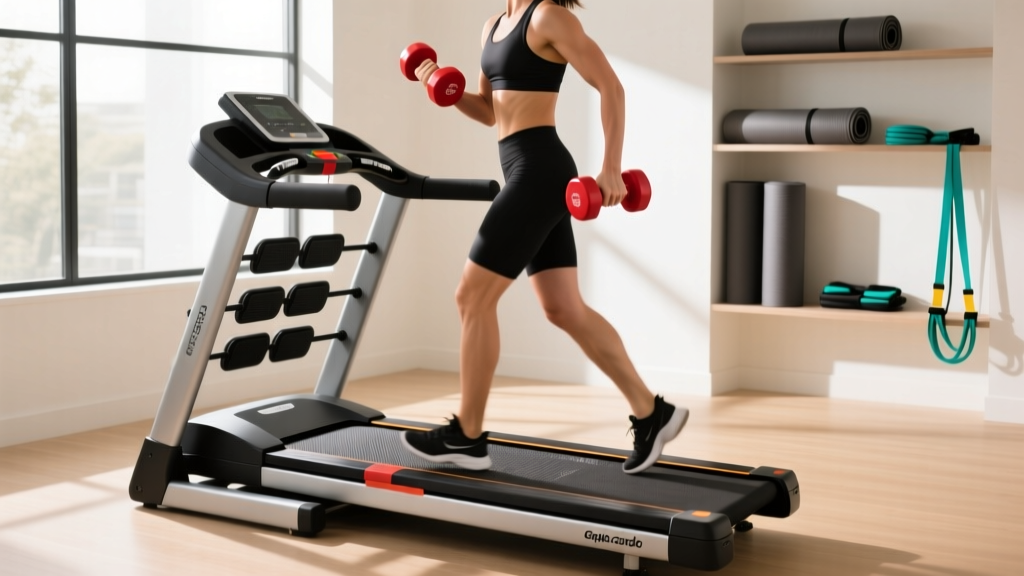
Treadmill Running Advice: Comparing Cardio Machine Noise Levels
Discover essential treadmill running advice for beginners, including a step-by-step guide and decibel comparison of the quietest home cardio machines.

The Beginner's Guide to Quiet Home Cardio
Setting up a home gym in an apartment, condo, or shared living space presents a unique challenge: acoustics. When searching for the best treadmill running advice, most beginners focus entirely on pace, incline, and heart rate zones. However, managing the acoustic footprint of your workout is just as critical for long-term consistency. A machine that annoys your neighbors or wakes up your family will quickly become an expensive clothes rack.
This step-by-step guide breaks down the science of cardio machine noise, compares the decibel (dB) output of popular equipment, and provides actionable, expert-level treadmill running advice to keep your workouts effective and whisper-quiet.
Step 1: Understanding Cardio Machine Decibel (dB) Levels
Before comparing machines, you must understand how sound is measured. The decibel scale is logarithmic, meaning an increase of just 10 dB is perceived by the human ear as being twice as loud. According to the Environmental Protection Agency (EPA), prolonged exposure to indoor noise above 70 dB can cause hearing fatigue and significant stress, while normal conversation sits comfortably around 60 dB.
When evaluating cardio equipment, noise comes from two distinct sources: mechanical/motor noise (the whir of the flywheel or belt) and impact/structure-borne noise (the physical thud of your feet or the machine vibrating against the floor).
Cardio Machine Noise Comparison Matrix
| Machine Type | Motor/Mechanical Noise | Impact/Operational Noise | Total Peak dB | Apartment Friendly? |
|---|---|---|---|---|
| Motorized Treadmill (3.0 CHP) | 65 - 75 dB | 75 - 85 dB (Heel Strike) | 85 dB | No (Without heavy modification) |
| Manual Curved Treadmill | 40 - 50 dB | 65 - 75 dB (Footstrike) | 75 dB | Yes (With matting) |
| Front-Drive Elliptical | 45 - 55 dB | 40 - 50 dB (Low impact) | 55 dB | Yes (Highly recommended) |
| Magnetic Upright Bike | 40 - 45 dB | 45 - 50 dB (Pedaling) | 50 dB | Yes (Virtually silent) |
| Air Bike (e.g., Rogue Echo) | 50 - 60 dB (Fan) | 75 - 85 dB (High RPM fan) | 85 dB | No (Fan noise travels far) |
| Magnetic Rower | 45 - 55 dB | 55 - 60 dB (Seat rail) | 60 dB | Yes |
Step 2: Essential Treadmill Running Advice for Noise Reduction
If a motorized treadmill is your primary goal, you must actively mitigate both motor whine and impact thuds. Here is a step-by-step protocol to silence your machine.
1. Upgrade Your Foundation (Anti-Vibration Matting)
Never place a treadmill directly on hardwood, laminate, or thin carpet. The impact of a 180-pound runner at 6 mph generates transient kinetic energy that travels straight through the floor joists.
The Fix: Purchase a 3/8-inch thick vulcanized rubber mat. Avoid cheap, low-density EVA foam puzzle mats; they compress entirely under the weight of a treadmill deck and offer zero acoustic isolation. A 4x6 foot horse stall mat (typically $50-$80 from agricultural supply stores) or a specialized 3/8-inch high-density treadmill mat (like the SuperMats 13GS) will absorb low-frequency structure-borne vibrations before they reach the subfloor.
2. Modify Your Footstrike Mechanics
Heel striking generates a sharp, high-amplitude acoustic spike with every step. This is the primary reason neighbors complain about treadmill use.
The Fix: Focus on a midfoot strike. By landing with your foot directly beneath your center of mass rather than out in front of you, you utilize your calf and Achilles tendon as natural shock absorbers. This simple biomechanical tweak can reduce impact noise by up to 40% while simultaneously lowering the risk of shin splints and knee pain.
3. Optimize Belt Tension and Lubrication
A dry or overtightened treadmill belt forces the motor to work harder, increasing mechanical whine and creating a loud 'slapping' sound against the walking board.
The Fix: Perform the 'lift test.' Unplug the machine, reach under the center of the belt, and lift. It should raise exactly 2 to 3 inches off the deck. If it is tighter, loosen the rear roller bolts by a quarter-turn. Next, apply 100% pure silicone treadmill lubricant (avoid petroleum-based products or WD-40, which will destroy the PVC belt). Apply 1 oz of silicone in a zig-zag pattern under the belt and run the machine at 2 mph for 3 minutes to distribute it evenly.
Step 3: Choosing the Right Machine for Your Specific Space
Not all living situations are created equal. Use this decision framework to match your environment with the correct cardio machine.
- Top-Floor Apartment / Concrete Subfloor: You have the luxury of impact noise isolation. A motorized treadmill (like the Sole F80, which features a heavy 3.25 CHP motor that runs cooler and quieter than cheaper 2.0 HP models) is perfectly viable here. Focus on motor noise dampening via rubber pads under the feet.
- Middle-Floor Apartment / Wood Joists: Avoid treadmills entirely. The low-frequency thud will penetrate the ceiling below. Opt for a front-drive elliptical, such as the Sole E95, which keeps your feet planted on the pedals, eliminating impact noise completely.
- Basement / Garage: Acoustic transfer is less of an issue, but ambient temperature matters. If your space is unheated in the winter, avoid machines with complex LCD touchscreens or liquid-based resistance, as cold temperatures can cause screen lag and fluid thickening. Stick to mechanical magnetic resistance bikes or manual curved treadmills.
According to the American Speech-Language-Hearing Association (ASHA), everyday household appliances like a vacuum cleaner operate at about 70 dB. If your cardio machine sounds louder than a vacuum cleaner, it is time to reassess your equipment or your soundproofing strategy.
Step 4: Implementing a Sound-Dampening Maintenance Routine
Noise levels degrade over time as machines accumulate dust, lose lubrication, and experience belt stretch. To keep your cardio equipment whisper-quiet, follow this maintenance schedule:
Weekly Maintenance
- Vacuum the Deck: Dust and pet hair get sucked into the motor compartment and under the belt, creating friction and a high-pitched whining sound. Use a vacuum hose attachment along the edges of the belt weekly.
- Wipe the Rails: If using an elliptical or rower, wipe down the seat rails and pivot arms with a damp microfiber cloth to prevent squeaking caused by dried sweat and salt buildup.
Monthly Maintenance
- Check Leveling Feet: Over time, the vibration of a machine can cause the adjustable leveling feet to loosen, creating a subtle 'click-clack' sound as the frame micro-shifts during use. Hand-tighten all four feet to ensure the frame is perfectly flush with your rubber mat.
- Inspect Pivot Bearings: On ellipticals and rowers, listen for rhythmic clicking. This usually indicates dry pivot bearings. Apply a single drop of PTFE (Teflon) based grease to the pedal arm joints.
Bi-Annual Maintenance
- Re-Lubricate the Treadmill Belt: Even with moderate use (3-4 times a week), 100% silicone lubricant breaks down and dries out every 6 months. Reapply 1 oz to prevent motor strain and belt slapping.
- Calibrate Belt Tracking: If the belt drifts to the left or right, it will rub against the plastic side guards, creating a loud, continuous squeak. Adjust the rear roller tension bolts evenly (one full turn clockwise on the side the belt is drifting toward) until it tracks perfectly center.
Frequently Asked Questions (FAQ)
Will a manual curved treadmill be quieter than a motorized one?
Yes, significantly. Because curved treadmills (like the AssaultRunner or Technogym Skillmill) lack a drive motor, they eliminate the 65-75 dB mechanical hum entirely. The only noise generated is the friction of the slat belt and your footstrike, which is easily managed with a thick rubber mat.
Can I use a thick yoga mat under my treadmill instead of a rubber mat?
No. Standard yoga mats are made of low-density PVC or TPE and are only 4mm to 6mm thick. The sheer weight of a motorized treadmill (often 150-250 lbs) combined with the dynamic load of a runner will compress the yoga mat to zero thickness within seconds, offering no acoustic or vibrational dampening. You must use high-density vulcanized rubber.
Do magnetic resistance bikes ever need lubrication?
Generally, no. The resistance mechanism on a magnetic bike (like the Peloton Bike+ or Schwinn IC4) uses magnets passing near a metal flywheel without physical contact. This makes them virtually maintenance-free and guarantees they will remain at a quiet 40-50 dB for the lifespan of the machine. Only the pedal threads and seat post may occasionally require a drop of grease to prevent creaking.
More gear to consider
All reviews
Air Bike vs Assault Bike: How to Use NordicTrack Treadmill Without iFIT
Is Running Outside Better Than Treadmill? Stair Climber Mistakes

Air Bike vs Assault Bike Space & Average Heart Rate on Treadmill

2026 Under Desk Treadmill Review: Treadmill Workout for Stamina

Spirit XT185 Treadmill Review: Home Office vs Under Desk Models