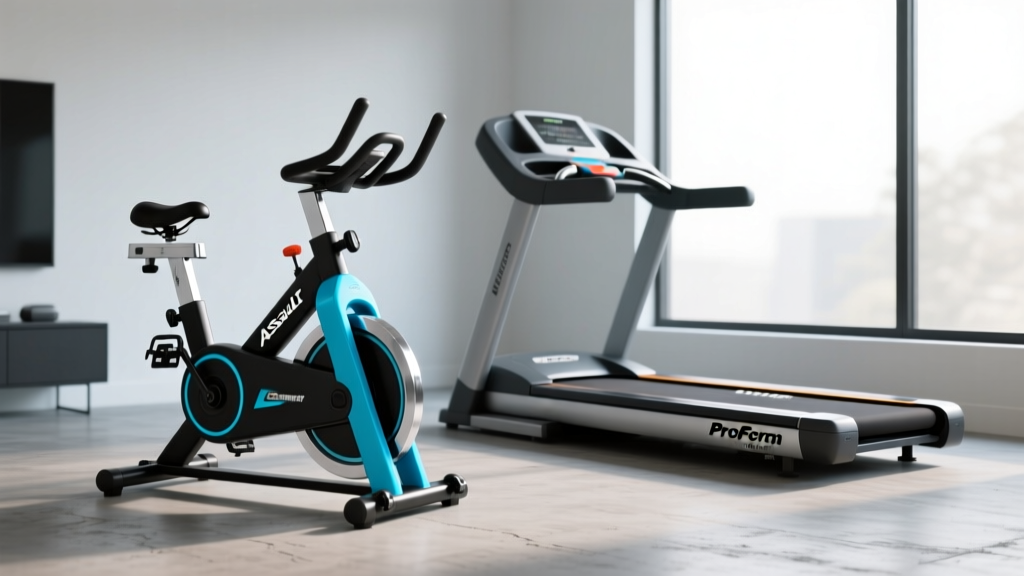
Treadmill Jacuzzi Showdown: Underwater vs Traditional Cardio
We compare premium traditional treadmills against aquatic treadmill jacuzzi systems. Explore costs, biomechanics, and home gym installation requirements.

The Rise of the 'Treadmill Jacuzzi' Home Gym Concept
In the evolving landscape of luxury home fitness for 2026, the line between high-performance cardiovascular training and clinical-grade recovery has completely blurred. When elite home gym designers and physical therapists discuss the ultimate treadmill jacuzzi setup, they are not referring to a bizarre hybrid appliance. Instead, they are comparing two distinct philosophies of home cardio: the ultra-premium traditional dry-land treadmill versus the aquatic fitness system (a swim spa equipped with an underwater treadmill and heated hydrotherapy jacuzzi jets).
This buying guide features a deep-dive comparison between these two heavyweights. Whether you are outfitting a high-end residential wellness center or seeking a low-impact rehabilitation solution, understanding the feature sets, spatial requirements, and biomechanical differences is critical before dropping tens of thousands of dollars.
Defining the Contenders
Contender 1: The Premium Traditional Treadmill (e.g., NordicTrack Commercial X32i). A land-based, high-incline smart treadmill focused on gravity-driven resistance and interactive programming.
Contender 2: The Aquatic Treadmill & Jacuzzi Spa (e.g., Endless Pools Fitness System E700 with Underwater Treadmill). A dual-zone aquatic system combining a variable-current underwater running track with a heated, jet-powered jacuzzi recovery zone.
Contender 1: Premium Traditional Treadmills (The Dry Cardio King)
For pure caloric expenditure and marathon-specific training, the traditional premium treadmill remains unmatched. In 2026, the gold standard for luxury home gyms is the NordicTrack Commercial X32i (or its latest generational equivalent), retailing at approximately $10,999.
Key Features and Specifications
- Motor: 4.0 Continuous Horsepower (CHP) self-cooling motor, capable of sustaining 12 mph speeds without thermal throttling.
- Incline/Decline: A massive -6% to 40% incline range. The 40% grade simulates extreme alpine hiking, engaging the posterior chain in ways flat running cannot.
- Running Surface: 22-inch by 60-inch commercial-grade belt with Reflex Cushioning, which reduces joint impact by up to 30% compared to outdoor asphalt.
- Tech Integration: 22-inch pivoting HD touchscreen with iFIT integration, offering auto-adjusting resistance and global trail mapping.
Failure Modes and Maintenance
Traditional treadmills suffer from specific mechanical failure modes. The most common is belt friction leading to motor controller burnout. If the silicone lubrication between the belt and deck degrades, the amp draw spikes, eventually frying the lower control board. Owners must manually lubricate the deck every 150 miles and inspect the drive belt for micro-tears annually.
Contender 2: Aquatic Therapy Pools with Underwater Treadmills
The 'treadmill jacuzzi' concept peaks with systems like the Endless Pools Fitness System E700 outfitted with the optional Underwater Treadmill. Priced between $38,000 and $45,000 (including installation), this is a 15-foot by 8-foot dual-zone aquatic environment.
Key Features and Specifications
- Propulsion & Resistance: Instead of a moving belt, a variable-speed swim current pushes against the user. The underwater treadmill insert provides a stable, high-traction surface while the water provides 360-degree isokinetic resistance.
- The 'Jacuzzi' Recovery Zone: The opposite end of the spa features a heated seating area with targeted hydrotherapy jets, maintaining a temperature of 100°F to 104°F for post-run vasodilation and muscle recovery.
- Water Treatment: Dual Ozone and UV-C purification systems drastically reduce the need for harsh chlorine or bromine, protecting both the user's skin and the stainless steel internal components.
Failure Modes and Maintenance
Aquatic systems face entirely different edge cases. The primary failure point is the main circulation pump seal; if water chemistry becomes too acidic (pH below 7.0), it can corrode the mechanical seals, leading to catastrophic leaks into the motor housing. Furthermore, maintaining exact water balance requires weekly testing, as high calcium hardness will scale the heating elements, reducing thermal efficiency by up to 40%.
Head-to-Head Feature Comparison Matrix
| Feature Category | Premium Traditional (X32i) | Aquatic Treadmill + Jacuzzi Spa |
|---|---|---|
| Capital Cost (2026) | $10,999 - $12,500 | $38,000 - $50,000+ |
| Footprint | 76' x 40' (21 sq ft) | 15' x 8' (120 sq ft + clearance) |
| Joint Impact | Moderate (2.5x bodyweight) | Near Zero (Buoyancy offset) |
| Power Requirement | 120V / 20A Dedicated | 240V / 50A+ (Heater + Pumps) |
| Primary Maintenance | Belt lubrication, dust vacuuming | Water chemistry, filter cleaning |
| Recovery Integration | None (Requires separate gear) | Built-in heated jacuzzi jets |
Critical Buying Factors: Space, Structural Load, and Installation
The most overlooked aspect of buying a high-end cardio machine is the structural reality of your home. This is where the treadmill jacuzzi comparison diverges wildly.
The Weight of Water
A traditional treadmill weighs roughly 350 pounds. Distributed over its footprint, standard residential floor joists (designed for 40 lbs per square foot live load) handle this easily. An aquatic fitness system, however, holds approximately 2,500 gallons of water. Since water weighs 8.34 pounds per gallon, the water alone exerts over 20,850 pounds of static load. Add the acrylic shell, the steel frame, and the users, and you are approaching 25,000 pounds.
⚠️ Structural Warning: You cannot place an aquatic treadmill spa on a standard wooden subfloor or an elevated deck without a structural engineer's reinforcement. These systems require a poured concrete slab with a minimum compressive strength of 4,000 PSI, leveled to within a quarter-inch over 10 feet.Electrical and Ventilation
While the traditional treadmill requires a simple 20-amp dedicated circuit, the aquatic system requires a licensed electrician to install a 240V, 50-amp sub-panel. Furthermore, if the aquatic system is installed indoors, you must factor in the cost of a commercial-grade dehumidifier (like a Desert Spring system) capable of removing 100+ pints of moisture per day to prevent mold growth and drywall degradation.
Biomechanics and Recovery: What the Science Says
Why would a buyer spend $40,000 on an aquatic system when a $10,000 treadmill is available? The answer lies in biomechanics and hydrotherapy.
According to the Mayo Clinic, water exercise provides a unique combination of resistance and buoyancy. When running on land, the ground reaction force equals roughly 2.5 times your body weight with every footstrike. In chest-deep water, buoyancy reduces your effective body weight by up to 70%, virtually eliminating eccentric joint loading while the water's viscosity provides continuous concentric resistance.
Furthermore, the Arthritis Foundation heavily endorses aquatic therapy for individuals with osteoarthritis or those recovering from joint replacements. The 'jacuzzi' component of the dual-zone spa elevates this further. Immersing the lower body in 102°F water with targeted hydrotherapy jets post-run induces vasodilation, flushing metabolic waste products like lactic acid from the muscles significantly faster than passive land-based stretching.
'The integration of variable-current underwater running with immediate access to heated hydrotherapy jets creates a closed-loop cardiovascular and recovery ecosystem that a traditional dry-land treadmill simply cannot replicate for aging athletes or rehabilitating patients.'
— Sports Biomechanics & Hydrotherapy Review, 2025
The Final Verdict: Which Setup Belongs in Your Home?
Choose the Premium Traditional Treadmill if: You are training for specific land-based endurance events (marathons, triathlons), have limited square footage, want interactive gamified fitness experiences, and need a plug-and-play installation under $15,000.
Choose the Aquatic Treadmill Jacuzzi System if: You are building a comprehensive wellness sanctuary, suffer from joint degradation or chronic lower-body injuries, require immediate post-cardio heat therapy, and possess the ground-floor real estate and budget ($40k+) to support structural and electrical upgrades.
Frequently Asked Questions (FAQ)
Can I install an underwater treadmill in an existing hot tub?
No. Standard acrylic hot tubs lack the necessary length (minimum 12 feet) for a running stride, and their filtration systems are not designed to handle the debris and agitation caused by underwater running. You must purchase a purpose-built aquatic fitness system.
Do underwater treadmills require special footwear?
Yes. Users should wear specialized aquatic running shoes with neoprene uppers and high-traction rubber outsoles to prevent slipping on the treadmill mat and to protect the feet from micro-abrasions.
How does the caloric burn compare between the two?
According to the American Council on Exercise (ACE), water resistance is roughly 12 to 14 times greater than air. While the lack of impact reduces heart rate slightly compared to land running at the same perceived exertion, the total caloric expenditure is often 10-15% higher in water due to the constant 360-degree muscular engagement required to stabilize the torso against the current.
More gear to consider
All reviews
Curved vs Motorized: Incline Treadmill Benefits for Beginners
Precor 9.33 Treadmill vs Assault Air Bike: 2026 Value Breakdown
Beyond the Woman Running on Treadmill: 2026 Compact Cardio Trends
Does Nike Run Club Work on Treadmills? Setup & 2026 Buyer Guide

Curved vs Motorized: Finding the Best Treadmill Attachment for Laptop