Treadmill or Exercise Bike? Motor Size & Setup Guide
Deciding between a treadmill or exercise bike? This setup walkthrough covers treadmill motor sizes, CHP ratings, and electrical installation requirements.

When outfitting a home gym in 2026, the ultimate cardiovascular crossroads remains: should you install a treadmill or exercise bike? While both deliver exceptional heart-health benefits that align with the American Heart Association's physical activity guidelines, the physical and electrical installation requirements differ drastically. Many buyers focus solely on screen size or interactive programming, completely overlooking the mechanical heart of the machine and the electrical infrastructure required to run it.
If you are leaning toward a treadmill, understanding treadmill motor size and horsepower is not just a matter of performance—it is a critical safety and installation prerequisite. Conversely, if your electrical infrastructure is limited, an exercise bike might be the only viable high-performance option. This complete setup and installation walkthrough will guide you through evaluating motor sizes, planning your electrical circuits, and executing a flawless physical installation.
The Space and Power Paradigm: Treadmill vs. Bike
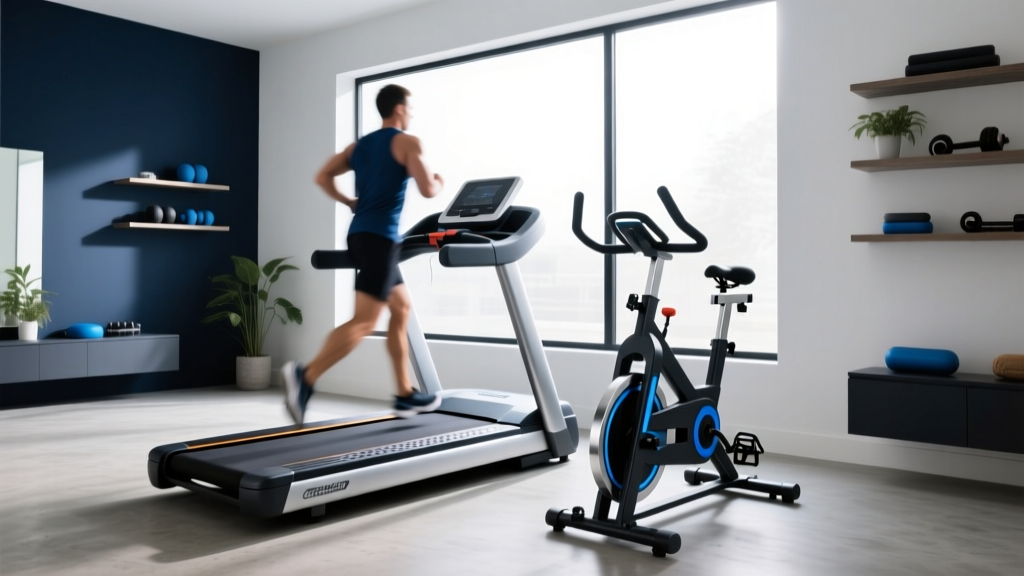
Before unboxing any equipment, you must audit your room's spatial and electrical capacity. The decision between a treadmill or exercise bike often comes down to these hidden constraints.
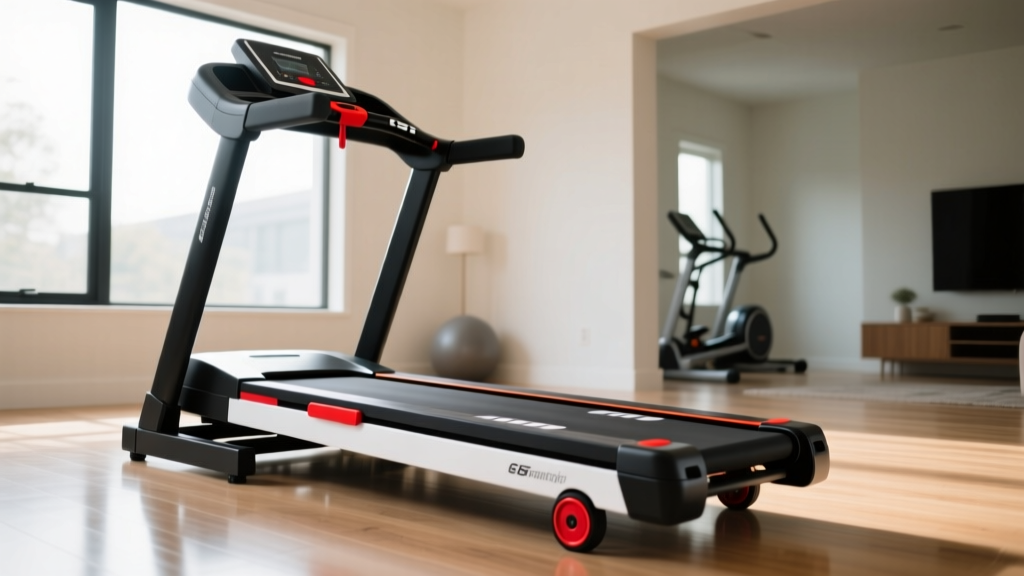
Quick Installation Footprint Comparison:- High-End Treadmill (e.g., NordicTrack Commercial 1750): Requires 78" L x 36" W floor space, plus a mandatory 6-foot (72") safety clearance behind the deck. Weighs 340 lbs unboxed. Requires a dedicated 20-amp electrical circuit.
- Smart Exercise Bike (e.g., Peloton Bike+): Requires a compact 59" L x 22" W footprint. Weighs 140 lbs. Plugs into any standard 15-amp shared household outlet.
As the data above illustrates, treadmills demand rigorous electrical planning due to their massive drive motors, while exercise bikes operate on low-draw internal resistance systems (magnetic or electromagnetic) that barely register on a standard household circuit.
Demystifying Treadmill Motor Size: HP vs. CHP
If your audit supports a treadmill, the next step is selecting the correct motor. The fitness industry is notorious for deceptive marketing regarding horsepower. You will frequently see terms like "Peak HP" or "Treadmill Duty." Ignore these. The only metric that matters for your setup is Continuous Duty Horsepower (CHP).
Peak HP measures the maximum output the motor can achieve for a fraction of a second before overheating. CHP measures the power the motor can sustain continuously during a heavy, hour-long workout without degrading. A treadmill advertised as "4.0 Peak HP" might only have a 2.25 CHP motor, which will bog down and overheat if a 220-lb user attempts a sustained 7.0 mph run.
CHP Sizing Matrix for 2026 Home Gyms
| User Weight | Primary Use: Walking (Under 4 mph) | Primary Use: Jogging (4 - 6 mph) | Primary Use: Running (6+ mph / Sprints) |
|---|---|---|---|
| Under 150 lbs | 2.0 CHP | 2.5 CHP | 3.0 CHP |
| 150 - 200 lbs | 2.5 CHP | 3.0 CHP | 3.5 CHP |
| 200 - 250 lbs | 3.0 CHP | 3.5 CHP | 4.0+ CHP |
| Over 250 lbs | 3.5 CHP | 4.0+ CHP | 4.25+ CHP (Commercial Grade) |
Expert Note: Always add 0.5 CHP to your requirement if you plan to frequently use maximum incline settings (15% to 40%), as fighting gravity exponentially increases the load on the drive motor and belt.
Electrical Installation Walkthrough: Circuit Requirements
This is where the setup of a treadmill or exercise bike diverges most sharply. Exercise bikes like the Concept2 BikeErg or Echelon EX-5s draw minimal current (usually under 3 amps) and can share a circuit with your TV, fan, and lights. Treadmills with 3.0+ CHP motors, however, are power-hungry beasts that require specialized electrical setup.
The 20-Amp Dedicated Circuit Rule
Most modern household bedrooms and living rooms are wired with 15-amp circuits that share power across multiple outlets and light switches. Plugging a 3.5 CHP treadmill (like the Sole F80) into a shared 15-amp circuit is a primary cause of tripped breakers and degraded motor controllers. When the treadmill initiates a high-incline interval, the amperage spike can easily exceed 14 amps, instantly tripping a shared 15-amp breaker.
- Audit Your Panel: Locate your breaker box and identify if the target room has a 15A or 20A circuit.
- Hire a Licensed Electrician: If you only have 15-amp shared circuits, budget between $150 and $350 to have an electrician run a dedicated 20-amp, 120-volt line directly from your panel to your gym space.
- Verify the Receptacle: A 20-amp circuit requires a 20-amp receptacle (identifiable by the T-shaped neutral slot) or a properly rated 15-amp duplex on a 20-amp breaker, depending on local code.
If your home gym is in a garage, basement, or unfinished space, the National Electrical Code (NEC) likely requires Ground Fault Circuit Interrupter (GFCI) outlets. However, treadmill motors generate significant electromagnetic interference (EMI) and micro-surges during startup and incline shifts. This frequently causes "nuisance tripping" on sensitive GFCI receptacles, shutting your treadmill down mid-stride. Pro-Tip: Consult your electrician about installing a dedicated non-GFCI circuit specifically for the treadmill appliance, or use a GFCI circuit breaker at the panel rather than a GFCI receptacle at the wall, which handles the EMI load much better.
Physical Setup and Placement Walkthrough
Once the electrical foundation is secure, the physical installation requires precise measurements to ensure safety and equipment longevity. The U.S. Consumer Product Safety Commission (CPSC) regularly issues warnings regarding treadmill placement and entrapment hazards, making this step non-negotiable.
Step 1: Subfloor Load-Bearing Verification
A premium treadmill weighs between 250 and 350 lbs. Add a 220-lb user running at 8 mph, and the dynamic downward force and lateral shear stress on your floor joists are immense. If installing on a second-story wood-framed floor, ensure the joists are spaced 16 inches on-center and are in good condition. For concrete slab foundations (basements, garages), load-bearing is a non-issue.
Step 2: The 6-Foot Safety Clearance
Never push a treadmill flush against a wall. You must maintain a minimum of 72 inches (6 feet) of clear, unobstructed space directly behind the rear roller of the deck. If a user falls or is ejected off the back of the moving belt, this clearance prevents them from becoming pinned between the machine and a wall—a leading cause of severe friction burns and traumatic injuries.
Step 3: Vibration Dampening and Matting
Do not place a treadmill directly on hardwood or carpet without a high-density equipment mat.
- For Hardwood/LVP: Use a 3/8-inch thick vulcanized rubber mat. This prevents the treadmill feet from scratching the finish and absorbs the harmonic vibration that can loosen floorboards over time.
- For Carpet: Use a rigid PVC or dense rubber mat to distribute the 350+ lb footprint. Without a mat, the treadmill feet will crush the carpet pad, causing the machine to sit unevenly, which leads to severe belt tracking issues and premature motor strain.
Real-World Edge Cases and Troubleshooting
Even with a perfect setup, high-CHP treadmills require specific maintenance to protect your electrical and mechanical investment. Here are two common edge cases we see in home gym installations:
Edge Case 1: Belt Friction and Motor Overheating
If your 3.5 CHP treadmill suddenly shuts off after 20 minutes of use, the motor thermal overload switch has likely tripped. This is rarely a defective motor; it is almost always a dry deck. The friction between the belt and the wooden deck forces the motor to draw excess amperage to maintain speed. The Fix: Lift the belt and apply 100% silicone treadmill lubricant every 150 miles or every 3 months. This single maintenance step reduces amp draw by up to 30%, saving your motor controller from frying.
Edge Case 2: PWM Controller Failures on Generators
Some users attempt to run high-end treadmills on off-grid solar setups or portable gas generators. Treadmill motors use Pulse Width Modulation (PWM) controllers that require a pure sine wave to operate. Standard portable generators produce a "dirty" modified sine wave that will instantly destroy the treadmill's lower control board. If you are off-grid, you must use a pure sine wave inverter rated for at least 2500 continuous watts to handle the startup surge.
Final Verdict: Making the Installation Choice
Choosing between a treadmill or exercise bike ultimately hinges on your willingness to manage the setup infrastructure. If you have the space, the budget to install a dedicated 20-amp circuit, and the discipline to perform quarterly belt lubrication, a high-CHP treadmill (3.5+) remains the gold standard for weight-bearing cardio. However, if you are renting, lack the electrical capacity for a dedicated line, or are setting up in a tight apartment bedroom, a smart magnetic exercise bike offers a zero-infrastructure, plug-and-play alternative that still delivers elite cardiovascular conditioning.
"A treadmill is only as good as the circuit it runs on and the clearance behind it. Never compromise on the 20-amp dedicated line or the 6-foot rear safety zone." — FitGearPulse Installation Standards, 2026
More gear to consider
All reviews
Beyond Treadmill Warnings: Upright, Recumbent & Spin Bikes

Elliptical vs Treadmill: 2026 Trends & Treadmill Pace Chart
Do Treadmills Work Better With High HP? Setup Guide
Treadmill Belt Maintenance to Delay Donation Pick Up

ProForm Treadmill Issues? Upright, Recumbent & Spin Bike Care