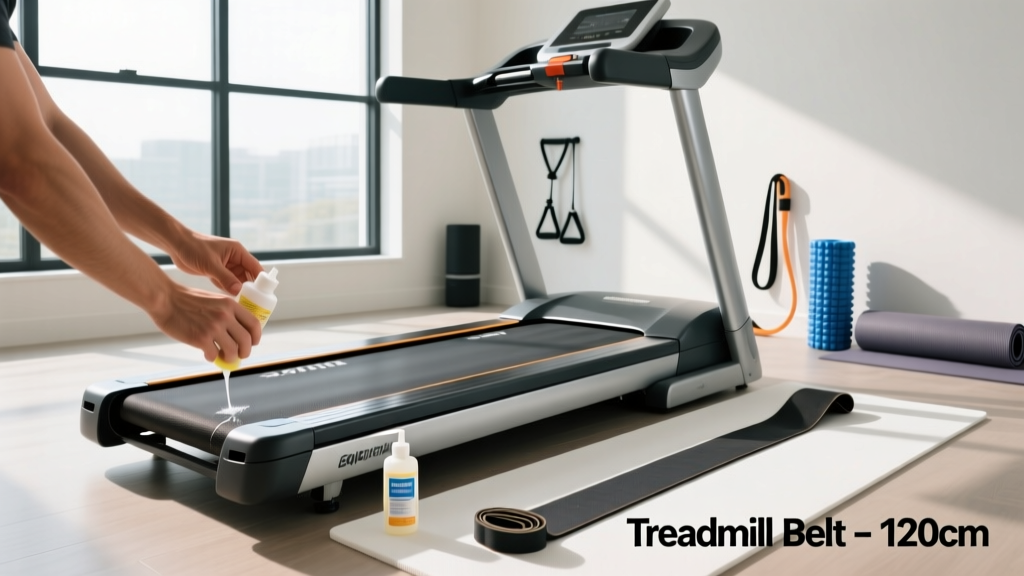
Beyond the Treadmill Emoji: Belt Maintenance & Lubrication Costs
Discover the true cost of treadmill belt maintenance. Learn DIY lubrication, belt replacement values, and how to protect your motor and workout streak.

We all know the feeling: you finish a grueling 5K indoor run, sync your Garmin or Apple Watch, and proudly post your stats with that familiar treadmill emoji (🏃♂️) on your social feed or Strava log. But maintaining that digital streak in 2026 requires more than just cardiovascular willpower—it demands rigorous mechanical upkeep of your machine. When you neglect your treadmill belt, you are not just risking a squeaky workout; you are actively inviting a catastrophic drive motor failure that can cost hundreds of dollars to fix.
As smart treadmills have evolved to include massive HD touchscreens, auto-incline declination motors, and advanced cooling systems, the baseline power draw of these machines has increased significantly. This makes belt friction an even bigger threat to your lower control board. In this comprehensive budget breakdown and value analysis, we will explore the exact costs of treadmill belt maintenance, the financial ROI of DIY lubrication versus professional servicing, and the precise metrics you need to know to keep your machine running flawlessly.
Expert Insight: According to data aggregated by Fitness Repair Parts, over 40% of all treadmill motor and control board failures are directly linked to excessive belt friction caused by inadequate lubrication and improper tensioning. A $12 bottle of silicone lubricant can literally save you from a $500 repair bill.The Hidden 'Friction Tax' on Your Treadmill
Every time your foot strikes the deck, the treadmill belt glides over the wooden or MDF deck board. If the belt is dry, the coefficient of friction increases exponentially. This friction forces the drive motor to work harder to maintain your target speed. If you are running at 7.0 mph on a dry belt, the motor may draw 12 to 15 amps of electricity, generating immense internal heat. Over time, this heat degrades the motor windings and fries the MOSFETs (metal-oxide-semiconductor field-effect transistors) on the lower control board.
From a budget perspective, ignoring maintenance introduces a 'friction tax' into your home gym economics. Let us break down the actual financial impact of neglect versus proactive maintenance.
Financial Breakdown: Neglect vs. Proactive Care
| Maintenance Scenario | Estimated Cost | Machine Downtime | Long-Term Value Impact |
|---|---|---|---|
| Routine DIY Silicone Lubrication | $12 - $18 per year | 15 minutes | Extends motor life by 3-5 years |
| Professional Tech Service Call | $120 - $180 (flat rate) | 1 - 3 days | Good for warranty compliance, but pricey |
| Belt & Deck Replacement (2-Ply) | $110 - $160 (parts) | 1 - 2 hours | Restores factory friction levels |
| Drive Motor Burnout Replacement | $350 - $600+ | 1 - 2 weeks | Total loss of value; often exceeds machine worth |
The DIY Lubrication Protocol: Step-by-Step Value
You do not need to be a certified fitness equipment technician to perform routine lubrication. However, you must use the correct materials. The golden rule of treadmill maintenance is to never use WD-40, petroleum-based oils, or household cleaners. These substances will chemically break down the rubber and cotton layers of your belt, causing delamination and voiding your warranty. You must use 100% pure liquid silicone.
Here is the exact protocol to maximize your machine's lifespan and protect your treadmill emoji streak from unexpected hardware outages:
- Verify Belt Tension: Before lubricating, check the tension. Turn off and unplug the machine. Slide your hand under the belt at the midpoint of the deck. You should be able to lift the belt exactly 2 to 3 inches. If it is tighter than 2 inches, the motor is straining; if it is looser than 3 inches, the belt will slip during heavy sprints.
- Loosen the Belt (If Necessary): If the belt is too tight, use the provided hex wrench to turn the rear roller adjustment bolts counter-clockwise by exactly one-quarter (1/4) turn on each side. Never adjust one side more than the other, or you will derail the belt.
- Apply the Silicone: Reach under the belt as close to the center of the deck as possible. Squeeze a continuous zig-zag line of 100% silicone lubricant across the width of the deck. Use approximately 0.5 to 1 ounce of fluid. Repeat this process slightly further down the deck.
- Distribute the Lubricant: Plug the machine back in. Start the treadmill at a slow walking pace (2.0 to 3.0 mph). Walk on the treadmill for 3 to 5 minutes, intentionally stepping heavily on the left and right edges of the belt to press the silicone outward toward the rails.
- Wipe the Excess: Stop the machine and use a dry microfiber cloth to wipe any silicone that has squeezed out onto the side rails or motor hood. Silicone on the floor is a severe slip hazard.
Frequency Guideline: For budget and mid-range treadmills (like the Sole F80 or LifeSpan TR1200i), lubricate every 150 miles or every 3 months. For premium commercial-grade models with pre-lubricated wax-infused decks (like the Technogym Skillrun), consult the manufacturer, as adding liquid silicone can actually ruin the factory wax coating.
Belt Replacement Matrix: When to Buy a New Belt
Lubrication only works if the belt's structural integrity is intact. Over time, the underside of the belt develops a glazed, hardened surface that will no longer absorb silicone. Furthermore, the cotton or polyester backing can begin to fray. When it is time to replace the belt, understanding the 'ply' rating is crucial for your budget analysis.
According to Consumer Reports' treadmill buying guides, matching the replacement belt to your specific usage profile is the key to long-term value. Do not simply buy the cheapest option; buy the one that matches your foot-strike impact.
| Belt Type | Average Cost (20x55 inch) | Best Use Case | Expected Lifespan |
|---|---|---|---|
| 1-Ply (Single Layer) | $45 - $65 | Walking pads, light jogging under 150 lbs user weight. | 1 - 2 Years |
| 2-Ply (Standard) | $85 - $130 | Daily running, HIIT workouts, users up to 250 lbs. (Industry Standard) | 3 - 5 Years |
| 4-Ply (Premium) | $160 - $240 | Marathon training, heavy sprinting, users 250+ lbs. Superior shock absorption. | 5 - 8+ Years |
Advanced Diagnostics: The Amp Draw Test
For the ultimate budget-conscious home gym owner who wants empirical proof of their machine's health, the 'Amp Draw Test' is the gold standard. This test removes the guesswork from belt maintenance and tells you exactly how much friction is present in your system.
To perform this test, you will need a digital clamp multimeter (available for about $25 at any hardware store). Open the motor hood, locate the main power wire leading into the drive motor, and clamp the meter around it.
- Baseline (No User): Turn the treadmill on to 3.0 mph. The motor should draw between 1.5 and 2.5 amps.
- Walking Load (150 lb User): Step on and walk at 3.0 mph. The amp draw should rise to roughly 3.0 to 4.5 amps.
- Running Load (150 lb User): Increase speed to 6.0 mph. The draw should sit between 5.0 and 7.0 amps.
The Danger Zone: If your walking amp draw exceeds 6.0 amps, or your running amp draw spikes above 9.0 amps, your belt is dangerously dry, improperly tensioned, or the deck is warped. Operating the machine in this state will inevitably trigger the thermal overload switch or destroy the motor controller. At this point, immediate lubrication or belt replacement is not just recommended; it is a financial emergency for your equipment.
Final Verdict: Protecting Your Investment and Your Streak
Earning that treadmill emoji on your favorite fitness app is a badge of honor that represents consistency, sweat, and discipline. But your digital consistency is entirely reliant on mechanical consistency. By allocating a mere $15 a year to high-quality silicone lubricant and understanding the true value of 2-ply or 4-ply belt replacements, you insulate yourself from the catastrophic $500 motor failures that plague negligent owners.
Treat your treadmill's drivetrain with the same respect you treat your own cardiovascular system. Keep the belt slick, monitor your tension, check your amp draw, and your machine will faithfully support your fitness journey for years to come.
More gear to consider
All reviews
Is a Treadmill Easier Than Running Outside? Curved vs Motorized

Noise Comparison Guide: Quiet Treadmill Exercises for Belly Fat

Rowing Machine vs. Treadmill 500 lb Weight Capacity: 2026 Showdown

WellFit Treadmill Reviews Reddit: Best Under Desk Picks 2026

Elliptical vs Treadmill for Home Cardio & Donate Treadmill Pickup
