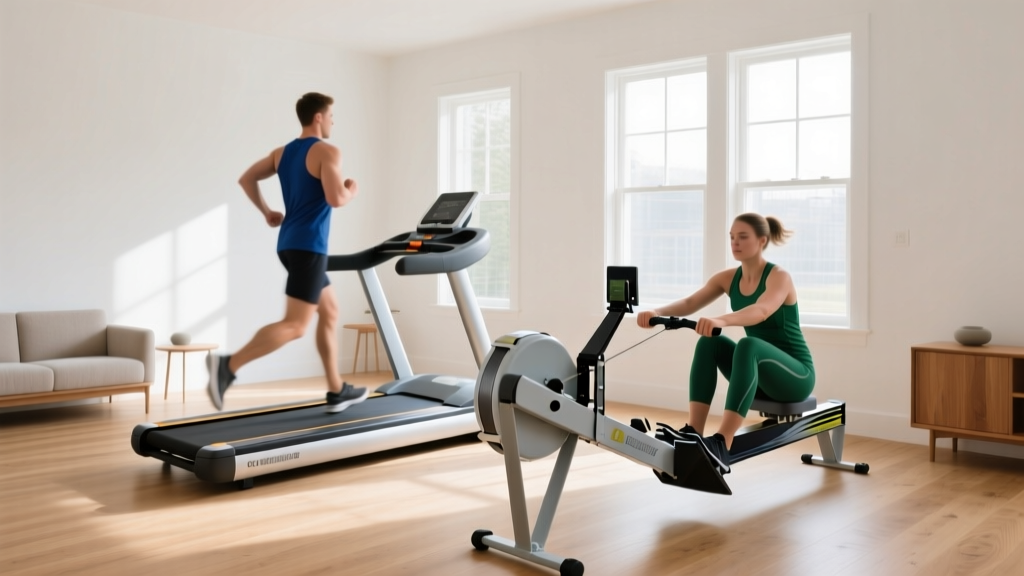
Treadmill Belt Slipping? Top Compact Portable Cardio Alternatives
Stop fighting treadmill belt slipping on cheap walking pads. Discover space-saving portable cardio alternatives for small layouts without mechanical failures.

Designing a high-performance home gym in a compact apartment or small dedicated room requires ruthless space optimization. In 2026, the trend of micro-gyms has pushed millions of buyers toward ultra-compact folding treadmills and under-desk walking pads. However, this spatial efficiency often comes with a frustrating mechanical trade-off: chronic treadmill belt slipping. When you sacrifice motor size and roller diameter to achieve a foldable footprint, you invite severe traction issues that ruin your cardio sessions and damage the machine.
If you are tired of recalibrating tension bolts every week, it is time to rethink your layout. This guide explores the mechanical realities of compact treadmills, outlines precise spatial clearances for small rooms, and highlights premium portable cardio alternatives that deliver elite workouts without the maintenance headaches.
The Mechanical Trap: Why Compact Treadmills Slip
To understand why treadmill belt slipping is the number one failure mode for walking pads and budget folding treadmills, we have to look at the engineering compromises required to make a machine fold in half. Standard commercial treadmills use 3-inch diameter rollers and 3.0 to 4.0 Continuous Horsepower (CHP) motors. Compact walking pads, like the popular WalkingPad P1 or generic $199 Amazon alternatives, typically utilize 1.5 HP peak motors and tiny 40mm (1.5-inch) rollers.
Diagnostic: Slip vs. Stick
Is your machine actually slipping, or is the deck dragging?
Slip: The front roller stops for a split second while the belt keeps moving, then jerks forward. Cause: Low tension or worn drive belt.
Stick: The belt and roller stop completely together under your foot. Cause: High friction, lack of silicone lubrication, or a dying motor capacitor.
When a 180-pound user strikes the belt on a compact machine, the small motor lacks the immediate torque to maintain speed. The belt hesitates, slips over the smooth drive roller, and creates a jarring, dangerous stutter. Furthermore, the short 45-inch running surfaces force users to alter their natural gait, causing uneven wear on the belt edges that exacerbates the slipping over time.
Space-Optimized Layouts: Ditching the Folding Treadmill
Before selecting alternative equipment, we must define the spatial constraints of a micro-gym. According to guidelines adapted from the American Council on Exercise (ACE), safe cardio zones require specific clearance envelopes that most apartment dwellers ignore.
- The Treadmill Clearance Myth: Many assume a walking pad takes up only its physical footprint (roughly 55 x 20 inches). In reality, you need a minimum of 20 inches of clearance behind the machine for safety egress, and 15 inches on both sides for arm swing. This turns a 'compact' machine into a 55 x 55 inch (21 square foot) permanent floor hog.
- The Vertical Advantage: True space optimization in 2026 relies on vertical storage and multi-axis folding. Equipment that stores against a wall or under standard 24-inch furniture yields vastly superior usable square footage.
"The most efficient home gym layouts prioritize equipment that can transition from 'active footprint' to 'zero footprint' in under 15 seconds, without requiring heavy lifting or complex latching mechanisms."
Top Compact Portable Cardio Alternatives (Zero Belt-Slip Risk)
If you want high-calorie burn and cardiovascular conditioning without the endless maintenance of tensioning a slipping treadmill belt, consider these space-optimized alternatives.
1. Foldable Smart Rowers
Rowing machines provide a superior full-body cardio stimulus (engaging 86% of muscle mass) compared to the lower-body-only focus of walking pads. Modern smart rowers have solved the storage issue.
- Hydrow Wave: Folds to an incredibly compact 33 x 25-inch footprint. The electromagnetic resistance is completely silent and requires zero belt maintenance. Priced around $1,695.
- Concept2 RowErg (with Vertical Stand): The gold standard for durability. While it separates into two pieces rather than folding, it stores vertically in a 27 x 34-inch space. As noted on the Concept2 official site, the chain drive requires only occasional purification, entirely eliminating the rubber belt degradation seen in treadmills. Priced at $995.
2. Magnetic Resistance Upright & Spin Bikes
Stationary bikes offer the smallest active footprint in the cardio category. Because they use direct magnetic resistance or belt-driven flywheels (enclosed and pre-tensioned at the factory), they do not suffer from user-induced belt slipping.
- Echelon EX-5s: Occupies just 54 x 20 inches during use, but unlike a treadmill, requires zero rear clearance because the user remains stationary in a seated position. Priced around $899.
- Peloton Bike+: Features a rotating screen and a footprint of 59 x 22 inches. The internal polygroove belt is sealed and maintenance-free for the lifespan of the machine. Priced at $2,495.
3. Portable Vertical Climbers
For those who miss the upright, weight-bearing nature of a treadmill, vertical climbers offer a high-intensity, low-impact alternative.
- MaxiClimber XL-2: Uses your own body weight as resistance. It folds completely flat to just 5 inches thick, allowing it to slide under a bed or lean flush against a closet wall. Priced around $449.
Equipment Comparison Matrix: Footprint vs. Maintenance
| Equipment Type | Active Footprint | Storage Footprint | Belt Slip Risk | Avg. Price (2026) |
|---|---|---|---|---|
| Budget Walking Pad | 55" x 20" + 20" rear | High | $150 - $300 | |
| Folding Smart Rower | 86" x 25" | 33" x 25" | None | $1,200 - $1,800 |
| Indoor Cycling Bike | 59" x 22" | 59" x 22" (Wheels) | None | $800 - $2,500 |
| Vertical Climber | 36" x 30" | 36" x 30" x 5" | None | $400 - $600 |
If You Must Keep the Walking Pad: A Maintenance Protocol
If your space layout absolutely dictates the use of a compact walking pad, you can mitigate treadmill belt slipping by adhering to a strict, proactive maintenance schedule. Do not wait for the slip to begin; treat the machine based on usage hours.
- Monthly Lubrication: Compact belts generate immense friction due to small deck surfaces. Apply exactly 10ml of 100% silicone treadmill lubricant under the belt every 30 hours of use. Never use WD-40 or petroleum-based products, which will dissolve the belt backing.
- Quarter-Turn Tensioning: If the belt slips at the front roller, locate the two rear end-cap bolts. Using the provided Allen wrench, turn both bolts exactly one-quarter (1/4) turn clockwise. Test the machine at 3.0 MPH. Over-tightening will strain the 1.5 HP motor and burn out the control board.
- Debris Extraction: Small rollers easily trap pet hair and dust, creating a slick barrier between the drive belt and the motor pulley. Use a vacuum with a crevice tool around the motor hood every two weeks.
Final Layout Blueprint for Small Spaces
Optimizing a home gym is not just about finding the smallest machine; it is about finding the most reliable machine that fits your spatial envelope. While budget walking pads offer an attractive entry price and foldable convenience, the chronic mechanical failures associated with treadmill belt slipping often render them useless within 12 to 18 months. By pivoting to vertical storage rowers, magnetic resistance bikes, or foldable climbers, you secure a premium cardiovascular stimulus—aligned with the CDC's physical activity guidelines for heart health—while completely eliminating the friction and tension maintenance that plagues compact treadmills. Measure your room, respect the clearance zones, and invest in mechanical longevity over false spatial promises.
More gear to consider
All reviews
16 Incline on Treadmill: 2026 Compact Portable Cardio Market Trends
Virtual Reality Treadmill Buying Guide & Top Setups 2026
Stationary Bike Types Budget Breakdown & Treadmill Turns On But Won't Start Fixes

Manual Incline Treadmill Buying Guide: 2026 Feature Comparison

Understanding the 8 Speed on Treadmill Pace & Cardio Noise