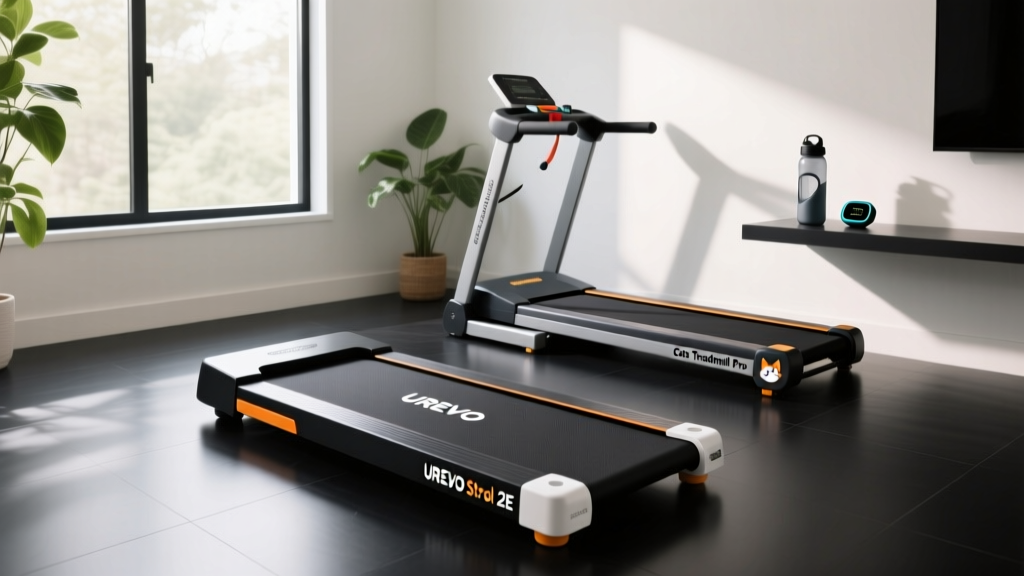
Treadmill Belt Off Center? Budget Breakdown of Stationary Bike Types
Dealing with a treadmill belt off center? We break down repair costs versus upgrading to upright, recumbent, or spin bikes with a 2026 value analysis.

The Financial Drain of a Treadmill Belt Off Center
You are mid-stride on your morning run when you feel that familiar, frustrating drift. Your foot catches the plastic side rail, and your workout comes to a grinding halt. The dreaded treadmill belt off center issue has struck again. While a minor tracking error can sometimes be fixed with a quick quarter-turn of a 3/16-inch hex key on the rear roller adjustment bolts, chronic belt drift is often a symptom of deeper mechanical failure.
When a belt consistently slides to the left or right despite manual adjustment, you are usually looking at stretched belt fibers from asymmetric foot strikes, a warped MDF running deck, or a failing drive motor. In 2026, with fitness equipment repair costs surging due to specialized labor rates and parts inflation, homeowners are facing a critical financial crossroads.
2026 Treadmill Repair Cost Breakdown:- Technician Call-Out Fee: $125 - $180
- Replacement Belt & Deck Kit: $150 - $350 (OEM parts)
- Labor (1.5 - 2 hours): $185 - $250
- Total Estimated Repair: $460 - $780
Sinking $500+ into a five-year-old treadmill with a degraded motor is rarely a sound investment. This brings us to the ultimate budget pivot: reallocating those repair funds toward a low-maintenance stationary bike. But with upright, recumbent, and spin bikes dominating the market, where does your money yield the highest cardiovascular ROI?
Pivoting Your Cardio Budget: Stationary Bike Types Analyzed
According to the CDC physical activity guidelines, adults need at least 150 minutes of moderate-intensity aerobic activity weekly. Stationary bikes are exceptional tools for meeting this mandate without the high-impact joint stress or the relentless mechanical maintenance of treadmills. Let us break down the three primary bike categories through a strict value-analysis lens.
1. Upright Bikes: The Traditionalist's Value
Upright bikes mimic the geometry of a traditional outdoor bicycle. They require core engagement to maintain posture and offer a familiar pedal stroke. From a budget perspective, they offer the most balanced cost-to-feature ratio for general fitness.
- 2026 Value Pick: Sole B94 Upright Bike
- Current Pricing: $999
- Key Specs: 30-pound flywheel, 40 levels of electromagnetic resistance, 9-inch LCD display.
- The Value Proposition: Sole's lifetime warranty on the frame and 3-year warranty on parts/electronics makes the B94 a virtually bulletproof investment. Unlike treadmills, there is no belt to center and no deck to lubricate.
2. Recumbent Bikes: The Ergonomic Investment
If your treadmill is gathering dust because of lower back pain or knee discomfort, the recumbent bike is your ultimate pivot. The seated, reclined position with a supportive backrest drastically reduces lumbar strain and shifts the workload almost entirely to the glutes and quadriceps.
Biomechanical studies highlighted by Mayo Clinic fitness experts consistently show that recumbent cycling provides comparable cardiovascular benefits to upright cycling while significantly reducing shear force on the knee joints and lumbar spine.
- 2026 Value Pick: Schwinn 270 Recumbent Bike
- Current Pricing: $699
- Key Specs: 25-pound perimeter-weighted flywheel, 29 resistance levels, dual-track LCD screens, Bluetooth connectivity.
- The Value Proposition: At under $700, the Schwinn 270 offers premium ergonomic seating and app integration that rivals machines costing twice as much. The step-through design also eliminates the awkward mounting required on treadmills.
3. Spin / Indoor Cycling Bikes: The High-Intensity Burn
For those who miss the high-calorie burn and interval training capabilities of a treadmill sprint, the indoor cycling bike (spin bike) is the only logical replacement. These bikes feature a forward-leaning geometry and heavy flywheels designed for high-cadence sprints and out-of-the-saddle climbs.
- 2026 Value Pick: Echelon EX3 Smart Connect
- Current Pricing: $549 (Hardware only, subscription optional)
- Key Specs: 28-pound flywheel, 32 levels of silent magnetic resistance, reversible dual-sided pedals (SPD and toe cages).
- The Value Proposition: The EX3 provides commercial-grade geometry at a budget price. While it lacks an integrated screen (you mount your own tablet), this actually saves you money long-term by avoiding proprietary screen replacements—a common failure point on expensive smart-treadmills.
2026 Value Matrix: Upright vs. Recumbent vs. Spin
To visualize the budget and spatial requirements of your cardio pivot, refer to the comparison matrix below.
| Feature | Upright Bike | Recumbent Bike | Spin / Indoor Cycle |
|---|---|---|---|
| Avg. Price Range | $600 - $1,200 | $500 - $1,500 | $450 - $2,500 |
| Footprint (L x W) | 42' x 22' | 55' x 28' | 45' x 20' |
| Maintenance Level | Very Low | Very Low | Low (Occasional sweat wipe-down) |
| Caloric Burn (per hr) | 400 - 600 kcal | 350 - 500 kcal | 500 - 800+ kcal |
| Best Suited For | General fitness, core engagement | Rehab, seniors, lower back issues | HIIT, athletes, high-intensity burn |
The Maintenance Reality: Treadmills vs. Stationary Bikes
The primary reason a treadmill belt goes off center is the immense friction and lateral force generated by human foot strikes. Treadmills require 100% silicone lubrication every 130 miles or 3 months, belt tension checks, and motor hood vacuuming to prevent overheating. According to insights from Johns Hopkins Medicine, indoor cycling provides a highly efficient cardiovascular workout with virtually zero impact trauma, which translates mechanically to the equipment itself.
Why Bikes Win on Long-Term ROI:
- No Belt Centering: Magnetic resistance bikes use a belt drive or direct drive system that is enclosed and tensioned at the factory. You will never need a hex key to adjust the tracking.
- No Deck Friction: There is no running surface to degrade, warp, or require chemical lubricants.
- Lower Power Draw: A treadmill motor can draw 1,500 to 2,500 watts under heavy load. A stationary bike with an electromagnetic brake draws less than 50 watts, and many spin bikes are entirely self-powered (no wall outlet required).
Decision Framework: Repair or Replace?
Before you order that $150 replacement belt for your drifting treadmill, run your situation through this 2026 decision framework:
Fix the Treadmill IF:
- The machine is under 3 years old and still under manufacturer warranty.
- The drift is minor and corrects itself with a simple 1/4-turn of the rear roller bolt.
- You are training for a specific road race and absolutely require impact-loading for bone density and joint conditioning.
Pivot to a Bike IF:
- The treadmill is 5+ years old and the belt drifts immediately after manual adjustment (indicating a warped deck).
- You are spending more than $300 annually on maintenance, repairs, or replacement parts.
- You experience joint pain, shin splints, or plantar fasciitis that makes running unsustainable.
Final Verdict: Where Should Your Money Go?
Dealing with a treadmill belt off center is the universe's way of telling you to re-evaluate your home gym ROI. If your budget is strictly capped at the cost of a treadmill repair (roughly $500), the Echelon EX3 offers the most aggressive high-intensity value, completely eliminating future mechanical headaches. If you have a bit more capital and prioritize joint longevity and comfort, the Schwinn 270 Recumbent at $699 is an unparalleled ergonomic investment that will easily outlast a budget-tier treadmill.
Stop fighting with warped decks and frayed belts. In 2026, the smartest cardio budget is one that prioritizes silent, magnetic resistance and biomechanical efficiency over high-maintenance, motor-driven belts.
More gear to consider
All reviews
Air Bike vs Assault Bike: Is Upkeep Easier Than Treadmill Maintenance?
Avoid Treadmill Injuries: Under Desk Treadmill Maintenance & Review

How to Log In iFIT on Treadmill Consoles & Fix Cardio Noise
Rowing Machine Guide: Better Than a Stationary Bike or Treadmill?

How Long Are Treadmills? Best Folding Picks for Small Spaces (2026)