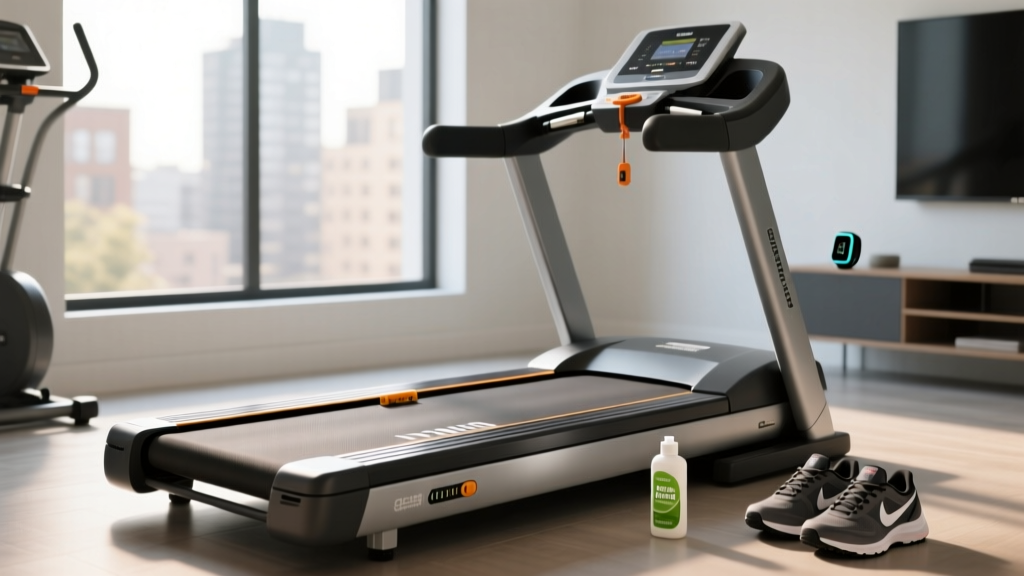
What to Look for in a Treadmill: Belt Maintenance & Lube Trends
Discover what to look for in a treadmill belt maintenance system. Our 2026 market analysis covers lubrication trends, auto-lube tech, and upkeep costs.

The 2026 Market Shift: Total Cost of Ownership in Cardio Equipment
The home fitness equipment market has matured significantly by 2026. According to Statista fitness equipment market data, consumers are no longer making purchasing decisions based solely on interactive screen sizes or maximum incline capabilities. Instead, the modern buyer is heavily focused on the Total Cost of Ownership (TCO), which includes long-term maintenance, part replacements, and energy efficiency. When conducting a comprehensive market analysis of modern cardio equipment, understanding what to look for in a treadmill requires looking beneath the running surface—specifically at belt maintenance and lubrication technology.
Historically, treadmill belts were an afterthought for consumers, often neglected until the machine began squeaking or the motor overheated. Today, friction management is at the forefront of treadmill engineering. A poorly lubricated belt doesn't just ruin the user experience; it exponentially increases electrical resistance, degrades the running deck, and ultimately destroys the drive motor. As manufacturers race to capture the premium home-gym demographic, the integration of advanced, low-maintenance belt systems has become a primary market differentiator.
Lubrication Technologies: Market Penetration & Performance Analysis
The 2026 treadmill landscape is dominated by three primary lubrication architectures. Each system caters to a different segment of the market, from budget-conscious manual upkeep to premium, automated friction management. Below is a breakdown of the current market penetration and performance metrics for these systems.
| Lubrication Type | Tech Mechanism | Avg. Annual Upkeep Cost | Motor Strain Reduction | 2026 Market Share |
|---|---|---|---|---|
| Manual 100% Silicone | Periodic liquid application between belt and deck | $15 - $25 | Moderate (User dependent) | 45% (Entry/Mid-tier) |
| Wax-Impregnated / Reversible | Friction-activated wax coating embedded in belt/deck | $0 (Until deck flip/replacement) | High (Consistent baseline) | 25% (Premium/Commercial) |
| Smart Auto-Lube Reservoir | App-monitored fluid dispersion system via micro-tubes | $30 - $45 (Reservoir refills) | Maximum (Precision dosed) | 30% (High-end Smart Treadmills) |
As noted by the Consumer Reports treadmill buying guide, the shift toward auto-lube and wax-impregnated systems in the mid-to-high-end market ($1,500 to $3,500 price range) has drastically reduced the number of consumer complaints related to motor burnout and deck warping. Brands like Matrix and Life Fitness have heavily invested in reversible, wax-coated phenolic decks that require zero liquid silicone, effectively eliminating user error from the maintenance equation.
The Physics of Friction: Motor Amp Draw and PCB Failures
To truly understand why belt maintenance dictates the lifespan of your machine, we must examine the physics of friction and its direct impact on the treadmill's electrical system. The relationship between belt lubrication and motor health is measurable and unforgiving.
⚠️ The 8-Amp Warning Sign
A properly lubricated treadmill deck operating under a 175-pound user will typically draw between 2.5 to 4.0 amps from the motor. If the 100% silicone lubricant dries out or the deck accumulates debris, the coefficient of friction spikes. This forces the motor to work harder to maintain the belt's speed, causing the amp draw to surge to 8.0 to 12.0 amps. Sustained operation at this amperage will trigger the thermal overload switch on the motor controller (PCB), leading to a catastrophic board failure that costs between $150 and $250 to replace.
This electrical strain is the primary reason why the American Council on Exercise (ACE) and other fitness authorities emphasize routine equipment maintenance not just for safety, but for preserving the mechanical integrity of the hardware. In 2026, high-end smart treadmills now feature built-in amp meters accessible via the user console's diagnostic mode, allowing owners to monitor friction levels in real-time and apply lubricant exactly when the amp draw crosses the 5.0-amp threshold.
The Buyer’s Matrix: Evaluating Belt and Deck Systems
When researching what to look for in a treadmill from a maintenance perspective, consumers must evaluate the physical construction of the running surface. Not all belts and decks are created equal, and the materials used dictate the lubrication schedule and overall longevity.
- Belt Ply Construction: Avoid single-ply belts, which are prone to stretching and heat retention. Look for 2-ply or 4-ply belts with a textured PVC top layer and a low-friction cotton or polyester under-layer. The under-layer material dictates how well it holds and distributes liquid silicone.
- Deck Material & Coating: Standard MDF (Medium-Density Fiberboard) decks warp easily when exposed to moisture and friction heat. The 2026 industry standard for premium machines is a high-density phenolic resin coating over a compressed wood core. For commercial-grade home units, look for reversible urethane-coated decks that offer up to 10,000 miles of frictionless running before needing to be flipped.
- Tensioning Mechanisms: Belt alignment and tension directly affect edge friction. Look for treadmills with accessible, rear-mounted tension bolts that utilize a 'quarter-turn' calibration system, allowing for micro-adjustments without over-tightening the belt and choking the drive motor.
- Smart Diagnostics: Does the companion app track 'belt health' or 'friction alerts'? Modern ecosystems (like iFIT and Peloton's backend diagnostics) now push notifications to your smartphone when the algorithm detects an anomaly in motor resistance, prompting a maintenance intervention before hardware damage occurs.
Maintenance Protocols for Modern Auto-Lube Systems
For buyers investing in the growing segment of smart auto-lube treadmills (such as the Horizon 7.4 AT or select NordicTrack Commercial models), the maintenance paradigm has shifted from physical labor to fluid management. While the machine handles the distribution, the owner must manage the reservoir.
- Monitor Reservoir Levels via App: Most 2026 auto-lube systems feature a translucent 4 oz to 6 oz silicone reservoir mounted near the front roller. The machine's BLE (Bluetooth Low Energy) connection will alert your fitness app when the fluid drops below the 20% threshold.
- Select the Correct Silicone Viscosity: Never use aerosol sprays, WD-40, or petroleum-based lubricants. These contain distillates that will chemically dissolve the rubber backing of the belt and destroy the deck coating. Purchase only 100% liquid silicone treadmill lubricant with a medium viscosity (typically 100 cSt at 25°C) designed for micro-tube dispersion.
- Purge the Micro-Tubes Annually: Silicone can occasionally coagulate in the capillary tubes if the machine sits unused for months. Once a year, use the manufacturer's 'purge' function in the diagnostic menu to force a heavy dose of fresh silicone through the lines, clearing any blockages and ensuring even distribution across the deck width.
- Inspect the Distribution Sponge: Auto-lube systems utilize a porous foam sponge or a perforated plastic spreader bar located just behind the front roller. During your annual vacuuming of the motor hood, visually inspect this spreader. If it is caked with dust and hardened silicone, wipe it down with a dry microfiber cloth to restore even lubrication flow.
"The evolution of the treadmill from a purely mechanical device to a smart, self-diagnosing appliance has fundamentally changed the maintenance landscape. The consumers who understand these underlying friction-management systems are the ones who will see their equipment last a decade or more, rather than ending up in a landfill after three years of neglect."
Expert Verdict: The Future of Frictionless Running
The 2026 cardio equipment market makes one thing abundantly clear: belt maintenance and lubrication technology is no longer a hidden afterthought; it is a primary driver of hardware longevity and user satisfaction. When determining what to look for in a treadmill, buyers must look past the marketing hype of massive touchscreens and evaluate the engineering of the running surface.
For the hands-on enthusiast willing to perform quarterly maintenance, a high-quality 2-ply belt on a phenolic resin deck with manual 100% silicone application remains the most cost-effective route. However, for the premium buyer seeking a true 'set it and forget it' experience, investing in a machine with a smart auto-lube reservoir or a commercial-grade wax-impregnated reversible deck is the smartest capital allocation. By prioritizing friction management in your purchasing decision, you protect your investment, safeguard your motor's PCB, and ensure a consistently smooth, quiet run for years to come.
More gear to consider
All reviews
Curved vs Motorized: NordicTrack Treadmill Installation Compared

Nordic Track Treadmill Review: 2026 Folding Models for Small Spaces

Compact Bikes: Layouts & Does Oura Ring Track Steps on Treadmill?

Folding Treadmill Review: 30 Minutes on Elliptical vs Treadmill
Gold's Gym Treadmill 410 Maintenance & Compact Cardio Care
