Tonal Treadmill Combo: Smart Resistance Space Layouts
Designing a Tonal treadmill combo? Learn how to integrate adaptive smart resistance technology into compact home gym layouts with exact clearance specs.

The 'Tonal Treadmill' Search Intent: Myth vs. Spatial Reality
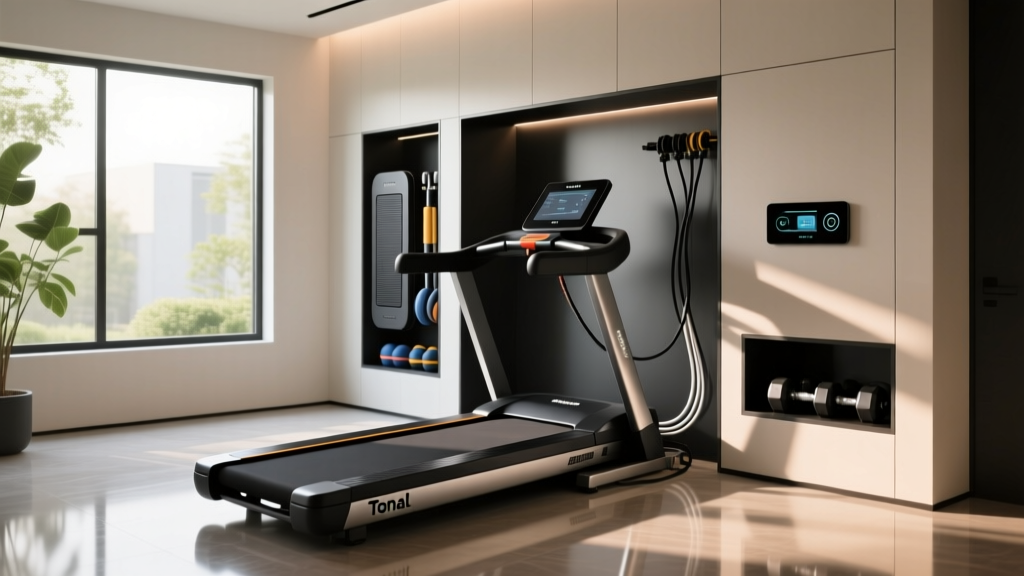
If you have been searching for a 'Tonal treadmill,' you have likely hit a wall: Tonal does not manufacture treadmills. The brand is strictly focused on wall-mounted smart resistance systems. However, the concept of a Tonal treadmill combo—strategically pairing Tonal’s electromagnetic adaptive resistance with a high-end smart treadmill or ultra-compact folding walking pad—is the pinnacle of 2026 space-optimized home gym design. For urban dwellers and homeowners converting spare bedrooms into hybrid fitness studios, integrating adaptive weight technology with cardio equipment requires precise spatial planning, structural foresight, and an understanding of dynamic movement zones.
In this guide, we deconstruct the biomechanics of smart resistance, outline exact clearance metrics, and provide a concrete layout blueprint for pairing the Tonal 2 with compact smart treadmills without compromising safety or functionality.
Deconstructing Adaptive Weight Technology
To design a safe layout, you must first understand how adaptive weight technology differs from traditional gravity-based iron. According to testing by Garage Gym Reviews, systems like the Tonal 2 utilize electromagnetic motors to generate resistance via eddy currents, rather than relying on the gravitational pull of metal plates. This allows the machine to manipulate the resistance curve in real-time.
Key Adaptive Features That Impact Floor Plans
- Eccentric Overload: The system increases resistance during the lowering phase of a lift. This causes higher muscle fatigue, meaning users are more likely to drop handles or lose balance, necessitating a wider, unobstructed 'fail zone' on the floor.
- SmartFlex & Spotter Mode: If the machine detects you struggling, it automatically reduces the digital weight. While this prevents injury, the sudden shift in resistance can cause a user to step backward unexpectedly—a major hazard if a treadmill console is positioned directly behind them.
- Digital Chains: Simulates the variable resistance of chain links, requiring explosive concentric movements that often involve stepping out into a wider stance for stability.
The Spatial Matrix: Clearances and Collision Zones
The most common mistake in smart gym layout design is treating the Tonal as a flat wall decoration. When the articulating arms are extended and a user is performing dynamic movements like lunges or cable woodchops, the footprint expands drastically. As noted in Wired's smart home gym coverage, failing to account for the three-dimensional swing zone leads to cramped, unusable setups.
| Equipment Model | Static Footprint (W x D) | Required Dynamic Clearance Zone | Weight / Load |
|---|---|---|---|
| Tonal 2 (Wall-Mounted) | 22.5" W x 5.25" D | 84" W x 84" D (7x7 ft floor space) | 150 lbs (Unit) + 200 lbs (Pull) |
| WalkingPad X21 (Folding) | 27" W x 63" D (Unfolded) | 30" W x 75" D (User stride buffer) | 55 lbs |
| Peloton Tread+ (Smart Cardio) | 34" W x 72" D | 48" W x 96" D (Incline/Running buffer) | 330 lbs |
The 10x12 Room Layout Blueprint
How do you actually fit a Tonal and a smart treadmill into a standard 10x12 foot spare bedroom? You must utilize an L-shaped perimeter layout combined with low-profile cardio equipment. Here is the exact step-by-step framework for optimizing this space:
- Identify the Primary Load-Bearing Wall: The Tonal 2 must be mounted to a wall with 16-inch on-center wooden studs or solid concrete. Drywall anchors will fail under the 200 lbs of dynamic sheer force generated during heavy lat pulldowns.
- Map the 84" x 84" Tonal Zone: Mark a 7x7 foot square on the floor directly in front of and to the sides of the mounting point. This is your strict 'No Equipment' zone.
- Position the Smart Treadmill Parallel: Place a compact, foldable treadmill (like the Horizon T101 or WalkingPad X21) on the adjacent perpendicular wall, at least 36 inches away from the edge of the Tonal's clearance zone. This allows the treadmill to be used without the user's arms striking the Tonal's screen during a sprint.
- Utilize the 'Under-Bench' Storage Gap: When the Tonal smart bench is not in use, it slides away. If using an ultra-slim walking pad (under 6 inches thick when folded), it can be stored flat on the floor beneath the Tonal bench zone, completely disappearing from the room's visual footprint.
Structural and Electrical Constraints
Smart resistance and adaptive cardio machines are power-hungry. The Tonal 2 requires a standard 120V outlet, but the electromagnetic motors draw significant amperage during peak eccentric overload phases. Similarly, smart treadmills with incline motors (like the NordicTrack T Series) draw heavy current upon startup and incline adjustment.
"Running a Tonal and a motorized smart treadmill on the same 15-amp household circuit is a recipe for tripped breakers. For a dedicated smart gym layout, we recommend having an electrician install a dedicated 20-amp circuit specifically for the fitness zone." — Home Gym Electrical Safety Guidelines, 2025
Furthermore, consider the thermal output. Electromagnetic resistance generators produce heat. Ensure your Tonal wall mount has at least 2 inches of clearance from the wall (facilitated by the included mounting bracket) and that the room has adequate HVAC circulation to prevent the machine's internal thermal throttling from interrupting your workout.
Frequently Asked Questions
Does Tonal make a smart treadmill or bike?
No. Tonal exclusively manufactures wall-mounted adaptive resistance systems. However, they do offer smart accessories like the Ski and Row attachments, which provide cardiovascular conditioning using the same electromagnetic resistance technology, eliminating the need for a separate cardio machine in extremely tight spaces.
Can I mount the Tonal on the wall behind my treadmill?
Technically yes, but practically it is a poor layout choice. If the treadmill is positioned against the wall, the user's body and the treadmill's upright console will block access to the Tonal screen and restrict the articulating arms. Always mount the Tonal on a clear, unobstructed wall where the 7-foot floor zone remains entirely open.
What is the cost of a complete Tonal and compact treadmill setup?
As of 2026, the Tonal 2 retails for approximately $3,995, plus a mandatory $59/month membership. A high-quality, space-saving smart treadmill like the WalkingPad X21 costs around $599, while premium folding options like the Sole F63 hover around $999. Expect to invest between $4,600 and $5,200 for the hardware, excluding installation and electrical upgrades.
More gear to consider
All reviews
2026 Peloton Treadmill Deals: Space Layout & Subscription ROI
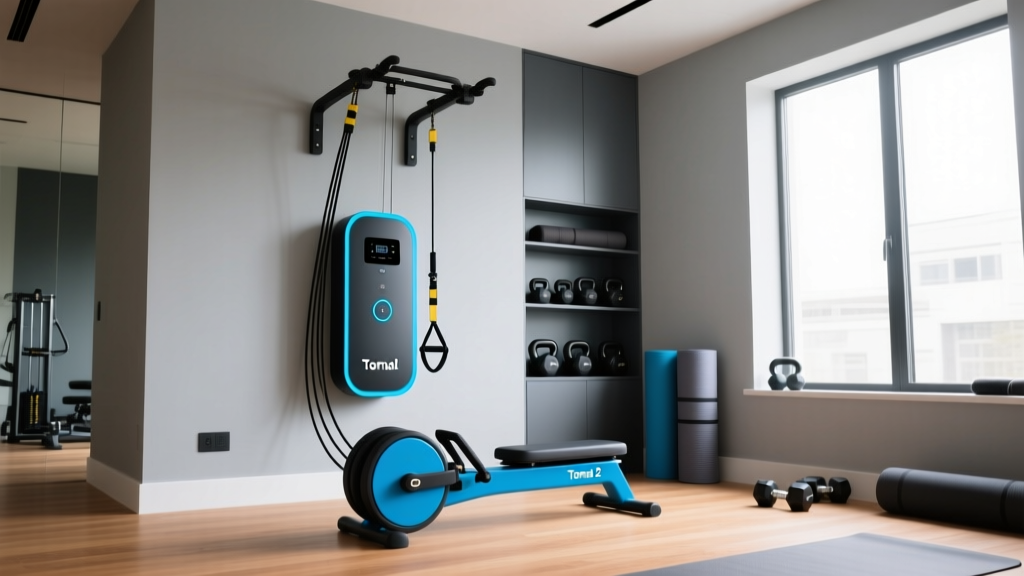
Tonal 2 Home Gym Space Layout & 2026 Subscription Cost Analysis

2026 AI Treadmill Reviews: Peloton Treadmill Electrical Requirements

Leaving Peloton Treadmill Classes? Troubleshooting Smart Alternative Equipment

Peloton Treadmill vs NordicTrack 2450: 2026 Cost Analysis
