
Theragun vs Hyperice: Top Massage Guns for Athletes (2026)
We analyze Theragun vs Hyperice to find the best massage guns for athletes in 2026. Compare torque, stall force, pricing, and recovery tech.

The 2026 Percussive Therapy Market Landscape
The percussive therapy market has matured significantly since the initial boom of the early 2020s. As we navigate 2026, the debate over the best massage guns for athletes is no longer just about raw power; it is an intricate discussion of biomechanical amplitude, AI-driven app integration, and ecosystem interoperability. Therabody (formerly Theragun) and Hyperice remain the undisputed duopoly in the elite recovery space, but their engineering philosophies have sharply diverged.
Therabody has leaned heavily into clinical-grade torque, smart-screen interfaces, and thermal therapy integrations. Conversely, Hyperice has doubled down on acoustic engineering, ergonomic fluidity, and seamless integration with their Venom heat and compression lines. For elite and amateur athletes alike, choosing between these two giants requires looking past marketing claims and analyzing the hard data on stall force, amplitude, and long-term hardware durability.
Market Insight: According to recent sports medicine analyses, percussive therapy is now recognized not just for delayed onset muscle soreness (DOMS) mitigation, but for acute neuromuscular activation. A pivotal study by Konrad et al. (2022) demonstrated that percussive massage significantly improves acute range of motion (ROM) without the performance deficits typically associated with static stretching.Flagship Face-Off: Theragun PRO Plus vs. Hypervolt 2 Pro
To understand where the market stands in 2026, we must compare the current flagship models that dominate professional locker rooms and high-end home gyms. Below is the head-to-head matrix of the Theragun PRO Plus and the Hyperice Hypervolt 2 Pro.
| Specification | Theragun PRO Plus | Hypervolt 2 Pro |
|---|---|---|
| Amplitude (Stroke Depth) | 16 mm | 14 mm |
| Stall Force (Max Pressure) | 60 lbs (27.2 kg) | ~45 lbs (20.4 kg) |
| Percussions Per Minute (PPM) | 1750 - 2400 PPM | 1800 - 2700 PPM |
| Acoustic Profile (Noise Level) | ~70-75 dB (Vacuum level) | ~60-65 dB (Conversation level) |
| Smart Interface | Built-in OLED Screen + Bluetooth | LED Indicator + App Dependent |
| Weight | 2.8 lbs (1.27 kg) | 2.5 lbs (1.13 kg) |
| MSRP (2026 Pricing) | $599 | $399 |
Deep Dive: Therabody's Biomechanical Approach
The Theragun PRO Plus is engineered for one primary objective: uncompromising tissue penetration. The defining metric here is the 16mm amplitude. In percussive therapy, amplitude dictates how deep the attachment travels into the muscle belly. For athletes with high muscle density—such as powerlifters, rugby players, and elite sprinters—shallower strokes merely vibrate the epidermis and superficial fascia. The 16mm stroke physically manipulates the deeper muscle fibers, triggering the Golgi tendon organ to induce autogenic inhibition (muscle relaxation).
The 60 lbs Stall Force Advantage
Stall force is the amount of pressure you can apply before the device's motor gives out and stops. The PRO Plus boasts a verified 60 lbs of stall force. This allows athletes to aggressively target the gluteus maximus, IT band, and deep calf muscles without the device stuttering. However, this massive torque comes with distinct trade-offs.
⚠️ Edge Cases & Failure Modes (Theragun):- Acoustic Fatigue: At 75 dB, using the PRO Plus in a quiet apartment or shared hotel room is disruptive. The mechanical clatter of the internal brushless motor is noticeable.
- Weight & Ergonomics: At 2.8 lbs, treating your own contralateral side (e.g., reaching across to treat the right latissimus dorsi with your left arm) induces rapid forearm and grip fatigue.
- Battery Degradation: Heavy users report that pushing the 60 lbs stall force limit daily accelerates lithium-ion battery degradation, often requiring a $79 battery replacement after 18-24 months.
Deep Dive: Hyperice and the QuietGlide Revolution
Hyperice took a fundamentally different route with the Hypervolt 2 Pro. Recognizing that 80% of athletes do not possess the muscle density requiring a 16mm strike, Hyperice optimized for user experience, acoustics, and high-frequency vibration. The 14mm amplitude is sufficient for endurance athletes, CrossFitters, and soccer players to flush metabolic waste and reduce hypertonicity without causing the deep-tissue bruising that an overly aggressive Theragun session might induce.
Acoustic Engineering and Ergonomics
Hyperice’s QuietGlide technology utilizes specialized internal bearings and a carbon fiber-reinforced housing that dampens sound waves. The result is a device that operates at roughly 60 dB. You can comfortably watch television or listen to a podcast while treating your quads. Furthermore, the Hypervolt's traditional drill-like grip, combined with its lighter 2.5 lb chassis, makes self-administration significantly less taxing on the wrists and shoulders.
💡 Edge Cases & Failure Modes (Hyperice):- The 'Bounce' Effect: When applying heavy pressure to dense muscle groups (like the hamstrings of a track cyclist), the 45 lbs stall force will occasionally trigger the device's safety shut-off, requiring you to reset the pressure.
- Lack of On-Device UI: Unlike the Theragun's OLED screen, the Hypervolt relies on basic LED dots. To access guided routines or precise speed metrics, you must have your smartphone mounted nearby and connected via Bluetooth.
Athlete Decision Framework: Which Ecosystem Fits Your Sport?
Selecting the right tool requires matching the device's mechanical output to your specific physiological demands. Use this 2026 decision matrix to guide your investment.
1. The Power & Collision Athlete (Powerlifting, NFL, Rugby)
- Recommendation: Theragun PRO Plus
- Why: Hypertrophied muscle bellies and thick fascial sheaths require 16mm amplitude to reach the target tissue. The 60 lbs stall force is non-negotiable for athletes who need to apply immense pressure to the glutes and spinal erectors.
- Protocol: Use the large ball attachment at 2400 PPM for 2 minutes per muscle group post-training to down-regulate the central nervous system.
2. The Endurance & Field Athlete (Marathon, Triathlon, Soccer)
- Recommendation: Hyperice Hypervolt 2 Pro
- Why: Endurance athletes require frequent, daily flushing of the calves, hamstrings, and quads to promote lymphatic drainage and blood flow. The lighter weight prevents upper-body fatigue during 20-minute full-body routines, and the quieter motor allows for mental decompression.
- Protocol: Use the flat head attachment at 1800 PPM, utilizing long, sweeping strokes along the muscle grain to encourage venous return.
3. The Hybrid / CrossFit Athlete
- Recommendation: Tie (Depends on Budget and Travel)
- Why: CrossFitters need both deep tissue release (for heavy Olympic lifting days) and rapid flushing (for high-volume metcons). If budget allows ($599), the Theragun's smart screen and guided app routines are superior for managing varied daily loads. If travel is a priority, the Hypervolt's slightly more compact profile and included travel case make it the better road companion.
Emerging 2026 Trends: Thermal Attachments and AI Coaching
The hardware battle between Theragun and Hyperice has largely plateaued regarding motor mechanics; the 2026 market differentiator is ecosystem software and thermal add-ons. Both brands now offer specialized heated and cooled attachments that snap onto their flagship percussive devices.
Therabody’s Theragun Relief and integrated thermal heads allow athletes to combine deep percussive strikes with localized heat therapy (up to 115°F), which increases tissue elasticity before a workout. Conversely, post-workout protocols can utilize cooling attachments to constrict local capillaries and blunt acute inflammation. Hyperice has countered by tightly integrating the Hypervolt app with their Normatec compression boots, allowing athletes to run synchronized recovery routines where the app guides your percussive work while the boots sequentially compress your lower limbs.
Furthermore, AI-driven recovery coaching is now standard. The Therabody app uses Bluetooth to read your Apple Watch or WHOOP strap data, automatically adjusting the suggested percussive speed and duration based on your daily Heart Rate Variability (HRV) and sleep scores. This shifts the massage gun from a 'dumb' vibrating tool into a proactive, biometric-responsive recovery node.
Final Verdict & Market Outlook
When evaluating the top massage guns for athletes in 2026, there is no single 'best' device—only the right tool for the specific athletic demand. The Theragun PRO Plus ($599) remains the undisputed king of clinical-grade, deep-tissue torque, making it essential for high-mass, high-power athletes willing to tolerate the noise and weight. The Hyperice Hypervolt 2 Pro ($399) captures the endurance and hybrid market by delivering an incredibly refined, quiet, and ergonomic experience that encourages daily compliance. As the market moves forward, expect the integration of localized thermal therapy and biometric AI to become the baseline standard for all elite recovery equipment.
More gear to consider
All reviews
Theragun vs Hyperice: Physical Recovery Beyond the SQL Recovery Tool
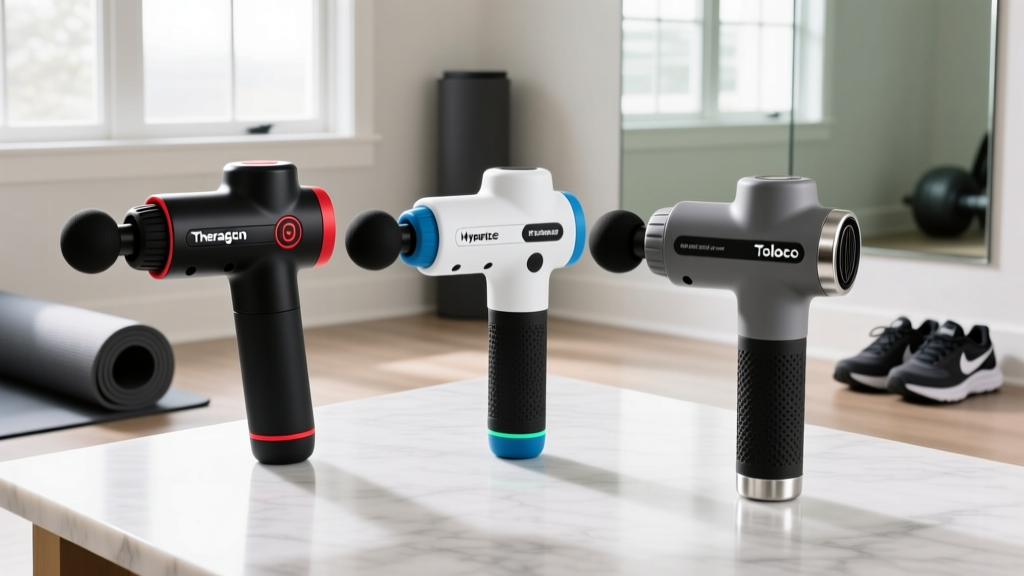
Theragun vs Hyperice & Toloco Massage Gun Review: Longevity Tips
8 Head Massage Gun vs Trigger Point Balls: 2026 Value Breakdown
Space-Saving Recovery: Trigger Point Tools vs Etafor Plus Massage Gun
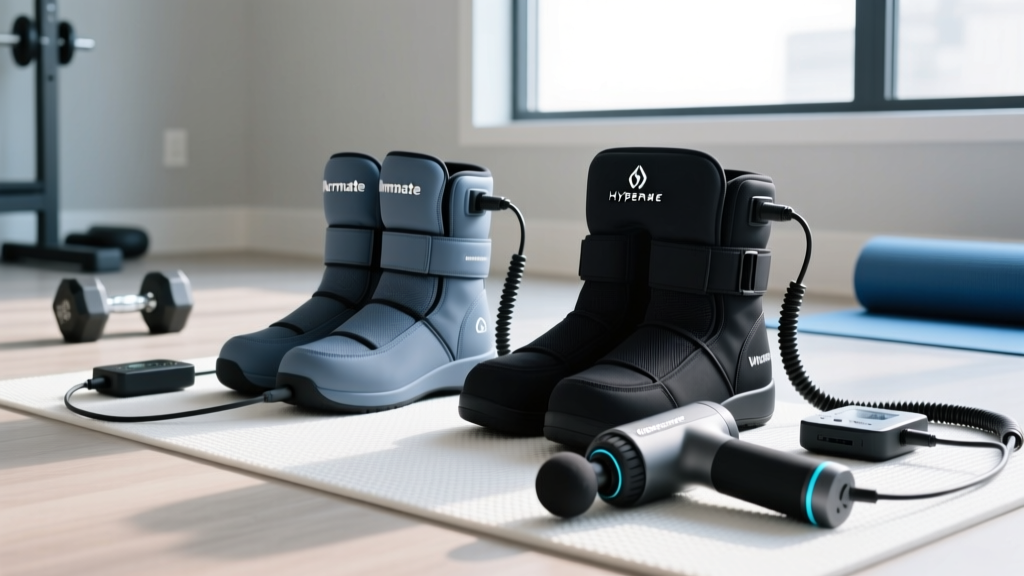
Normatec vs Hyperice Boots Setup: Integrating a Vibrapower Massage Gun
