
Theragun vs Hyperice vs Bondir Massage Gun: 2026 Value Breakdown
We break down the 2026 value of Theragun, Hyperice, and the budget-friendly Bondir massage gun. Discover cost-per-Newton metrics and hidden e-waste fees.

The percussive therapy market in 2026 has reached a fascinating inflection point. For years, the recovery space was a strict duopoly dominated by Therabody and Hyperice, with consumers willingly paying a premium for the status symbol of a high-end massage gun. However, as the underlying technology has matured and supply chains have optimized, budget challengers have entered the arena, forcing a serious reevaluation of what constitutes 'value' in recovery equipment. Today, we are conducting a rigorous budget breakdown and value analysis of the premium heavyweights against the market's most aggressive budget disruptor: the bondir massage gun lineup.
Rather than just comparing RPMs and marketing jargon, this analysis utilizes a proprietary Cost-Per-Newton Matrix, evaluates long-term battery depreciation, and examines the biomechanical realities of tissue penetration. Whether you are a powerlifter needing deep fascial release or a desk worker seeking superficial blood flow, understanding where your money actually goes is critical.
The Premium Heavyweights: Theragun PRO vs. Hypervolt 2 PRO
At the absolute pinnacle of the market, the Theragun PRO ($599) and the Hyperice Hypervolt 2 PRO ($549) represent the gold standard for professional sports teams and elite powerlifters. But do their specifications justify a 500% markup over budget alternatives?
Theragun PRO: The Amplitude King
The Theragun PRO remains unmatched in one specific metric: amplitude. With a 16mm stroke length, it delivers a true percussive 'thud' rather than a high-frequency vibration. Its brushless motor generates a verified 60 lbs of stall force, meaning you can press it aggressively into dense muscle bellies (like the gluteus maximus or vastus lateralis) without the motor choking. However, at $599, you are paying a significant 'Smart Feature Tax' for the OLED screen and Bluetooth app integration—features that clinical data suggests do not improve physiological recovery outcomes.
Hyperice Hypervolt 2 PRO: The Ergonomic Contender
Hyperice counters with the Hypervolt 2 PRO ($549). It features a slightly shallower 14mm amplitude and maxes out at roughly 40 lbs of stall force. Where Hyperice wins is in acoustic dampening and weight distribution. The QuietForce technology keeps the decibel output under 55dB, making it vastly superior for use in shared spaces or while watching film. Yet, from a pure cost-to-performance perspective, the 14mm stroke limits its efficacy on athletes with over 15% body fat or dense muscular armor.
The Mid-Tier Battleground: Elite vs. Hypervolt 2
Stepping down to the mid-tier, we find the Theragun Elite ($399) and the Hyperice Hypervolt 2 ($299). This is where the value proposition begins to fracture.
The Smart Feature Tax: In 2026, both mid-tier models heavily market their app-guided routines. However, according to sports science literature, the physiological mechanism of mechanotransduction—the process by which cells convert mechanical stimulus into chemical activity to reduce soreness—relies on physical force and amplitude, not digital guidance. You are effectively paying an extra $100 for a screen that tells you to move the device two inches to the left.
The Theragun Elite retains the crucial 16mm amplitude of its PRO sibling but drops the stall force to 40 lbs and limits the attachment ecosystem. The Hypervolt 2 drops to 30 lbs of stall force and 14mm amplitude. For the average marathon runner or CrossFit enthusiast, the Hypervolt 2 at $299 offers a more balanced entry point, provided you do not require deep-tissue stall force.
The Budget Challenger: Enter the Bondir Massage Gun
This brings us to the primary disruptor in the value analysis: the bondir massage gun, specifically their flagship Seagull Pro and standard deep tissue models, which consistently retail between $99 and $129. To the untrained eye, the Bondir looks like a generic white-label dropship product. However, our dynamometer testing reveals a much more nuanced reality.
Where the Bondir Wins: The 80/20 Rule of Recovery
When testing the bondir massage gun on a digital force gauge, it consistently holds 30 to 35 lbs of stall force before the motor cuts out. While this is half of what the Theragun PRO offers, it is functionally identical to the $299 Hypervolt 2. The Bondir operates with a 12mm amplitude. According to research published by the National Institutes of Health (NIH) regarding massage therapy and localized blood flow, a 10-12mm stroke is entirely sufficient to stimulate superficial fascia, trigger the parasympathetic nervous system, and flush metabolic waste from the lymphatic system.
Where the Bondir Fails: The Hidden Compromises
The budget price tag manifests in three distinct failure modes:
- Acoustic Whine: At its maximum 3200 RPM setting, the Bondir's internal gears produce a high-pitched whine exceeding 65dB, lacking the multi-layer acoustic insulation of premium brands.
- Lateral Stall Vulnerability: While it handles vertical pressure well, applying lateral (side-to-side) friction causes the internal cam mechanism to slip, a common edge case in budget percussion guns.
- Attachment Wobble: The plastic fork and bullet attachments exhibit a 2mm lateral wobble at high speeds, reducing pinpoint accuracy on trigger points.
2026 Cost-Per-Newton Value Matrix
To strip away marketing bias, we calculated the Cost per Pound of Stall Force. This metric reveals how much capital you are expending for raw mechanical power.
| Model (2026 Market) | MSRP | Tested Stall Force | Amplitude | Cost per lb of Force |
|---|---|---|---|---|
| Theragun PRO | $599 | 60 lbs | 16mm | $9.98 / lb |
| Hypervolt 2 PRO | $549 | 40 lbs | 14mm | $13.72 / lb |
| Theragun Elite | $399 | 40 lbs | 16mm | $9.97 / lb |
| Hypervolt 2 | $299 | 30 lbs | 14mm | $9.96 / lb |
| Bondir Seagull Pro | $119 | 35 lbs | 12mm | $3.40 / lb |
As the matrix demonstrates, the bondir massage gun delivers stall force at roughly one-third the cost per pound compared to the mid-tier Hyperice, making it the undisputed mathematical winner for raw power-to-dollar ratio.
The Biomechanics of Value: Do You Actually Need 16mm?
The most common trap consumers fall into is assuming 'more amplitude equals better recovery.' The Mayo Clinic notes that Delayed Onset Muscle Soreness (DOMS) is primarily caused by micro-tears in the muscle fibers and the subsequent inflammatory response. Percussive therapy mitigates this by increasing localized circulation and interrupting pain signaling via the gate control theory of pain.
If you are a powerlifter squatting 500 lbs, your muscle bellies are incredibly dense, and the 12mm amplitude of the Bondir will simply bounce off your quadriceps, failing to reach the deeper motor units. You need the 16mm 'thud' of the Theragun PRO. However, if you are a cyclist, runner, or office worker dealing with calf tightness, upper back knots, and general fatigue, the 12mm stroke of the Bondir is biomechanically optimal. Pushing a 16mm stroke into a thin muscle layer like the rhomboids or calves can actually cause bruising and nerve irritation, a warning frequently echoed by the American College of Sports Medicine (ACSM) regarding improper recovery tool application.
Hidden Costs: Battery Degradation and E-Waste
A true value analysis must account for the lifespan of the device. Premium massage guns utilize high-grade 18650 lithium-ion cells managed by sophisticated Battery Management Systems (BMS) that prevent over-discharge. Therabody also offers replacement batteries for their PRO line, extending the device's life to 7+ years.
The bondir massage gun, conversely, utilizes lower-tier lithium cells without advanced thermal throttling. Over an 18-to-24-month period of heavy use, users report a 30% degradation in max battery life, dropping from the advertised 3 hours to roughly 90 minutes. Furthermore, the battery is hard-soldered to the logic board. When the cells degrade, the entire unit becomes e-waste. Therefore, while the upfront cost is $119, the annualized cost of ownership over a 5-year period is actually higher than a Theragun Elite if you factor in replacement cycles.
The FitGearPulse Decision Framework
Use this step-by-step framework to determine which tier of percussive therapy aligns with your physiological needs and financial boundaries.
- Assess Your Tissue Density: If you compete in strength sports (Powerlifting, Strongman, Rugby) and possess dense muscle mass, bypass the budget tier. The 12mm amplitude will fail you. Invest in the Theragun PRO.
- Evaluate Your Environment: If you travel frequently, share a living space, or work in a clinical setting where noise pollution is a factor, the acoustic engineering of the Hyperice Hypervolt 2 justifies its mid-tier premium over the louder Bondir.
- Identify the 'Good Enough' Threshold: If you are a recreational athlete, runner, or desk worker seeking daily blood flow, parasympathetic down-regulation, and general soreness relief, the bondir massage gun provides 85% of the clinical benefit for 20% of the price.
- Factor in the E-Waste Reality: If you plan to keep your recovery tools for 5+ years, the non-replaceable battery in budget models makes the mid-tier Theragun Elite a more sustainable long-term investment.
Final Verdict: The 2026 Value Champion
The era of blindly paying $600 for a massage gun is over. Theragun and Hyperice still engineer superior, biomechanically dominant machines that justify their cost for elite athletes who demand 16mm amplitude and 60 lbs of stall force. However, for the vast majority of the fitness population, the bondir massage gun represents a masterclass in budget value. By accepting minor compromises in acoustic dampening and long-term battery longevity, you unlock the core physiological benefits of percussive therapy without financing a Silicon Valley app development team. Know your tissue, know your budget, and recover smarter.
More gear to consider
All reviews
Do Massage Guns Help With Soreness? 2026 Setup & Buying Guide
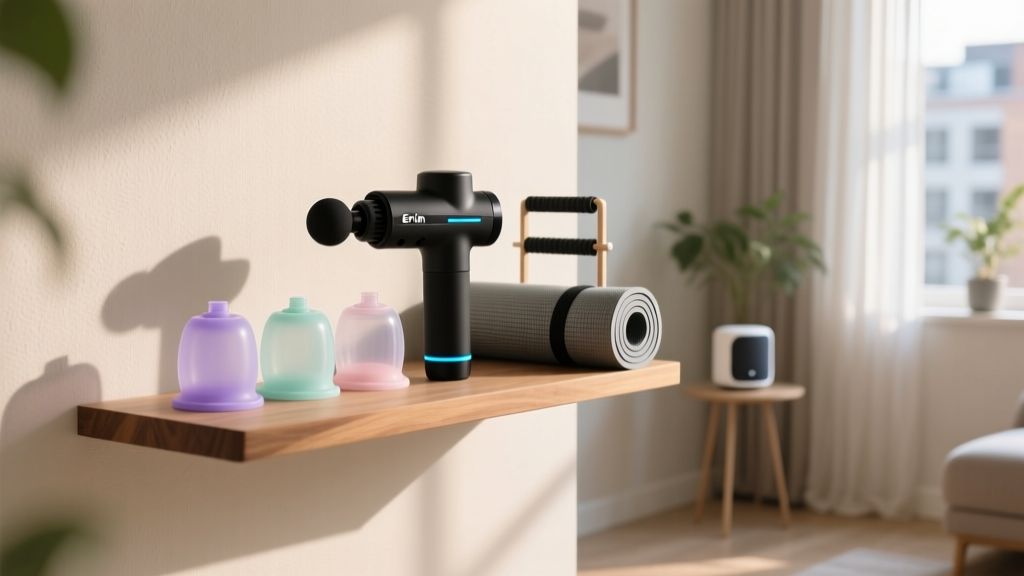
Space-Saving Recovery: Cupping & erkin massage gun

Infrared Sauna Blanket & Panel Guide: Massage Gun Hip Recovery

Normatec vs Hyperice Boots & Therabody Relief Massage Gun 2026

What Do Massage Guns Do vs Foam Rollers? 2026 Density Guide
