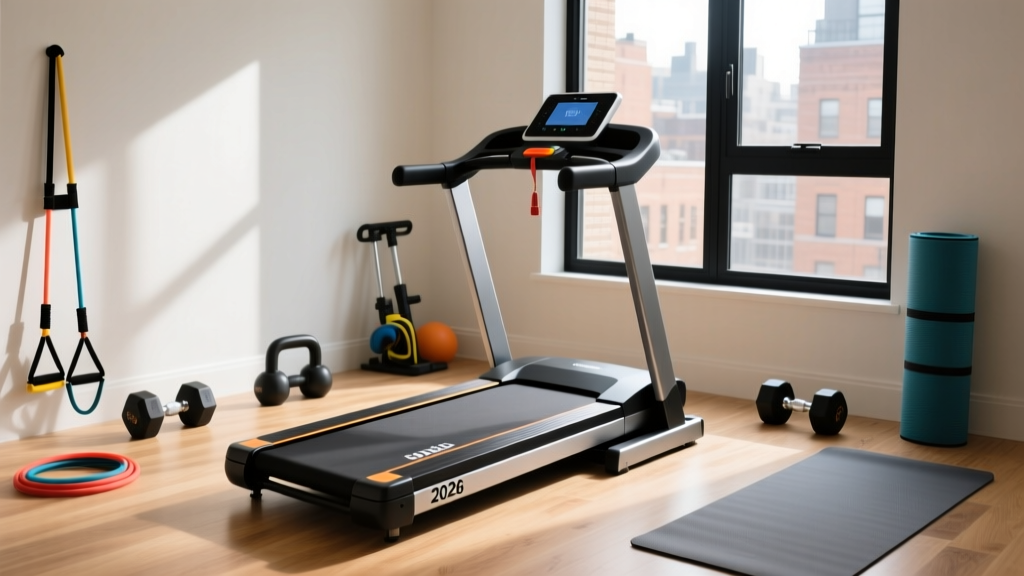
Can You Use Strava on a Treadmill? 2026 Portable Cardio Budget Guide
Wondering if you can use Strava on a treadmill? We break down the 2026 budget for portable cardio equipment and how to accurately track indoor miles.

As urban living spaces shrink and remote work becomes a permanent fixture in 2026, compact portable cardio equipment like under-desk ellipticals, folding treadmills, and walking pads have exploded in popularity. But for data-driven athletes and casual walkers alike, a major friction point remains: tracking. If you are investing in a space-saving machine, the first question you likely asked is, can you use strava on a treadmill that folds up and slides under your bed?
The short answer is yes, but the method of tracking—and the hidden costs required to make it accurate—varies wildly depending on the machine's internal technology. In this budget breakdown and value analysis, we will dissect the real costs of building a portable cardio setup that seamlessly syncs to Strava, exposing the hardware limitations of budget machines and the exact workarounds you need to log your indoor miles accurately.
The Short Answer: How Strava Connects to Portable Cardio
Strava itself does not 'talk' directly to most budget walking pads or compact treadmills. Instead, it relies on three distinct data pipelines. Understanding these pipelines is critical to budgeting for your home gym:
- Native FTMS Bluetooth: The Fitness Machine Service (FTMS) protocol allows treadmills to broadcast speed, incline, and distance directly to smartwatches and third-party apps (like Zwift), which then auto-sync to Strava.
- Proprietary App API Bridging: Many budget walking pads use a closed ecosystem (e.g., the KS Fit or UREVO apps). These apps track your workout via Bluetooth and use an API bridge to push a .FIT file to Strava upon completion.
- Wearable Accelerometers & Foot Pods: Bypassing the machine entirely, using a GPS watch (with GPS turned off) or a dedicated running foot pod to measure biomechanical movement and sync directly to Strava's compatible devices network.
The Hidden Costs of Portable Cardio Tracking
When consumers budget for a compact treadmill, they usually only factor in the hardware. However, achieving accurate Strava integration often requires secondary purchases. Budget walking pads (under $300) rarely feature FTMS chips to save on manufacturing costs. To get accurate distance and pace on Strava without relying on buggy proprietary apps, you may need to invest in a wearable sensor.
According to the American Heart Association, consistent tracking of moderate-intensity aerobic activity is key to maintaining cardiovascular health, making accurate data capture more than just a vanity metric. If your budget walking pad's belt slips—a common failure mode in sub-$250 models with lighter flywheels—the machine's internal console will report 3.0 miles, while your actual biomechanical output might only be 2.6 miles. A foot pod solves this discrepancy.
2026 Portable Cardio Budget Breakdown: 3 Tiers for Strava Syncing
Let us break down the actual market value of compact cardio equipment in 2026, categorized by how easily and accurately they integrate with your Strava profile.
Tier 1: The Budget Walking Pad + API Bridge (Under $400)
Featured Model: UREVO Strol 2E Smart Walking Pad
Hardware Cost: ~$349
Tracking Cost: $0 (Requires Smartphone)
The Setup: The UREVO Strol 2E is a foldable walking pad with a handlebar, maxing out at 7.6 mph. It lacks native FTMS. To get your miles onto Strava, you must use the UREVO companion app. During setup, you navigate to the app's 'Account' settings and authorize a direct API link to Strava. When you finish your walk, the app automatically uploads the activity as an 'Indoor Walk'.
Value Verdict: Excellent for casual walkers logging 10k steps. However, because it relies on the treadmill's internal belt rotation sensor, if the belt tension loosens over time (a common edge case after 6 months of heavy use), your Strava distance will slowly become inflated compared to your actual effort.
Tier 2: The Mid-Range Foldable FTMS Treadmill ($600 - $900)
Featured Model: Horizon Fitness T202
Hardware Cost: ~$799
Tracking Cost: $0 (If you own a Garmin/Apple Watch or use Zwift)
The Setup: The Horizon T202 folds vertically to save space but includes a premium FTMS Bluetooth chip. You can pair the treadmill directly to a Garmin Forerunner or Apple Watch Ultra via the watch's native indoor running profile. The watch pulls exact speed and distance data directly from the treadmill's motor controller, bypassing the watch's internal accelerometer entirely.
Value Verdict: This is the sweet spot for serious runners living in apartments. The FTMS connection guarantees 100% data parity between the treadmill console and your Strava feed. No API bridges, no third-party apps, no data lag.
Tier 3: The Under-Desk Portable Alternative ($200 - $300)
Featured Model: Cubii JR2 Under-Desk Elliptical
Hardware Cost: ~$249
Tracking Cost: $0
The Setup: If a treadmill is too loud or large for your space, portable ellipticals are the alternative. The Cubii JR2 uses Bluetooth to connect to the Cubii app, which features a built-in, one-tap export function to Strava. It logs as an 'Elliptical' activity, capturing strides and estimated calories.
Value Analysis Matrix: Equipment vs. Tracking Accuracy
| Equipment Type | Avg. 2026 Price | Strava Sync Method | Data Accuracy |
|---|---|---|---|
| Budget Walking Pad (No App) | $150 - $250 | Smartwatch Accelerometer | Low (Prone to drift) |
| Smart Walking Pad (UREVO/KingSmith) | $300 - $500 | Proprietary App API Bridge | Medium (Belt-slip variance) |
| FTMS Foldable Treadmill (Horizon) | $700 - $900 | Native Bluetooth to Watch/Zwift | High (Motor-calibrated) |
| Any Treadmill + Stryd Footpod | $299 (Pod only) | Direct Wearable Sync | Elite (Biomechanical) |
Step-by-Step: How to Force Strava to Recognize Budget Treadmills
If you have already purchased a budget walking pad that lacks both FTMS and a native API bridge, you are not entirely out of luck. You can manually port your data to Strava using the .FIT file method. Here is the exact workflow:
- Download a Third-Party Tracker: Use a free app like Treadmill Tracker or RunSocial on your smartphone. Place the phone in your pocket (not on the treadmill console, as the vibration will skew the accelerometer).
- Record the Session: Start the app when you start walking. The app uses your phone's internal sensors to estimate cadence and distance.
- Export the File: Once finished, locate the activity in the app's history and select 'Export as .FIT'.
- Upload to Strava: Open your mobile browser, navigate to Strava's web upload portal, and select the .FIT file. Strava will parse the data and format it as an indoor cardio session.
Frequently Asked Questions
Will Strava ban me for logging indoor treadmill miles?
No. Strava fully supports indoor activities. However, if you use a poorly calibrated budget walking pad that accidentally logs you as running a 3-minute mile due to a sensor glitch, Strava's automated anti-cheating algorithms may flag the activity and hide it from public leaderboards. Always verify your pace data before saving.
Do I need to pay for Strava Premium to track portable cardio?
No. Basic (free) Strava accounts can log, map, and share indoor treadmill and walking pad activities. Premium features like the Training Log and AI coaching are helpful for analyzing long-term portable cardio trends, but they are not required for basic data syncing.
Final Verdict: Where Should You Put Your Money?
If your primary goal is casual daily step-counting and you want to answer 'yes' to the question can you use strava on a treadmill without spending a fortune, a smart walking pad like the UREVO Strol 2E ($349) paired with its native API bridge offers the best entry-level value. However, if you are a dedicated runner using portable cardio to maintain strict marathon training zones, you must budget for an FTMS-enabled foldable treadmill like the Horizon T202 ($799). Skipping the FTMS chip to save $300 will inevitably lead to data frustration, rendering your hard-earned indoor miles inaccurate and ultimately useless for structured Strava training plans.
More gear to consider
All reviews
Air Bike vs Assault Bike: Sydney Sweeney Housemaid Treadmill Scene
Space Planning: Bike Types vs the Matrix Treadmill Manual Footprint

Compact Treadmill, Walking Pad, and Bike Maintenance Guide
Folding Treadmill for Small Spaces: Country Treadmill Classes Guide
Rowing vs Working Out on Treadmill to Lose Weight: A Guide
