Stationary Bike Types Budget Breakdown & Treadmill Turns On But Won't Start Fixes
Compare upright, recumbent, and spin bike budgets for 2026. Plus, cost-effective fixes for when your treadmill turns on but won't start.

The Cardio Crossroads: Repairing vs. Replacing Your Equipment
Investing in home cardio equipment is a commitment to your long-term health, but mechanical failures can quickly turn that investment into a financial headache. One of the most frustrating and common issues fitness enthusiasts face is when a treadmill turns on but won't start. The console lights up, the display initializes, but the belt remains completely stationary. When this happens, you are immediately faced with a budget dilemma: do you sink hundreds of dollars into diagnosing and repairing an aging motor system, or do you pivot that capital toward a more reliable, low-maintenance modality?
In 2026, the stationary bike market has evolved to offer exceptional value, lower lifetime maintenance costs, and superior biomechanical safety compared to aging treadmills. Before you authorize a $400 repair bill for your treadmill, it is crucial to understand the exact failure points of your current machine and conduct a thorough budget breakdown of the three primary stationary bike types: upright, recumbent, and spin (indoor cycle). This guide provides a deep-dive value analysis to help you maximize your fitness ROI.
Diagnosing the 'Turns On But Won't Start' Treadmill Error
When your treadmill's console has power, it means the low-voltage (5V-12V) logic board is functioning. The failure lies in the high-voltage drive system or the safety interlocks. Before abandoning the machine, check these four specific failure modes:
- The Safety Key Interlock: The most common and cheapest fix. If the magnetic safety key is demagnetized, or the internal reed switch has shifted out of alignment, the console will turn on but will not send the 'engage' signal to the motor. Fix: Test with a stronger neodymium magnet. Cost: $0 - $15.
- Motor Control Board (MCB) Failure: The MCB acts as the bridge between the console and the drive motor. If a capacitor blows or a relay fails, the board cannot deliver the 90V-130V DC required to spin the belt. Fix: Replace the MCB. Cost: $150 - $320 for parts.
- Optic Sensor Misalignment: Most modern treadmills use an optic sensor near the motor flywheel to read RPMs. If dust accumulates on the sensor eye or it gets knocked out of alignment during a heavy run, the system will abort the startup sequence to prevent motor overcurrent. Fix: Clean and realign the sensor. Cost: $0.
- Snapped or Slipped Drive Belt: If the motor hums but the belt doesn't move, the ribbed drive belt connecting the motor pulley to the front roller may have snapped or lost tension. Fix: Replace belt and adjust tension. Cost: $40 - $85.
Stationary Bike Types: Upright, Recumbent, and Spin Value Analysis
If you decide to pivot your budget away from treadmill repairs, you must choose the right stationary bike modality. The 2026 market is dominated by three distinct designs, each catering to different biomechanical needs and spatial constraints.
1. Spin Bikes (Indoor Cycles): The Performance Pick
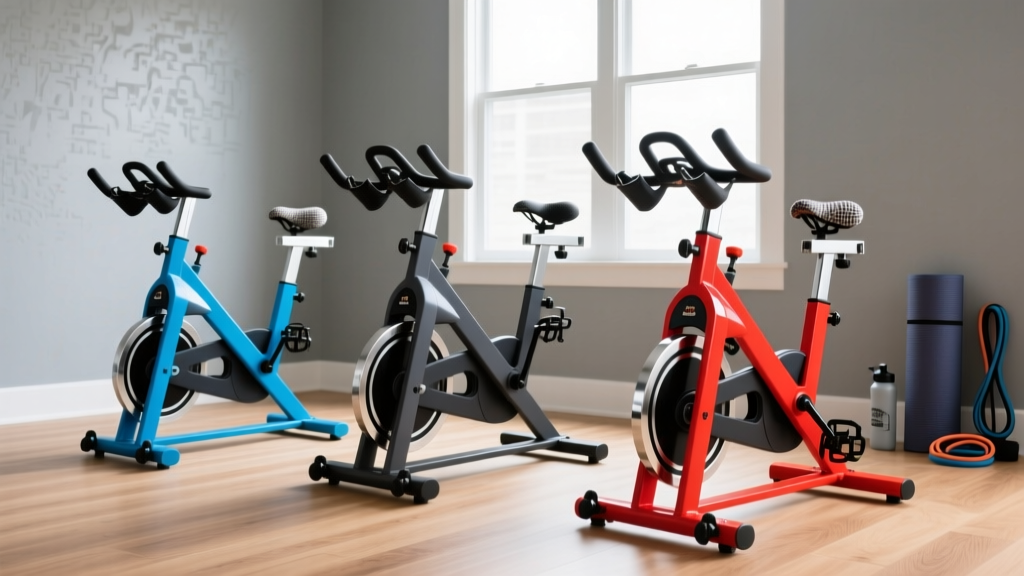
Spin bikes mimic the geometry of a road bike, featuring a heavy flywheel (typically 30 to 45 lbs) and a direct-drive or belt-drive system. They are designed for high-intensity interval training (HIIT), out-of-the-saddle climbing, and aggressive calorie burn.
- Key Specs to Look For: Magnetic resistance (avoid friction pads in 2026 due to dust and wear), 4-way adjustability (seat height, seat fore/aft, handlebar height, handlebar fore/aft), and a Q-factor (pedal width) of 160mm-170mm to protect knee joints.
- Top Value Models: The Schwinn IC4 ($799) remains the undisputed king of mid-tier value, featuring a belt drive and dual-sided pedals. For premium commercial-grade durability, the Keiser M3i ($1,595) uses an eddy-current magnetic system and an ultra-light 8lb flywheel geared up via internal pulleys, offering the smoothest pedal stroke on the market.
- Maintenance Profile: Extremely low. Belt drives require zero lubrication, and magnetic resistance has no physical contact points to degrade.
2. Upright Bikes: The Compact All-Rounder
Upright bikes feature a more relaxed geometry with a wider, padded saddle and higher handlebars. They are ideal for steady-state cardio, reading, or watching television while exercising. They take up less vertical space than spin bikes and often include integrated media consoles.
- Key Specs to Look For: Step-through frame designs for easy mounting, heavy flywells (15-20 lbs) hidden in the casing for momentum, and ergonomic grip pulse sensors.
- Top Value Models: The Nautilus U618 ($699) offers excellent Bluetooth connectivity and a comfortable ride for casual users. The Sole B94 ($1,199) steps up to a heavy-duty frame with a 20lb flywheel and a lifetime warranty on the frame and motor, making it a staple for dedicated home gyms.
- Maintenance Profile: Low to moderate. The primary wear item is the seat post slider, which may require occasional silicone lubrication to prevent squeaking.
3. Recumbent Bikes: The Ergonomic & Rehab Standard
Recumbent bikes place the user in a reclined position with the pedals out in front. This design completely eliminates load-bearing stress on the lumbar spine and drastically reduces shear force on the knees and hips. The Mayo Clinic frequently recommends low-impact, seated aerobic exercises like recumbent cycling for patients managing osteoarthritis or recovering from lower-body injuries.
- Key Specs to Look For: Breathable mesh backrests (superior to solid plastic for sweat management), a sliding seat rail with micro-adjustment locking pins, and a low step-over height (under 5 inches).
- Top Value Models: The Schwinn 270 ($899) is a budget-friendly powerhouse with 29 resistance levels and a dual-track LCD display. For a premium experience, the NordicTrack Commercial R30 ($1,499) offers a massive 22-inch pivoting touchscreen and automatic trainer control for iFIT integration.
- Maintenance Profile: Moderate. The long drive belt and pulley system inside the extended chassis can accumulate dust and may require tension adjustments every 2-3 years.
2026 Budget Breakdown & Lifetime Value Matrix
To truly understand the value proposition, we must look beyond the sticker price. The table below breaks down the initial investment, hidden subscription costs, and expected lifespan across the three bike categories.
| Bike Category | Entry-Level Budget | Mid-Tier Value Sweet Spot | Premium / Commercial | Est. Lifespan |
|---|---|---|---|---|
| Spin (Indoor Cycle) | $350 - $500 (Sunny Health, Yosuda) |
$799 - $1,099 (Schwinn IC4, Bowflex C6) |
$1,595 - $2,495 (Keiser M3i, Peloton Bike+) |
7 - 12 Years |
| Upright Bike | $250 - $400 (Generic Amazon Brands) |
$699 - $999 (Nautilus U618, ProForm) |
$1,199 - $1,899 (Sole B94, LifeFitness IC8) |
5 - 10 Years |
| Recumbent Bike | $400 - $600 (Exerpeutic, Marcy) |
$899 - $1,299 (Schwinn 270, Nautilus R618) |
$1,499 - $2,799 (NordicTrack R30, Matrix R50) |
8 - 15 Years |
Hidden Costs: Power Consumption and Ecosystem Traps
When conducting a budget breakdown, amateur buyers only look at the MSRP. Domain experts look at the Total Cost of Ownership (TCO). This is where stationary bikes drastically outperform treadmills.
The Electrical Draw Discrepancy
A standard motorized treadmill requires a dedicated 15-amp or 20-amp circuit. During a heavy run, the drive motor can draw between 600 to 1,500 watts of continuous power, spiking your monthly electricity bill if used daily. Furthermore, if your home's wiring is older, sharing a circuit with a treadmill can trip breakers or degrade the treadmill's MCB over time.
Conversely, modern magnetic resistance stationary bikes (upright, recumbent, and spin) utilize neodymium magnets and eddy currents. They draw virtually zero wattage for resistance generation. The only power required is for the LCD console and Bluetooth module, which typically pull less than 15 watts. Over a 5-year period, the electrical savings of switching from a daily-used treadmill to a magnetic bike can offset up to 15% of the bike's initial purchase price.
The Subscription Ecosystem Tax
In 2026, hardware is often subsidized by software subscriptions. If you purchase a NordicTrack or Peloton, expect to pay $15 to $44 per month for interactive programming. If your budget is strictly capped, prioritize 'open-ecosystem' bikes like the Schwinn IC4 or Sole B94. These machines feature dual-sided Bluetooth (FTMS protocol), allowing you to connect to free or low-cost third-party apps like Zwift, Kinomap, or MyHomeFit, keeping your ongoing monthly overhead at or near zero.
"The American Heart Association recommends at least 150 minutes of moderate-intensity aerobic activity per week. Achieving this on a low-impact, open-ecosystem stationary bike ensures cardiovascular compliance without the recurring financial penalty of proprietary software lock-in."
— Adapted from AHA Physical Activity Guidelines
Decision Framework: Matching Budget to Biomechanics
Use this rapid decision matrix to finalize your purchase based on your specific physical needs and financial parameters:
- Choose a Spin Bike if: You are training for outdoor cycling events, prefer high-cadence HIIT workouts, have a smaller spatial footprint, and want the highest resale value. (Budget Target: $800 - $1,500).
- Choose an Upright Bike if: You want a traditional gym-style cardio session, prefer to read or work on a tablet while exercising, and need a machine that is easy to move via transport wheels. (Budget Target: $700 - $1,100).
- Choose a Recumbent Bike if: You suffer from sciatica, lumbar disc herniation, or severe knee osteoarthritis. The pedal-forward geometry is non-negotiable for rehab and senior fitness. (Budget Target: $900 - $1,500).
Final Verdict: Protecting Your Fitness Investment
When your treadmill turns on but won't start, it is a mechanical cry for help. While a $15 safety key replacement or a sensor cleaning might resurrect it temporarily, aging treadmill motors and warped decks are a sinking financial ship. Pivoting your budget toward a high-quality upright, recumbent, or spin bike in 2026 is a strategic upgrade. You eliminate the high-voltage failure points, slash your electrical consumption, and gain access to a smoother, lower-impact cardiovascular training modality that will reliably serve your health goals for the next decade.
More gear to consider
All reviews
Air Bike vs Assault Bike Space & Burning Calories Walking on Treadmill

Curved vs Motorized Treadmill Assembly: Philadelphia Setup Guide

Precor Treadmill How to Use vs Home Stair Climber: Beginner Guide

Walking Pad Setup & Review: Avoid a Funny Treadmill GIF
Lamb Treadmill vs Walking Pads: Review & Troubleshooting