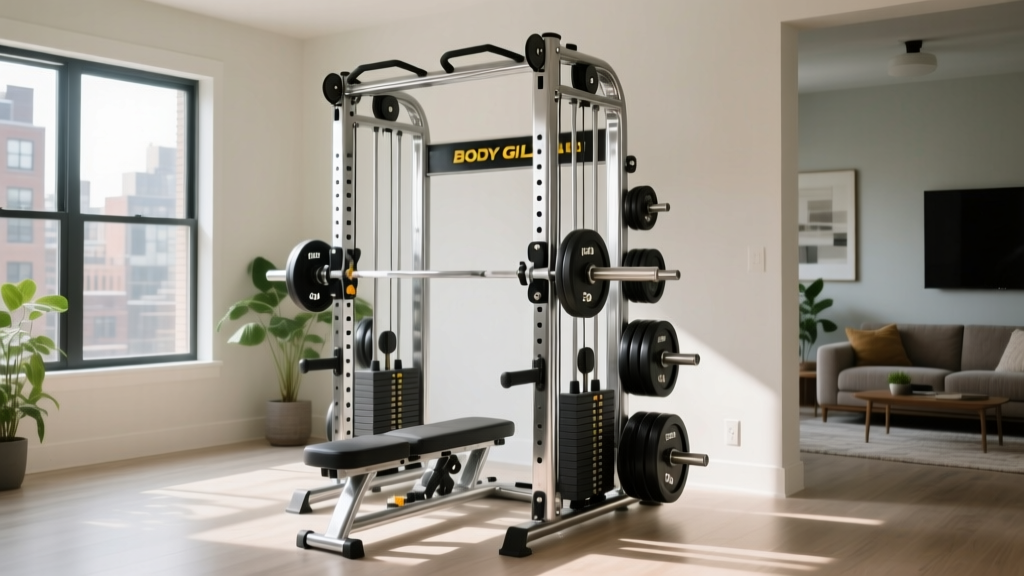
Beginner Starter Kit: Space Layouts For Home Gym Leg Exercises
Design a compact beginner starter kit optimized for space. Discover layout blueprints and gear for effective home gym leg exercises in small rooms.

The Paradox of the Compact Home Gym
Building a beginner home gym in a spare bedroom, small garage, or apartment corner often forces a brutal compromise: you can have a space-saving setup, or you can have effective leg days, but rarely both. Most beginners assume that training legs requires massive, footprint-heavy machines like leg presses or hack squat sleds. This is a fundamental misunderstanding of biomechanics and spatial design. By applying strategic layout principles and selecting the right modular starter kit, you can execute high-yield home gym leg exercises in a footprint as small as 4x6 feet when the equipment is not in use.
According to Mayo Clinic's guidelines on home exercise spaces, safety and functional movement patterns must dictate your floor plan, not just the storage dimensions of your gear. This guide breaks down the exact spatial math, equipment models, and layout blueprints required to build a beginner starter kit that prioritizes lower-body development without sacrificing your living space.
The 132-Inch Rule: Spatial Math for Leg Day
Before purchasing a single piece of equipment, you must understand the 'active footprint' versus the 'storage footprint'. A foldable squat rack might only protrude 4 inches from the wall when stored, but its active footprint during a set of barbell back squats is substantial.
The Barbell Clearance Formula
A standard Olympic barbell is 84 inches (7 feet) long. To safely load and unload bumper plates, you need a minimum of 24 inches of clearance on each sleeve. Total minimum width required: 132 inches (11 feet). If your room is narrower than 11 feet, you must either use shorter specialty bars (like a 6-foot Rogue Cargo Bar) or rely heavily on unilateral dumbbell movements, which we will cover in the programming section below.
Furthermore, depth is critical for safety during squats and lunges. You need at least 36 inches behind the barbell for bailing out of a failed rep or stepping back into a lunge, and 48 inches in front for spotting and plate storage. This establishes a minimum 'active zone' of 7 feet by 11 feet for bilateral barbell training.
Essential Gear Matrix: Space-Saving Leg Builders
To optimize for space without sacrificing the progressive overload necessary for leg hypertrophy, your starter kit must feature modular, multi-purpose equipment. Below is the 2026 benchmark matrix for a space-optimized leg day kit.
| Equipment | Recommended Model (2026) | Approx. Cost | Storage Footprint | Primary Leg Application |
|---|---|---|---|---|
| Wall-Mount Rack | Rogue R-3 Fold Back | $625 | 4" depth (folded) | Squats, Rack Pulls, Pin Squats |
| Adjustable Bench | Rogue Utility Bench 3.0 | $495 | 18" x 48" (storable) | Bulgarian Split Squats, Seated Good Mornings |
| Dumbbells | Nuobell 80lb Adjustable | $429 | 15" x 8" (per bell) | RDLs, Goblet Squats, Walking Lunges |
| Landmine Base | Rogue Ares Attachment | $145 | Integrated to Rack | Landmine Hack Squats, Reverse Lunges |
| Resistance Bands | Rogue Monster Bands (Set) | $115 | Negligible (hang on rack) | Banded Leg Curls, Adductor Work |
Layout Blueprint: Zoning the 'Triangle of Movement'
Space optimization is not just about buying folding gear; it is about minimizing the friction of transitioning between exercises. In a compact room, dragging 45-pound bumper plates across the floor destroys your momentum and scratches your flooring. We recommend designing your layout around the Triangle of Movement.
Zone 1: The Anchor (The Rack & Plate Storage)
Mount your folding rack on the longest unbroken wall. Store your bumper plates on vertical plate tree pegs attached directly to the uprights of the rack, rather than using a freestanding plate tree. This reclaims up to 4 square feet of floor space. Ensure the bottom of your rack's uprights is sealed with high-density rubber mats to prevent floor indentation during heavy squat sessions.
Zone 2: The Unilateral Corridor
Leave a 3-foot wide by 6-foot long corridor directly adjacent to the rack. This is your 'lunging and split squat' lane. By keeping this space permanently clear of storage bins or extra gear, you can perform walking lunges or Bulgarian split squats using the Rogue Utility Bench without having to rearrange the room mid-workout.
Zone 3: The Floor Work Mat
Position a 4x6 foot interlocking EVA foam or horse-stall mat setup directly in front of the rack. This is where your Nuobell dumbbells live during the workout. Keeping the dumbbells within arm's reach of the barbell allows for seamless superset transitions—such as moving immediately from heavy barbell front squats to dumbbell Romanian Deadlifts (RDLs) without crossing the room.
Why Space Constraints Favor Unilateral Leg Training
When spatial limitations prevent the use of a leg press or a full 132-inch barbell path, beginners often panic about losing leg mass. However, research published in the Journal of Sports Science & Medicine demonstrates that unilateral exercises (like split squats and single-leg RDLs) produce equal, and sometimes superior, muscle activation in the quadriceps and hamstrings compared to bilateral movements, largely due to the elimination of bilateral deficits and increased stabilization demands.
"The landmine hack squat is the ultimate spatial hack for home gyms. By wedging a barbell into a landmine base attached to your folded rack, you can replicate the exact biomechanical path of a $3,000 hack squat machine using only 4 feet of forward floor space."
Space-Saver Leg Day Programming Framework
Here is a highly effective, space-conscious leg day routine designed specifically for the starter kit matrix above. Rest times are kept to 90 seconds to maintain intensity without requiring you to pace around a cramped room.
- 1. Landmine Hack Squats: 4 sets of 8-10 reps. (Utilizes the corner footprint; targets quads and glutes without needing a spotter or massive barbell clearance).
- 2. Bulgarian Split Squats: 3 sets of 8-12 reps per leg. (Uses the Utility Bench and Nuobell dumbbells; stays entirely within the Unilateral Corridor).
- 3. Dumbbell RDLs: 4 sets of 10-12 reps. (Targets hamstrings; requires only 2 feet of forward depth).
- 4. Banded Lying Leg Curls: 3 sets to failure. (Loop a Rogue Monster band around the base of the rack and your ankle; lie on the mat. Replicates a machine leg curl in zero extra space).
Common Layout Mistakes That Kill Leg Gains
Even with the right gear, poor spatial planning can render your home gym leg exercises ineffective or dangerous. Avoid these three critical layout errors:
- The Mirror Proximity Trap: Many beginners mount gym mirrors flush against the wall directly behind or beside the squat rack to check their form. If your rack is mounted on a wall, and you step back to bail a squat, you will crash into the glass. Always leave a 24-inch buffer between the back of your active squat zone and any mirrored surfaces.
- Ignoring Overhead Clearance: A standard ceiling is 8 feet (96 inches). If your pull-up bar sits at 84 inches, and you are 6 feet tall, you cannot safely perform overhead presses or high-bar squats with plates on the bar. Always measure your ceiling height minus your height plus 12 inches before finalizing your rack placement.
- Ventilation Blindspots: Leg days generate immense metabolic heat and CO2 output. Placing your squat rack in a closed corner without cross-ventilation or a directed floor fan will cause premature central nervous system fatigue. Position your primary fan at the entrance of the room, pushing air toward the rack, rather than pulling it out.
Final Thoughts on Spatial Efficiency
Building a beginner home gym starter kit for leg training does not require a commercial facility's footprint. By respecting the 132-inch barbell rule, investing in modular folding gear like the Rogue R-3, and embracing the biomechanical superiority of unilateral movements, you can build a world-class lower body in a spare bedroom. Optimize your layout for the flow of movement, not just the storage of steel, and your home gym leg exercises will yield results that rival any big-box commercial gym.
More gear to consider
All reviews
Centr 1 Home Gym Reviews: Best Compact & Foldable Alternatives

Shared Home Gym Setup: REP PR-1100 Power Rack Hands-On Review

Home Gym Alternatives vs. Traditional Free Weights: A Practical, Space-Smart Comparison
How Much Weight You Need: Home Gym Weight Selection & Boxing Equipment

Budget Home Gym Garage Conversion Under $500 (2026)