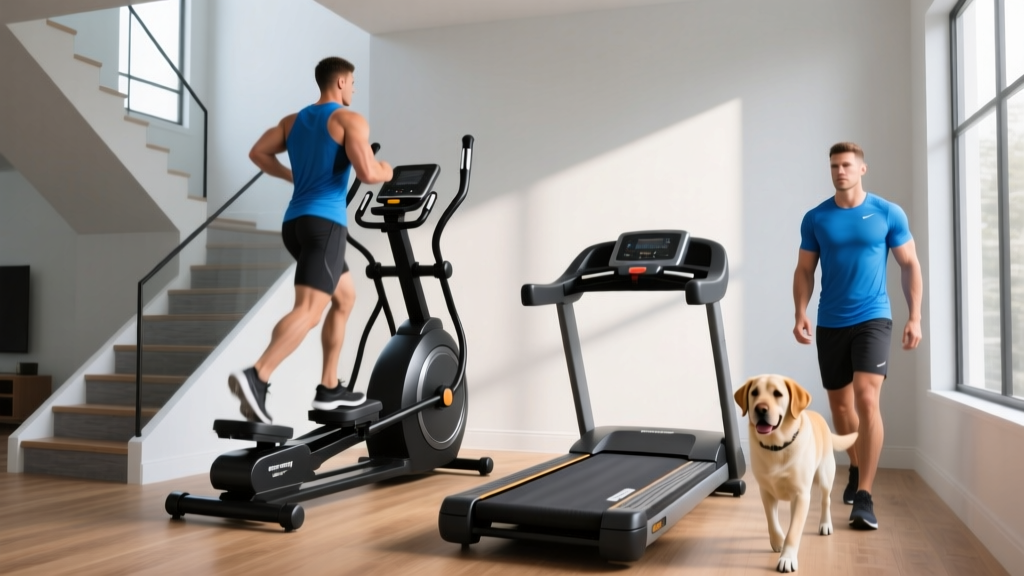
Home Stair Climber Guide vs. Treadmill for Dogs and Humans
Master your home cardio with our beginner step-by-step stair climber guide. Plus, we compare it to shared treadmills for dogs and humans in multi-pet homes.

The Ultimate 2026 Home Cardio Dilemma: Multi-Species Households
Outfitting a home gym in 2026 requires balancing spatial efficiency, biomechanical yield, and household logistics. For fitness enthusiasts who also own active canine companions, the equipment selection process becomes uniquely complex. Many multi-pet homeowners find themselves searching for a versatile treadmill for dogs and humans, hoping to save space and money with a single machine. However, as we will explore in this comprehensive stair climber machine for home use guide, attempting to share a traditional treadmill across species often leads to equipment failure and safety hazards.
Instead, the smartest approach for modern households is investing in a dedicated stair climber for the human, paired with a species-specific dog treadmill. This guide will walk you through the exact step-by-step process of mastering the stair climber, highlight the best models on the market, and explain the mechanical realities of sharing cardio equipment with your pets.
⚠️ Safety Callout: According to the American Kennel Club (AKC), dogs require specialized pacing and side-enclosures on treadmills to prevent joint strain and falls. Never force a dog onto a standard human treadmill without a specialized harness and enclosure system.Why the Stair Climber Reigns Supreme for Home Use
When evaluating cardio machines, the stair climber (specifically the stepmill variety with rotating stairs) offers an unmatched combination of cardiovascular conditioning and lower-body hypertrophy. Unlike treadmills or ellipticals, stair climbers force you to lift your entire body weight against gravity with every step.
- Caloric Expenditure: Data published by the Mayo Clinic highlights that weight-bearing aerobic exercises like stair climbing can burn between 400 to 600 calories per hour, depending on intensity and user weight.
- Glute and Quad Activation: The vertical vector of the movement heavily targets the gluteus maximus and quadriceps, areas that remain under-stimulated during flat-plane walking.
- Pet-Hair Resistance: Unlike treadmills, which use a motorized belt and a cooling fan that actively sucks in airborne dog and cat hair (leading to fried motor control boards), stair climbers utilize sealed internal gearboxes or magnetic resistance systems that are highly resistant to pet dander and debris.
Step-by-Step Beginner Guide to Your First Stair Climber Workout
If you have just unboxed your new machine, do not simply step on and hit 'Start'. Proper form is critical to prevent lumbar strain and maximize glute engagement. Follow this 4-step beginner protocol.
Step 1: The Mount and Posture Check
Step onto the bottom stair and immediately grasp the side handrails. Press 'Start' at the lowest speed (usually 15-20 steps per minute). The Golden Rule: Do not lean your weight onto the handrails. Leaning reduces caloric burn by up to 30% and shifts the load away from your glutes onto your lower back. Keep your chest up, shoulders retracted, and use the rails only for balance.
Step 2: The 15-Minute Baseline Assessment
For your first week, aim for 15 minutes at a steady, conversational pace. Focus on driving through your heel rather than your toe. Pushing through the toe over-activates the calves and can lead to Achilles tendonitis, a common beginner failure mode.
Step 3: Implementing the 2:1 Interval Protocol
Once you can comfortably complete 20 minutes at a steady state, introduce intervals to spike your VO2 max.
- Warm-up: 5 minutes at 25 steps/min.
- Work Interval: 2 minutes at 45 steps/min (you should be breathing heavily, unable to speak in full sentences).
- Active Recovery: 1 minute at 20 steps/min.
- Repeat: Cycle the work/recovery blocks 5 times.
- Cool-down: 3 minutes at 15 steps/min.
Step 4: Progressive Overload via Resistance, Not Just Speed
By week four, stop increasing the step rate. Instead, use the machine's resistance settings. Higher resistance at a slower cadence builds muscular endurance and strength, whereas high speed purely targets cardiovascular conditioning.
Top Stair Climbers for Home Gyms in 2026
Not all climbers are created equal. Here are three distinct models tailored to different budgets and spatial constraints.
| Model | Type | Price Range | Footprint | Best For |
|---|---|---|---|---|
| NordicTrack CLM990 | Rotating Stairmill | $1,299 - $1,499 | 35" x 55" | Purists wanting commercial-grade stepping mechanics. |
| Bowflex Max Trainer M9 | Hybrid Stepper/Elliptical | $2,299 - $2,499 | 30" x 49" | Users needing low-impact, upper-body integration, and smart screens. |
| Sunny Health SF-S900015 | Mini-Stepper with Bands | $400 - $450 | 22" x 28" | Small apartments; budget-conscious beginners. |
The Multi-Pet Dilemma: Why a 'Treadmill for Dogs and Humans' is a Myth
When outfitting a shared space, many owners ask if they should invest in a stair climber for themselves and a separate setup, or search for a versatile treadmill for dogs and humans. The reality of biomechanics and mechanical engineering makes a true dual-use treadmill virtually non-existent and highly inadvisable.
The Biomechanical Mismatch
Human treadmills (like the popular NordicTrack T Series 10) feature a 55-inch belt length to accommodate a human stride. Dogs, however, require a completely different belt texture for claw traction, and more importantly, they lack the cognitive awareness to stay centered on a belt without physical side guards. Conversely, dedicated dog treadmills (such as the dogPACER LF 3.1, priced around $650) feature a 71-inch belt to allow for a dog's full gallop, but the belt is only 16 inches wide and sits mere inches off the ground. A human attempting to use a dog treadmill would face severe stride restriction and dangerous tripping hazards.
The Motor Housing Failure Mode
This is the most critical, non-obvious insight for pet owners. Treadmill motors rely on an integrated cooling fan. When a dog runs on a human treadmill, the friction of their claws creates micro-tears in the belt, and their shedding hair is pulled directly into the motor housing via the cooling fan. Within 6 to 12 months, the hair clogs the fan, the motor overheats, and the Motor Control Board (MCB) shorts out—a repair that often costs over $400. Stair climbers, lacking a large exposed belt and motor fan, bypass this failure mode entirely.
Expert Insight: If you live in a multi-pet household, the optimal 2026 home gym setup is a sealed-resistance stair climber for the human, paired with a dedicated, side-enclosed canine treadmill. Do not compromise on a shared 'treadmill for dogs and humans'—it will void your warranty and risk your pet's safety.
Essential Maintenance for Pet Owners
If you do utilize any belt-driven cardio equipment in a home with shedding pets, strict maintenance is non-negotiable.
- Weekly Vacuuming: Use a crevice tool to vacuum the motor hood and the rear roller of any treadmill. Never use a wet cloth near the MCB.
- Silicone Lubrication: Apply 100% pure silicone treadmill lubricant under the belt every 40 hours of use. Friction from dry belts draws higher amperage, which accelerates motor burnout when combined with pet-hair insulation.
- Stair Climber Track Care: For stepmills, wipe down the stair treads with a mild, non-abrasive cleaner to remove paw prints and dander that can make the steps slippery for barefoot human use.
Frequently Asked Questions (FAQ)
Can I use a human treadmill for my dog if I hold their leash?
While some trainers do this temporarily, it is highly discouraged for regular use. Human treadmill belts are too slick for dog paw pads, leading to splaying and joint stress. Furthermore, if the dog slips, there are no side panels to catch them, risking severe injury from the rear roller.
Is a stair climber bad for my knees?
When used correctly, no. The Mayo Clinic notes that stair climbing is a low-impact exercise compared to running on pavement, as there is no downward striking force. However, if you have pre-existing patellofemoral pain syndrome, you should limit the range of motion or opt for an elliptical.
How much ceiling clearance do I need for a stair climber?
You must measure your ceiling height carefully. Because you are elevated on the steps, you need your exact height plus 10 to 14 inches of clearance. For a 6-foot user on a NordicTrack CLM990, you need a minimum ceiling height of 7 feet 6 inches to avoid head strikes at the top of the stride.
Final Verdict
Building a home gym in a household with pets requires strategic equipment selection. By abandoning the flawed concept of a shared treadmill for dogs and humans, and instead embracing the biomechanical superiority of a dedicated stair climber, you protect your joints, your equipment's motor, and your pet's safety. Follow the step-by-step progression outlined above, respect the maintenance protocols, and you will transform your home cardio routine in 2026 and beyond.
More gear to consider
All reviews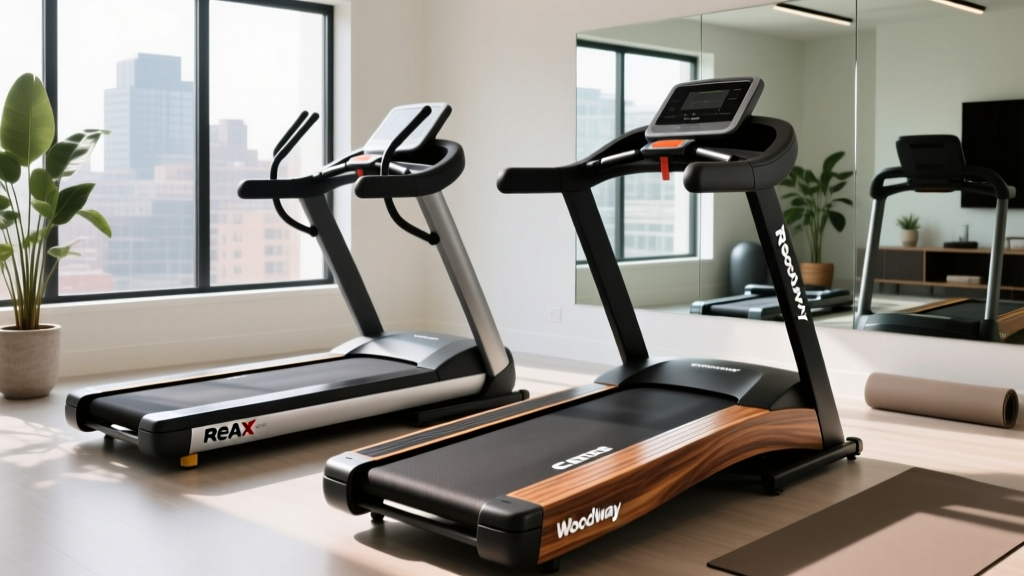
Reax Treadmill vs. Woodway Curve: 2026 Head-to-Head Feature Comparison

Does a Treadmill Make You Faster? Treadmill vs Spin & Upright Bikes

Sole vs NordicTrack Treadmill: Setup & Noise Guide

Treadmill HSA Trends: The Shift to Upright, Recumbent, and Spin Bikes
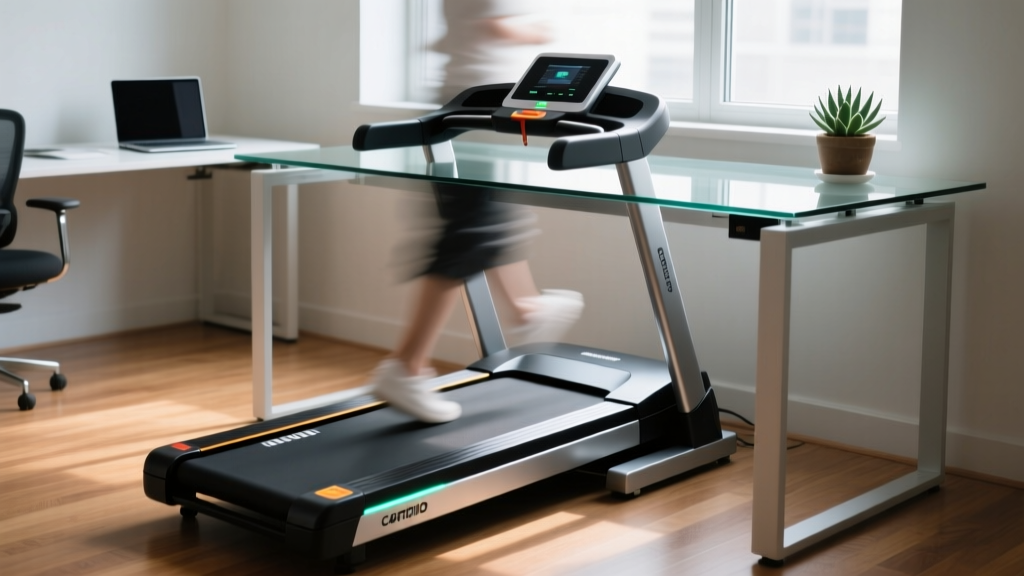
Under Desk Treadmill Review: How Much Electricity Does It Use?
