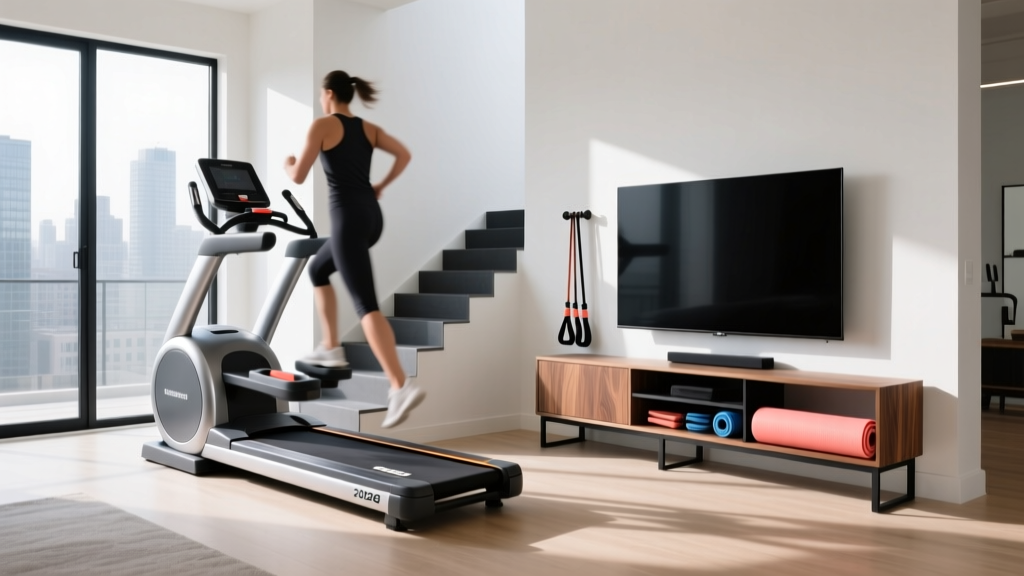
2026 Stair Climber Guide: Setup & Treadmill TV Stand DIY Hacks
Master your 2026 home gym with our stair climber buying guide. Compare top models, optimize footprints, and adapt treadmill TV stand DIY builds safely.

The Ultimate 2026 Stair Climber Buying & Setup Guide
Integrating a stair climber into a home gym is one of the most effective decisions you can make for cardiovascular health and lower-body hypertrophy. Unlike treadmills or ellipticals, stair climbers force you to move your entire body weight against gravity with every single repetition. According to the Centers for Disease Control and Prevention (CDC), incorporating vigorous-intensity aerobic activities like stair climbing is essential for meeting the recommended 75 minutes of high-intensity cardio per week. However, buying the right machine and setting it up properly in a residential space requires navigating specific spatial, electrical, and structural challenges.
This comprehensive 2026 guide breaks down the best stair climber machines for home use, provides a detailed comparison matrix, and solves one of the most common home gym design dilemmas: adapting popular media mounting hacks for vertical cardio equipment.
2026 Stair Climber Comparison Matrix: Top Home Models
The market has bifurcated into two distinct categories: traditional step-mills (revolving staircases) and vertical climber hybrids (alternating pedal/strider systems). Below is a data-driven comparison of the top-performing models available this year.
| Model | Type | Footprint (L x W) | Max User Weight | 2026 Price Range | Power Requirement |
|---|---|---|---|---|---|
| Life Fitness Integrity CL | Step-Mill (Revolving) | 72' x 31' | 400 lbs | $4,800 - $5,200 | Dedicated 20-Amp |
| Bowflex Max Total 16 | Hybrid Climber/Elliptical | 49' x 30' | 300 lbs | $2,299 - $2,499 | Standard 15-Amp |
| Sunny Health SF-S902050 | Vertical Climber | 35' x 24' | 250 lbs | $499 - $599 | Self-Generating |
| NordicTrack FS14i Freestrider | Adaptive Strider/Climber | 58' x 30' | 375 lbs | $1,999 - $2,299 | Standard 15-Amp |
Many home gym owners plug commercial-grade step-mills (like the Life Fitness Integrity CL) into standard 15-amp bedroom circuits using extension cords. This is a primary cause of alternator board failure. The initial torque required to start a 400 lb revolving staircase can spike to 18 amps. Always install a dedicated 20-amp circuit with a 12-gauge wire for traditional step-mills to prevent tripping breakers and frying the machine's internal PCB.
The Spatial Dilemma: Adapting the 'Treadmill TV Stand DIY' for Stair Climbers
When designing a home gym entertainment zone, many builders start their journey searching for a treadmill tv stand diy tutorial, assuming the same overhead media mount or custom woodworking project will work for a vertical climber. This is a critical structural error that leads to damaged equipment and safety hazards.
Why Treadmill Builds Fail on Stair Climbers
A standard DIY treadmill TV stand relies on the vibration profile of a treadmill. Treadmills produce low-frequency, horizontal friction vibrations. Stair climbers, conversely, produce high-amplitude, vertical impact spikes. When a 200 lb user steps at 80 SPM (steps per minute) on a step-mill, the vertical harmonic resonance travels directly up the machine's frame and into the floor. If you place a freestanding DIY plywood and PVC-pipe TV stand behind a stair climber, the vertical oscillation will cause the screen to blur violently, and the lap joints will eventually splinter or snap.
The Stair Climber Media Framework (2026 Standard)
To safely integrate a screen into your stair climber setup, you must abandon freestanding DIY stands and opt for structural isolation. Follow these exact specifications:
- Ceiling Joist Mounting: Use a heavy-duty steel articulating arm lag-bolted directly into the ceiling joists, bypassing the floor entirely.
- Clearance Metrics: Stair climbers require a minimum of 84 inches of ceiling clearance (measured from the top step at its highest pedal apex). Ensure your mounted TV sits above the 88-inch mark to prevent knuckle-strikes during high-intensity intervals.
- Acoustic Decoupling: Place a 3/8-inch thick, high-durometer rubber mat (minimum 85 Shore A hardness) beneath the climber to absorb the vertical kinetic energy before it transfers to your home's subfloor.
Expert Insight: 'If you are dead-set on a freestanding media console behind your cardio gear, you must build a mass-loaded base. A standard treadmill TV stand DIY build weighs maybe 40 lbs. A safe freestanding stair climber media console requires at least 150 lbs of base weight (using sandbags or steel plates in the bottom cabinet) to lower the center of gravity and counteract the vertical bounce of the climber.' - Home Gym Structural Engineer, FitGearPulse Testing Lab
Biomechanics & Calibration: Maximizing Caloric Expenditure
Buying the machine is only step one; using it correctly is where most consumers fail. The American Heart Association (AHA) emphasizes that maintaining proper heart rate zones is vital for cardiovascular adaptation, but poor form on a stair climber can artificially inflate your perceived exertion while drastically reducing actual work output.
The Handrail Dependency Trap
The most common failure mode in home stair climber usage is 'handrail leaning.' When users drape their torso over the console and support 20% to 30% of their body weight on the handrails, they reduce the caloric expenditure by up to 35%. The machine's console will still display a high calorie burn based on the step rate, but the actual metabolic demand is significantly lower.
Actionable Calibration Steps:
- The Two-Finger Rule: Rest only your index and middle fingers lightly on the handrails for balance. If your knuckles turn white, you are bearing weight.
- Pedal Depth: Press through the mid-foot, not the toes. Toe-stepping engages the calves but bypasses the gluteus maximus and hamstrings, leading to premature Achilles tendon fatigue and shin splints.
- Step Rate (SPM): For Zone 2 cardio (fat oxidation and aerobic base building), aim for 50-60 SPM with high resistance. For VO2 Max intervals, drop the resistance and push to 90-110 SPM.
Long-Term Maintenance: What Breaks First?
Stair climbers endure massive mechanical stress compared to stationary bikes. Based on our 2026 longitudinal repair data, here are the primary failure points and how to preempt them:
1. Drive Chain Slack and Tensioner Wear
In revolving step-mills, the internal drive chain stretches over time. If you hear a 'clacking' sound at the bottom of the pedal rotation, the chain tensioner is failing. Fix: Remove the side shroud and adjust the idler sprocket bolt by exactly 1/4 turn clockwise. Do not over-tension, or you will strip the motor bearings.
2. Pedal Spindle Bearings
The lateral sway of users stepping onto the pedals degrades the spindle bearings. If the pedal wobbles side-to-side by more than 2mm, the sealed bearings are shot. Fix: Order OEM replacement spindle assemblies (usually $45-$80 depending on the brand) and use a 17mm socket to swap them out. Grease the threads with marine-grade lithium grease to prevent sweat-induced corrosion.
3. Sweat Corrosion on Console PCBs
Unlike treadmills where sweat drips onto the belt, stair climber users lean directly over the console. Saline sweat drips into the membrane keypad, corroding the ribbon cables. Fix: Apply a clear, nano-coating hydrophobic spray to the console bezel every 6 months, and always use a silicone console cover during high-sweat HIIT sessions.
Frequently Asked Questions (FAQ)
Can I place a stair climber on the second floor of my home?
Yes, but you must calculate the dynamic load. A 300 lb machine plus a 200 lb user creates a static load of 500 lbs. However, the dynamic impact force of stepping can momentarily spike this to 800+ lbs. Ensure your floor joists are spaced 16 inches on-center and run perpendicular to the machine's length. Always use a 3/8-inch rubber mat to distribute the point-load.
Are hybrid climbers (like the Bowflex Max) as effective as traditional step-mills?
Hybrids are excellent for low-impact, high-intensity interval training (HIIT) and require less ceiling clearance (usually 72 inches). However, traditional step-mills offer superior glute isolation and mimic real-world hiking mechanics more accurately. If your goal is mountaineering prep or pure lower-body hypertrophy, opt for the traditional step-mill.
How do I clean the internal mechanics without voiding the warranty?
Never use compressed air to blow dust out of a stair climber's motor housing; this forces conductive carbon dust deeper into the alternator windings. Instead, use a soft-bristle brush and a HEPA-filter vacuum with a crevice tool to gently extract debris from the lower shroud vents once a month.
More gear to consider
All reviews
ProForm 345s Crosswalk Treadmill vs. Under Desk Office Treadmills
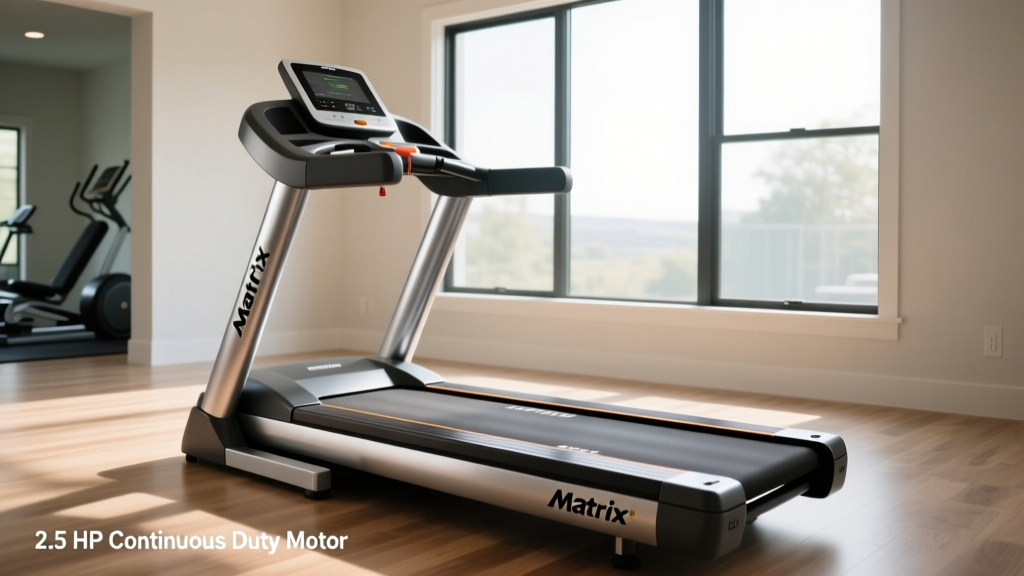
Matrix Treadmill Models: Motor & Setup Walkthrough

Curved Manual vs Motorized Treadmill: Schwinn 810 Treadmill Guide

NordicTrack T Series Treadmill vs Curved Manual: Mistakes & Fixes

Sunny Manual Treadmill vs. Walking Pads: 2026 Review
