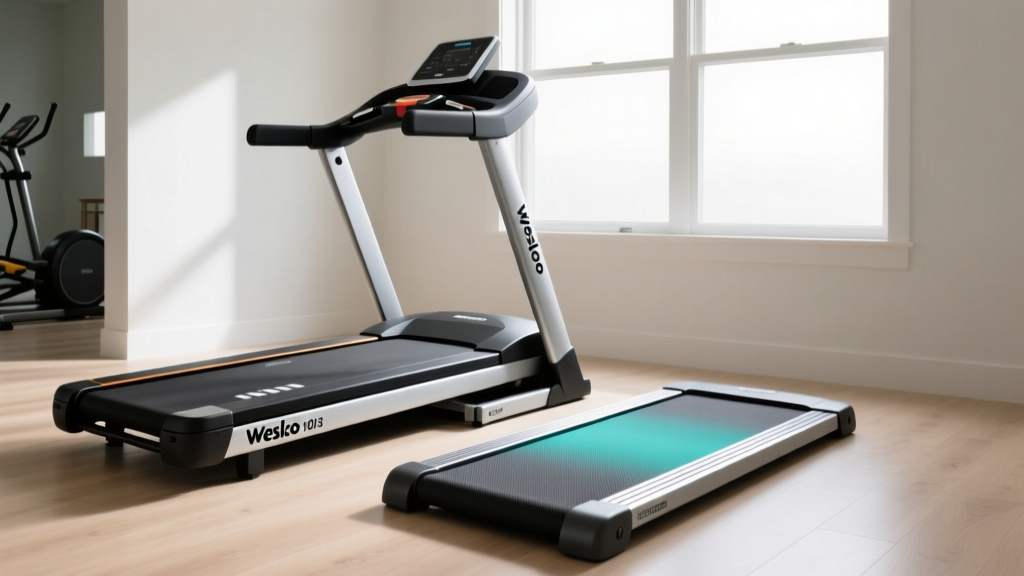
The Squeaky Treadmill Dilemma: 2026 Belt Maintenance Trends
Discover why the squeaky treadmill phenomenon is driving 2026 belt maintenance trends, from smart friction sensors to advanced silicone lubricants.

The True Cost of a Squeaky Treadmill in 2026
In the modern home gym, a squeaky treadmill is often dismissed as a mere acoustic annoyance. However, from a market analysis and mechanical engineering perspective, that high-pitched chirp or rhythmic thumping is a critical leading indicator of catastrophic motor failure. As inflation and supply chain shifts have driven the average cost of premium home treadmills past the $3,500 mark in 2026, consumers and manufacturers alike are treating belt maintenance not as an afterthought, but as a core component of equipment longevity.
The physics behind the squeak are rooted in the coefficient of friction (COF) between the polyvinyl chloride (PVC) running belt and the phenolic resin deck. When lubrication degrades, the COF spikes. This forces the drive motor to work significantly harder to maintain belt speed under the user's weight. According to equipment longevity data highlighted by Consumer Reports, excessive friction is the number one cause of premature motor burnout and control board failure in home cardio equipment. Replacing a burnt-out DC motor on a mid-tier machine now costs between $350 and $650, making proactive belt lubrication one of the highest-ROI maintenance tasks a fitness consumer can perform.
Lubricant Chemistry: Silicone vs. Wax vs. PTFE
The 2026 treadmill lubricant market has largely consolidated around specific chemical formulations, moving away from the aerosolized hydrocarbon propellants of the early 2020s toward eco-friendly, high-viscosity pump sprays. Understanding the chemistry is vital for equipment owners looking to eliminate that squeaky treadmill sound without damaging their machine's deck.
| Lubricant Type | Chemical Base | Effective Lifespan | 2026 Market Share |
|---|---|---|---|
| 100% Silicone | Polydimethylsiloxane | 6–12 Months | 82% |
| Wax-Based Emulsions | Paraffin / Beeswax blends | 3–6 Months | 12% |
| PTFE (Teflon) Sprays | Polytetrafluoroethylene | 2–4 Months | 6% |
Industry consensus in 2026 heavily favors 100% Polydimethylsiloxane (silicone). Unlike PTFE sprays, which often contain petroleum distillates that can break down the cotton-polyester weave on the underside of the running belt, pure silicone is chemically inert to PVC and rubber compounds. Wax-based emulsions, while popular in older commercial gym models, tend to clump and attract dust in residential environments, ultimately creating a grinding paste that accelerates deck wear.
CRITICAL WARNING: Never use WD-40, 3-in-One oil, or standard household lubricants on a treadmill belt. These petroleum-based products will instantly dissolve the adhesive bonding the belt's top layer to its structural weave, resulting in immediate belt delamination and voiding your manufacturer warranty.The 10-Milliliter Rule: Precision Over Volume
One of the most pervasive myths in home fitness maintenance is that "more lubricant equals less friction." Market analysis of user-generated repair tickets reveals that over-lubrication is responsible for nearly 30% of belt-slippage complaints. The industry standard for a standard 20-inch by 55-inch residential treadmill belt is exactly 10 to 15 milliliters of silicone fluid per side.
Applying too much silicone creates a hydrodynamic layer that causes the belt to slip over the front roller during heavy foot strikes. Furthermore, excess fluid migrates to the edges of the belt, flinging onto the user's running shoes and creating a severe slip hazard on hardwood or laminate floors. Modern maintenance kits now ship with pre-measured 10ml syringes and flexible catheter tubes designed to deposit the fluid directly into the center third of the deck, where foot-strike friction is highest.
Smart Diagnostics and the IoT Maintenance Shift
The most significant trend in the 2026 cardio equipment market is the transition from reactive maintenance to predictive IoT (Internet of Things) diagnostics. Premium manufacturers are no longer waiting for the user to hear a squeaky treadmill before addressing friction.
High-end models from brands like NordicTrack and Peloton now feature integrated motor amperage sensors. A healthy DC treadmill motor operating at 3.0 mph with no user on the belt should draw between 2.0 and 4.0 amps. When the belt dries out and friction increases, the amperage spikes. Instead of waiting for the acoustic squeak, the treadmill's onboard computer detects a sustained draw of 6.0+ amps and pushes a notification to the user's companion app, recommending immediate lubrication before the motor's thermal overload switch trips or the control board's MOSFETs burn out.
The Rise of Self-Lubricating Belt Technology
Parallel to the smart-sensor trend is the hardware evolution of the belt itself. Companies like Spirit Fitness and Matrix have popularized self-lubricating belts in the residential market. These belts feature a microscopic layer of silicone beads impregnated directly into the cotton-polyester backing during the manufacturing process.
As the user runs, the friction and heat gently release tiny amounts of silicone onto the phenolic deck. While manufacturers market these as "maintenance-free," independent teardowns in 2026 show that they merely extend the lubrication interval from 6 months to approximately 3 to 5 years. Eventually, the impregnated silicone depletes, and the belt will require manual re-lubrication or total replacement, which typically costs between $150 and $250 for OEM parts.
Actionable Framework: Diagnosing and Curing the Squeak
If your machine has already developed a squeak, follow this precise diagnostic framework to resolve the issue without causing secondary damage to the drive system.
- The Clearance Test: Turn off and unplug the machine. Slide your hand under the center of the belt. You should be able to lift the belt exactly 3 to 4 inches off the deck. If it is tighter than 3 inches, the excessive downward normal force is causing the squeak, regardless of lubrication. Loosen the rear roller adjustment bolts by a quarter-turn on each side.
- The Surface Inspection: Check the underside of the belt. If it feels glossy, smooth, or looks like bare plastic, the original factory coating has worn off, and the belt is highly porous. It will absorb liquid silicone rapidly and may require double the standard 10ml dose.
- Precision Application: Using a 10ml syringe with an extension tube, insert the tube halfway between the belt edge and the center of the deck. Deposit the silicone in a zig-zag pattern while slowly pulling the tube out. Repeat on the opposite side.
- The Distribution Walk: Power the machine on and set the speed to 2.0 mph. Walk on the treadmill for exactly 3 minutes. Your foot strikes will naturally press the silicone outward toward the edges of the deck, ensuring an even, microscopic coating across the entire friction zone.
- The Amperage Verification (Optional but Recommended): If you have access to a clamp meter, measure the AC draw at the wall outlet. A drop of 2 to 3 amps immediately following lubrication confirms the friction has been successfully neutralized.
Summary: Protecting Your Investment
The era of ignoring a squeaky treadmill until it breaks is over. With replacement parts and technician call-out fees reaching historic highs in 2026, mastering the chemistry and physics of belt lubrication is essential for the home gym owner. By utilizing pure Polydimethylsiloxane, adhering to strict volumetric limits, and paying attention to early acoustic and digital warning signs, users can easily double the operational lifespan of their cardio equipment.
More gear to consider
All reviews
Curved vs Motorized Treadmills: Silicone Based Lubricant Needs

Deer Run Treadmill Review & Air Bike vs Assault Bike Value Guide

Treadmill Safety & Belt Care: A Guide for Compact Home Gyms

Treadmill Hill Workouts: Walking Pad vs Standard 2026

The Treadmill Guide to TweeklyNutrition Machine Care