
Squat Rack vs Leg Press Machine for Women: Space Guide
Discover how to optimize your home gym layout. We compare squat rack dimensions to a leg press machine for women to maximize space and leg day gains.

The Home Gym Dilemma: Squat Rack vs. Leg Press Machine for Women
The quest for the perfect lower-body setup often leads home gym owners to search for a dedicated leg press machine for women. The appeal is obvious: targeted glute and quad hypertrophy without the spinal compression of heavy barbell back squats. Many female lifters specifically seek out sled-style or vertical leg presses to safely push to failure while isolating the lower body. However, when evaluating space optimization and layout design in a home gym environment, a traditional leg press machine often loses the real estate war to a well-configured squat rack and power cage.
In this comprehensive layout guide, we break down the exact dimensions, clearance zones, and biomechanical ROI of both setups. If you are designing a home gym in 2026 and trying to decide between buying a specialized leg press machine for women or investing in a versatile power cage, this spatial analysis will help you maximize every square inch of your training floor.
Footprint Analysis: Measuring the Real Estate
Before purchasing any heavy steel, you must map your available floor space. A common mistake in home gym design is measuring only the static footprint of the machine while ignoring the dynamic clearance required for loading plates, racking weights, and safe bail-out zones. Below is a comparative data matrix of popular 2026 lower-body equipment models.
| Equipment Model | Static Footprint (W x D) | Dynamic Clearance Needed | Max Load Capacity | Avg Price (2026) |
|---|---|---|---|---|
| Rogue R-3 Power Rack | 34" x 43" | 106" x 115" | 1,000+ lbs | $1,350 |
| Fitness Reality 810XLT | 48" x 46" | 120" x 118" | 800 lbs | $280 |
| Body-Solid VLP-1500 (Vertical Leg Press) | 54" x 78" | 54" x 100" | 1,000 lbs | $1,150 |
| Powerline PVLP15X (Compact Leg Press) | 46" x 60" | 46" x 85" | 400 lbs | $380 |
The Compact Power Cage Profile
When reviewing equipment specifications on Rogue Fitness, the R-3 Power Rack remains the gold standard for space-constrained garages. Its 34-inch depth is specifically designed to fit flush against standard drywall while still accommodating a lifter's barbell path. Despite its narrow profile, the 11-gauge steel and 5/8-inch hardware provide commercial-grade stability for heavy squats and rack pulls.
The Vertical Leg Press Alternative
The Body-Solid VLP-1500 is a popular leg press machine for women because the vertical sled path naturally encourages deep hip flexion, heavily targeting the gluteus maximus without requiring the user to load plates high in the air. However, its 78-inch depth consumes a massive amount of linear floor space, effectively cutting a standard one-car garage in half and blocking traffic flow.
Designing the Optimal Leg-Day Layout
Space optimization is not just about the machine; it is about the ecosystem around it. To create a functional leg-training zone, you must adhere to strict clearance zoning.
- Lateral Plate Loading Zones (36" Minimum): Standard 45lb Olympic bumper plates have a diameter of 17.7 inches. You need at least 36 inches of clearance on both the left and right sides of your squat rack or leg press to comfortably slide plates onto the barbell or sled horns without scraping your drywall.
- Frontal Approach Zone (48" Minimum): For a power cage, you need 48 inches in front of the rack to safely unrack the barbell, take your setup steps back, and perform walking lunges or goblet squats without hitting the uprights.
- Ceiling Height Verification: Standard residential ceilings are 8 feet (96 inches). If you are 5'6" and perform overhead presses or high-bar squats, a 90-inch rack like the Rogue R-3 will leave you with only 6 inches of overhead clearance, risking ceiling damage.
Space-Saving Hack: Wall-Mounted Folding Racks
If your total available square footage is under 80 square feet, abandon the freestanding leg press entirely. Opt for a wall-mounted folding power rack (such as the PR-4000 Folding Rack). When folded against the wall, it protrudes only 4 inches, instantly converting your leg-training zone back into a parking space or multipurpose room. Pair this with a compact landmine attachment to replicate leg press angles without the footprint.
Biomechanics: Replicating the Leg Press in a Power Cage
Why do so many lifters specifically hunt for a leg press machine for women? The primary reason is axial loading. Heavy barbell back squats compress the spine, which can be a limiting factor for lifters with lower back sensitivities or those focusing purely on glute and quad hypertrophy without systemic fatigue.
According to biomechanical analyses referenced by ExRx.net, the leg press removes the stabilization requirements of the core and erector spinae, allowing for isolated lower-body force production. However, a well-equipped power cage can replicate these exact biomechanical benefits through specific attachments:
- The Belt Squat Lever: By attaching a belt squat lever to the base of your power rack, you can load up to 400+ lbs of weight that pulls downward from your hips. This completely removes spinal compression while allowing for deep, leg-press-style range of motion. It is arguably the ultimate space-saving alternative to a dedicated hip-belt squat machine.
- Landmine Goblet Squats: Anchoring a barbell in a landmine base inside the rack shifts the center of gravity forward. This mimics the upright torso angle of a hack squat or leg press, heavily biasing the quadriceps while reducing shear force on the lumbar spine.
- Banded Leg Presses: Using heavy loop bands anchored to the base of the power cage uprights, you can perform supine banded leg presses on the floor. This provides accommodating resistance that peaks at lockout, similar to a pneumatic sled machine.
Flooring and Shock Absorption Requirements
When laying out a leg-training zone, the floor dictates the safety of the space. Dropping a 300lb barbell or a loaded leg press sled carriage generates immense kinetic energy.
The American Council on Exercise (ACE) emphasizes that proper flooring is critical for joint health and equipment longevity in home gym environments, noting that inadequate shock absorption can lead to micro-fractures in concrete slabs and excessive joint impact for the lifter.
Do not use interlocking EVA foam tiles for a leg press or squat rack layout. EVA foam compresses under heavy loads, creating an unstable base that ruins squat mechanics and causes leg press sleds to track unevenly. Instead, invest in 4x8 foot, 3/4-inch thick vulcanized rubber horse stall mats. They cost approximately $50 to $70 each at agricultural supply stores, provide commercial-grade shock absorption, and create a perfectly level surface for heavy unilateral leg training.
Expert Verdict: Which Setup Wins the Space War?
If your primary goal is pure isolation and you have a dedicated 10x10 foot room with no need for upper-body training, a vertical leg press machine for women like the Body-Solid VLP-1500 is a fantastic, safe investment. It allows you to push to absolute muscular failure without a spotter and heavily targets the glutes and quads.
However, from a strict space optimization and layout design perspective, the squat rack and power cage is the undisputed champion. A 34" x 43" power cage footprint allows you to perform squats, rack pulls, belt squats, landmine variations, hip thrusts, and upper-body movements all within a 12-square-foot static zone. By utilizing smart attachments like belt squat levers and landmine bases, you can perfectly replicate the spinal-decompression benefits of a leg press while retaining the versatility required for a complete, lifelong training regimen.
More gear to consider
All reviews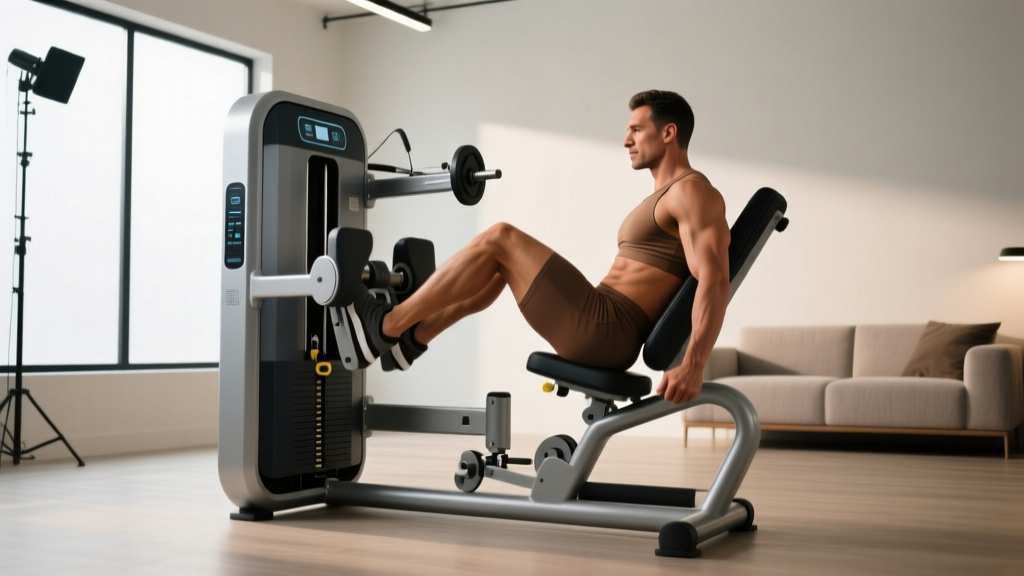
2026 Glute Machine Market Trends: Beyond the Squat Machine Leg Press

Sled Push vs Leg Press Machine Foot Position: A Beginner Guide

Single Leg Press Machine vs Sled: Beginner Leg Guide

Budget Breakdown: Cybex Leg Press Machine vs Hip Thrust Setups

Cable Leg Attachments Care: Hack Squat Machine vs Leg Press
