Beyond the Squat with Dumbbells Exercise: Olympic vs Standard Plates
Learn when to progress past the squat with dumbbells exercise and how to choose between Olympic vs standard weight plates for your first home gym barbell.

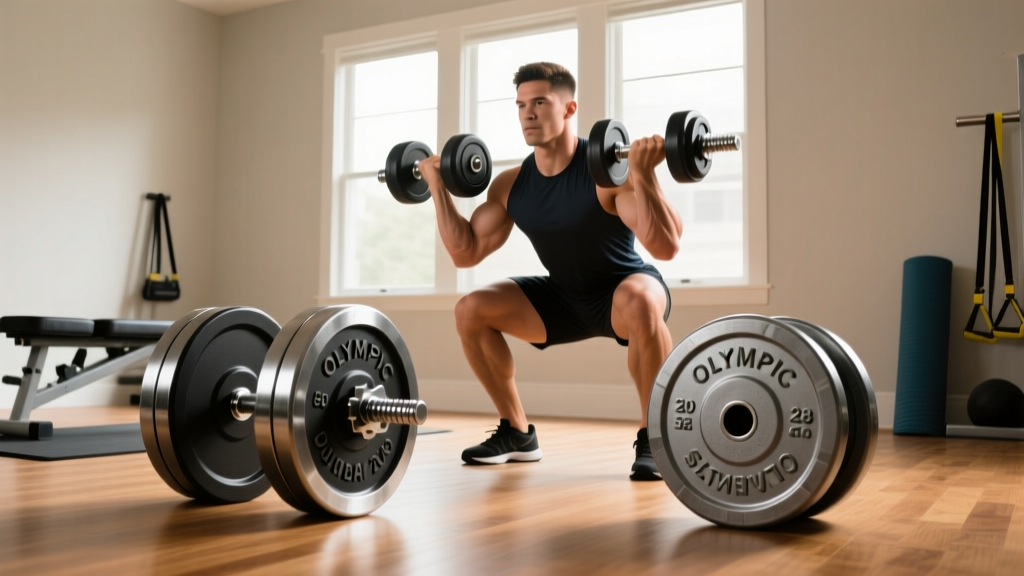
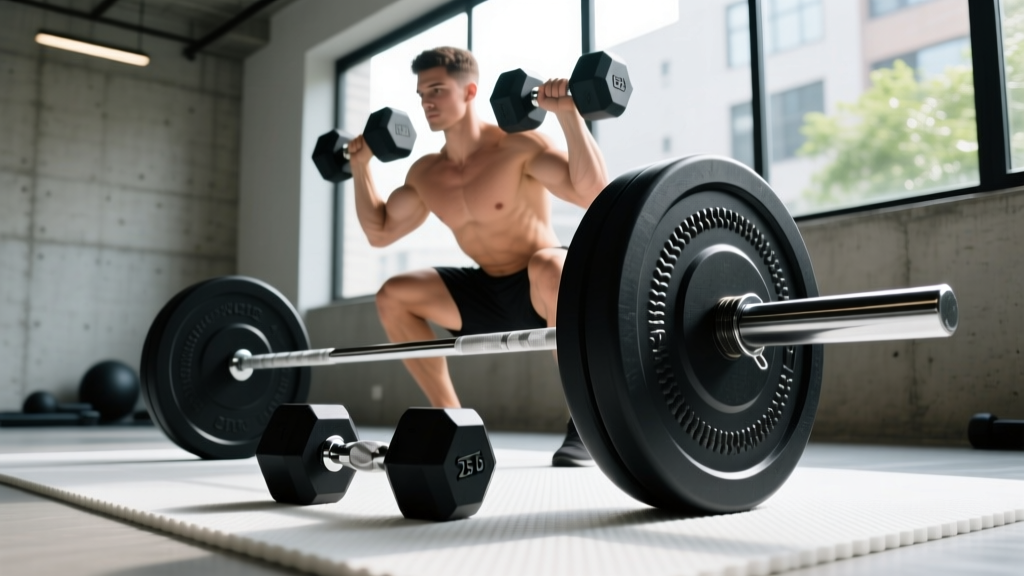
Every strength journey begins with a single step, and for many home gym beginners, that foundation is built on the squat with dumbbells exercise. Whether you are performing goblet squats or dual-dumbbell front squats, this movement is phenomenal for teaching depth, core bracing, and basic lower-body mechanics. However, as your leg strength develops, you will inevitably hit a frustrating wall. Your quadriceps and glutes will be capable of moving far more weight than your hands and forearms can physically hold.
When you finally max out your adjustable dumbbells and decide to invest in a barbell and power rack, you will face your first major equipment decision: What kind of weight plates should I buy? The fitness industry largely divides plates into two categories: Standard and Olympic. Making the wrong choice here can cost you hundreds of dollars and severely limit your future progress. This step-by-step guide will help you transition smoothly from dumbbells to barbells by breaking down exactly which plate type belongs in your home gym.
The Dumbbell Ceiling: When to Upgrade Your Gear
Before diving into plate specifications, it is vital to understand why the squat with dumbbells exercise eventually becomes a limiting factor. According to ExRx.net's biomechanical breakdown of the dumbbell goblet squat, the anterior load placement heavily taxes the upper back and grip. Most premium adjustable dumbbells on the market in 2026 cap out between 50 and 90 pounds per hand.
If you are squatting with two 80-pound dumbbells (160 pounds total), your grip strength and wrist stability will likely fail before your leg muscles reach true muscular failure. To continue applying progressive overload—a core tenet of muscle growth—you must transition to a barbell. A barbell rests securely on your upper traps or front deltoids, entirely removing grip strength from the equation and allowing you to safely load 200, 300, or 400+ pounds. This transition requires a barbell, a rack, and most importantly, the right weight plates.
Standard vs. Olympic Weight Plates: The Core Differences
The terminology used in the fitness industry can be highly misleading for beginners. The term 'Standard' actually refers to the older, cheaper, and less durable 1-inch hub plates, while 'Olympic' refers to the global standard for serious strength training. Let's break down the exact specifications of both.
Standard Plates (1-Inch Hub)
Standard plates feature a center hole measuring exactly 1 inch (25.4mm) in diameter. They are designed to slide onto cheap, solid-steel bars typically found in big-box sporting goods stores or budget Amazon kits. While a 300-pound standard plate kit might only cost around $120 to $150, the bars they pair with are notorious for bending, warping, or even snapping once the total loaded weight exceeds 200 pounds. Furthermore, the sleeves on standard bars do not rotate, which can cause severe wrist torque during dynamic movements like cleans or snatches.
Olympic Plates (2-Inch Hub)
Olympic plates feature a 2-inch (50mm) center hole. They are engineered to pair with Olympic barbells, which feature rotating sleeves equipped with bushings or bearings. As detailed in BarBend's comprehensive guide to plate specifications, Olympic plates are manufactured to withstand thousands of drops, massive load capacities, and rigorous daily abuse. An Olympic barbell will easily support 500 to 1,500 pounds without permanent deformation, making it a lifelong investment.
⚠ Beginner Warning: Never buy Standard plates if you plan on lifting seriously for more than six months. The 1-inch bars cannot handle heavy squats or deadlifts safely. Always invest in Olympic gear from day one of your barbell journey.Head-to-Head Comparison Matrix
To visualize the differences, review the data table below comparing Standard and Olympic weight plates across critical home gym metrics.
| Feature | Standard Plates (1") | Olympic Plates (2") |
|---|---|---|
| Hub Diameter | 1 inch (25.4mm) | 2 inches (50mm) |
| Bar Compatibility | Cheap solid steel bars | Tensile steel w/ rotating sleeves |
| Max Safe Load | ~200 - 300 lbs | 500 - 1,500+ lbs |
| 2026 Avg. Price (Iron) | $0.80 - $1.20 / lb | $1.50 - $2.50 / lb |
| Durability | Low (prone to chipping/rust) | Extremely High (calibrated) |
Step-by-Step Guide to Buying Your First Olympic Plate Set
Now that you understand why Olympic plates are the undisputed champion for home gyms, follow this step-by-step framework to purchase your first set.
Step 1: Verify Your Barbell Sleeve Diameter
Before adding plates to your cart, measure the sleeve (the thick end) of your barbell. An authentic Olympic barbell sleeve will measure exactly 50mm (1.97 inches). If you bought a budget 'Olympic' bar from a discount retailer, double-check this measurement. Some cheap import bars have sleeves that are slightly undersized at 48mm, which will cause authentic 50mm Olympic plates to wobble dangerously during a heavy back squat.
Step 2: Choose Your Plate Material (Cast Iron vs. Bumper)
Olympic plates generally come in two materials, and your choice depends on your training style and flooring:
- Cast Iron Plates: These are the traditional, thin, metal plates. They are ideal for powerlifting, heavy squats, and bench presses because their thin profile allows you to load more weight onto the barbell sleeve. As of 2026, expect to pay between $1.50 and $2.00 per pound for quality cast iron, such as the CAP Barbell Olympic Grip Plates.
- Bumper Plates: Made of high-density rubber, these plates are all the same diameter (450mm) regardless of weight. They are designed to be dropped from overhead during Olympic lifts or CrossFit WODs. If you plan on doing deadlifts on a wooden floor or practicing power cleans, bumpers are mandatory. Premium options like the Rogue Fitness Echo Bumper Plates cost around $3.50 per pound but offer incredible bounce reduction and longevity.
Step 3: Map Out Your Micro-Loading Strategy
When transitioning from the squat with dumbbells exercise to the barbell back squat, jumping in 45-pound increments is a recipe for stalled progress. Do not just buy four 45-pound plates. Your starter kit should include a strategic mix of denominations to allow for 2.5 lb or 5 lb jumps. A perfect beginner Olympic starter set includes:
- Two 45 lb plates (Total: 90 lbs)
- Two 25 lb plates (Total: 50 lbs)
- Two 10 lb plates (Total: 20 lbs)
- Two 5 lb plates (Total: 10 lbs)
- Two 2.5 lb plates (Total: 5 lbs)
This configuration gives you 175 pounds of adjustable weight, which, when added to a standard 45-pound barbell, provides a working range from 45 lbs up to 220 lbs—more than enough to bridge the gap from your dumbbell days to intermediate barbell strength.
Common Beginner Mistakes to Avoid
'The biggest mistake new home gym owners make is spending 80% of their budget on a flashy power rack and only 20% on the barbell and plates. The rack just holds the weight; the barbell and plates are what you actually interact with. Never compromise on the 2-inch Olympic standard.'
Avoid the 'Vinyl-Cement' Trap: Many big-box stores sell 'Standard' plates filled with cement and coated in vinyl. These are incredibly thick, meaning you can only fit a few on a short barbell sleeve. Furthermore, if the vinyl cracks and moisture gets inside, the cement will crumble and ruin your gym floor. Stick to solid cast iron or vulcanized rubber.
Ignoring Plate Calibrations: Cheap, unbranded Olympic plates can be off by as much as 5% in weight. A cheap 45-pound plate might actually weigh 42 pounds. While this doesn't matter for a casual workout, it ruins tracking your progressive overload over a multi-year training cycle. Stick to reputable brands that guarantee weight tolerances within 1% to 2%.
Final Thoughts on Your Home Gym Progression
Mastering the squat with dumbbells exercise is a crucial rite of passage. It builds the mobility, core stiffness, and mental toughness required for heavy lifting. But once your legs demand more resistance than your grip can supply, it is time to graduate. By bypassing the flawed 1-inch Standard plates and investing directly into a high-quality 2-inch Olympic plate set, you are future-proofing your home gym. Whether you choose classic cast iron for heavy powerlifting or rubber bumpers for dynamic movements, the Olympic standard will support your strength journey for decades to come.
More gear to consider
All reviews
Barbell Collar & Clamp Comparison: Back and Bicep Dumbbell Security

Olympic Barbell Knurling & Setup for Proper Dumbbell Curl Form
Best Neoprene Dumbbells for Home Gyms & Dumbbell Waiters Curl

Dumbbell Rack Care & Setup for the Leg Raise Over Dumbbell
Dumbbell Flys Muscles Worked vs. Bench: Olympic Bar Knurling Guide