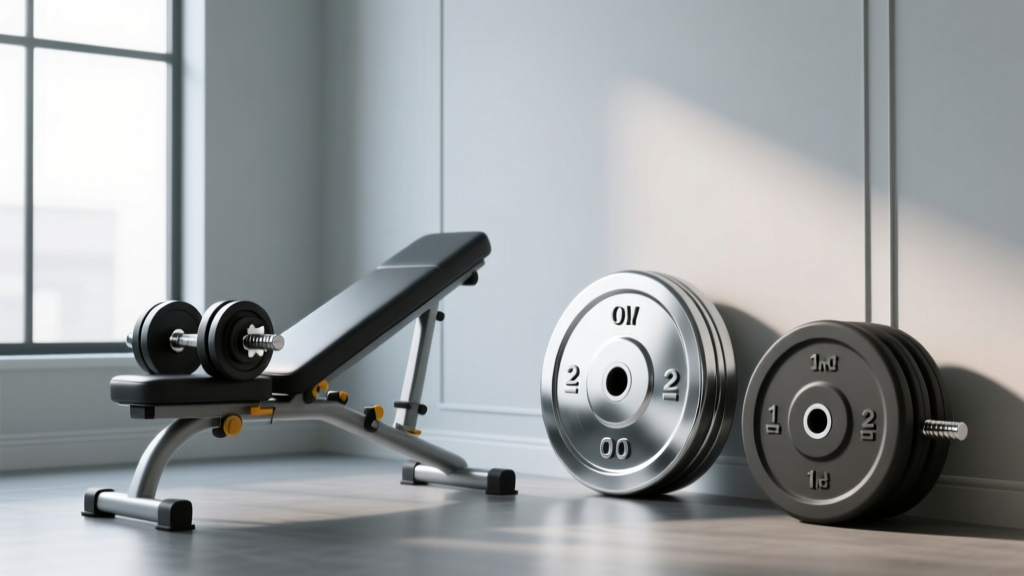
Slight Incline Dumbbell Press Mistakes & Olympic vs Standard Plates
Troubleshoot common home gym mistakes. We compare Olympic vs standard weight plates and fix your slight incline dumbbell press stabilization issues.

The Foundational Home Gym Mistake: Olympic vs. Standard Weight Plates
Building a home gym in 2026 requires navigating a minefield of equipment compatibility. The most expensive and frustrating mistake a beginner can make is misunderstanding the fundamental differences between weight plate types: Olympic vs standard. While standard plates might seem like a budget-friendly entry point, they introduce severe mechanical limitations that cascade into your daily training. Nowhere is this more evident than in stabilization-heavy isolation movements, where improper gear can completely derail your biomechanics and limit muscle hypertrophy.
According to the International Weightlifting Federation (IWF), true Olympic equipment adheres to strict 50.4mm (2-inch) sleeve and center-hole tolerances designed to handle massive axial loads and rotational forces. Standard equipment, utilizing a 25.4mm (1-inch) diameter, was never designed for progressive overload beyond intermediate thresholds. When you attempt to bridge the gap between heavy compound lifts and precise isolation work, the physical footprint of standard plates often becomes your biggest obstacle.
Specification and Compatibility Matrix
Before troubleshooting specific exercises, you must understand the physical limitations of the iron you are loading. Below is a direct comparison of the two dominant plate ecosystems available on the market today.
| Feature | Standard Plates (1-Inch) | Olympic Plates (2-Inch) |
|---|---|---|
| Center Hole Diameter | 1 inch (25.4mm) | 2 inches (50.4mm) |
| Max Barbell Load Capacity | 150 - 200 lbs (bends permanently) | 500 - 1,500+ lbs (high tensile steel) |
| Plate Profile (Thickness) | Bulky (cast iron flanges) | Compact (machined steel / dense rubber) |
| Average 2026 Cost Per Pound | $1.00 - $1.50 / lb | $2.50 - $5.00 / lb (Urethane/Bumper) |
| Dumbbell Handle Compatibility | 1-inch threaded or smooth sleeves | Olympic loadable handles (e.g., Rogue, Troy) |
Troubleshooting the Slight Incline Dumbbell Press
The slight incline dumbbell press is a cornerstone movement for targeting the clavicular head (upper chest) of the pectoralis major. By setting an adjustable bench to a 15-to-30-degree angle, you shift the mechanical tension upward without excessively recruiting the anterior deltoids, a common issue with steeper 45-degree inclines. However, this movement requires immense stabilization and an unobstructed range of motion.
Here is where the 'Standard Plate Trap' ruins the exercise. If you are using 1-inch adjustable dumbbell handles and standard cast iron plates, loading a moderate weight like 45 pounds per hand requires stacking multiple 10-pound and 5-pound plates. Because standard plates are thick and feature raised lip flanges for grip, the overall length of the dumbbell expands dramatically.
The Biomechanical Breakdown and Collision Point
When executing the slight incline dumbbell press, the medial edges of your dumbbells should naturally converge at the peak of the concentric phase to maximize pectoral contraction. If your standard-loaded dumbbells are 14 to 16 inches long due to plate stacking, the weights will physically collide before your hands reach the midline of your chest. This premature collision forces you to terminate the repetition early, robbing you of peak contraction and altering the natural bar path. The National Strength and Conditioning Association (NSCA) emphasizes that uninterrupted range of motion is critical for motor unit recruitment in the upper pectorals; standard plate bulk directly violates this principle.
⚠️ Troubleshooting Warning: Wrist Torque and Stabilizer Fatigue
Beyond collision, standard 1-inch dumbbell handles lack the ergonomic grip thickness and heavy-duty collars of Olympic loadable handles. The excessive outward weight distribution of stacked standard plates creates a severe moment arm, placing unnatural torque on the wrist joint during the eccentric lowering phase of the slight incline dumbbell press. This often leads to premature forearm fatigue, causing the lifter to fail the set due to grip instability rather than actual chest failure.
Step-by-Step Fix: Upgrading Your Dumbbell Arsenal
If you have identified that your standard plates are compromising your slight incline dumbbell press and other stabilization movements, follow this troubleshooting protocol to rectify your setup without wasting money.
- Audit Your Current Sleeve Length: Measure the loadable sleeve of your current dumbbell handles. If it exceeds 10 inches and requires 5+ plates to reach your working weight, the physical footprint is too large for incline pressing.
- Liquidate Standard Iron: Standard plates hold excellent resale value on local secondary markets because beginners are constantly searching for cheap starter kits. Sell your 1-inch plates and threaded handles.
- Invest in Olympic Loadable Dumbbells: Purchase a pair of Olympic loadable dumbbell handles (such as the Rogue Fitness Loadable Dumbbell Handles or the Troy Barbell V-Grip Olympic Dumbbell Handles). These feature 2-inch sleeves that accept thinner, denser Olympic plates, keeping the overall length of the dumbbell under 10 inches even at 60+ pounds.
- Alternative - Fixed Urethane Hex Dumbbells: If budget allows, bypass loadable handles entirely for incline work and invest in a rack of fixed urethane hex dumbbells. Urethane offers a dead-bounce, ultra-compact profile that completely eliminates the clanking and collision issues inherent to plate-loaded setups.
The Financial Reality: Why 'Cheap' Standard Plates Cost More
A frequent mistake is purchasing a $150 standard barbell and plate kit from a big-box sporting goods store, assuming it will suffice for a year or two. By the time you can bench press 185 pounds, the standard 1-inch barbell will exhibit permanent plastic deformation (bending). Furthermore, standard plates cannot be used on commercial-grade power racks, cable machines, or Olympic barbells. When you inevitably upgrade to an Olympic ecosystem, your entire standard investment becomes dead weight. In 2026, a high-quality entry-level Olympic barbell and a set of rubber-coated Olympic plates will cost between $400 and $600, but it is a lifetime investment that scales from novice lifts to advanced 500-pound deadlifts.
Frequently Asked Questions (FAQ)
Can I use standard 1-inch plates on an Olympic barbell with adapters?
While plastic sleeve adapters exist to shrink a 2-inch Olympic sleeve down to 1 inch, using them is highly discouraged for heavy or dynamic lifts. Adapters introduce a layer of lateral play and wobble, compromising the stability required for precision movements and creating a severe pinching hazard when changing plates.
Are bumper plates considered Olympic or Standard?
All regulation bumper plates are Olympic. They feature a 50.4mm center hole reinforced with a stainless steel insert designed to withstand the high-impact drops of Olympic weightlifting. Standard bumper plates do not exist in any reputable manufacturing context.
What is the ideal bench angle for the slight incline dumbbell press?
Most commercial adjustable benches have notches that jump from flat (0 degrees) to 30 or 45 degrees. For a true 'slight' incline targeting the upper pecs without excessive front delt involvement, aim for 15 to 30 degrees. If your bench only has a 45-degree notch, you can place a standard 10-pound Olympic plate under the base of the bench to elevate it slightly, though using a properly calibrated adjustable bench is the safer troubleshooting route.
More gear to consider
All reviews
Beyond Upper Body Dumbbell Exercises: Collar Setup Walkthrough

Olympic vs Standard Plates for Chest-Supported Dumbbell Rows

Best Back Exercises With Dumbbells & Barbell Collar Types
Master Dumbbell Wood Chops at Home with Neoprene Weights
EZ Curl Bar vs Straight Bar: 2026 Data & Svend Press with Dumbbells
