
Maintaining Arm Workout Equipment: Shoulder Press Machine Care
Learn expert maintenance care and longevity tips for shoulder press machines. Protect your arm workout equipment investment with our detailed service guide.

The Biomechanics of Wear: Shoulder Press Machine Types
When curating a comprehensive training facility, the shoulder press is often categorized alongside bicep and tricep isolators as essential arm workout equipment, primarily due to its massive recruitment of the triceps brachii during the lockout phase and its role in stabilizing the entire arm girdle. However, overhead pressing machines endure extreme axial loads and complex torque vectors that can rapidly degrade poorly maintained components. To effectively maintain these machines, you must first understand the mechanical differences between the two primary types: linear selectorized machines and converging-axis plate-loaded machines.
Linear selectorized models, such as the Life Fitness Signature Series Shoulder Press, utilize a fixed vertical or slightly angled track. The carriage moves along 1-inch (25.4mm) chrome-plated guide rods via linear ball bearings. The maintenance focus here is strictly on friction reduction and preventing chrome degradation. Conversely, plate-loaded converging-axis machines, like the Hammer Strength Iso-Lateral Shoulder Press, employ a proprietary four-bar linkage system. This design mimics the natural scapular plane, but it introduces multiple pivot points—typically four main hinge joints per arm—each housing sealed radial bearings or bronze bushings that require entirely different lubrication and inspection protocols.
Maintenance Schedule & Cost Breakdown (2026 Estimates)
| Component | Machine Type | Interval | Recommended Product | Est. Cost |
|---|---|---|---|---|
| Guide Rods | Selectorized | Weekly | PTFE/Teflon Dry Lube | $12 - $18 |
| Pivot Linkages | Plate-Loaded | Quarterly | White Lithium Grease | $15 - $22 |
| Aircraft Cables | Selectorized | Bi-Annually | 5mm/6mm Galvanized Cable | $45 - $85 |
| Sealed Bearings | Plate-Loaded | Annually (Inspect) | SKF Radial Bearings | $25 - $40 ea. |
| Upholstery Vinyl | All Types | Monthly | Marine-Grade Cleaner | $15 - $30 |
Identifying Acoustic Warning Signs
Expert facility managers do not wait for a machine to fail; they listen to it. The acoustic profile of your arm workout equipment will tell you exactly which component is nearing the end of its lifecycle. Ignoring these sounds leads to catastrophic failure and expensive downtime.
- High-Pitched Squeaking: This almost always indicates a dry pivot bushing or unlubricated guide rod. In plate-loaded machines, this requires immediate application of white lithium grease to the hinge bolts. In selectorized machines, the carriage bearings are running dry on the guide rods.
- Metallic Crunching or Grinding: This is a critical failure sound. On a selectorized machine, it means the chrome plating on the guide rod has begun to flake, which is actively tearing up the internal ball bearings of the carriage. On a plate-loaded machine, it indicates that a sealed radial bearing has lost its internal lubrication and the ball retainer is failing.
- Rhythmic Ticking or Pinging: This sound occurs when a frayed strand of the internal aircraft cable is catching on the swage fitting or the inner wall of the pulley housing. This requires immediate machine lockout and cable replacement to prevent a mid-rep snap.
Step-by-Step Pivot and Bearing Rehabilitation
Rehabilitating the pivot points on a converging-axis shoulder press requires precision. Over-greasing is just as detrimental as under-greasing, as excess lubricant attracts abrasive gym dust, creating a grinding paste that destroys the bushings.
- Unload and Secure: Remove all weight plates and lock the carriage or arms in the starting position. Place a towel beneath the pivot joints to catch runoff.
- Port Access: Locate the grease zerks or access ports on the main four-bar linkage. If your machine uses sealed bronze bushings without zerks, you will need to loosen the main hinge bolt (typically requiring a 17mm or 19mm wrench and an 8mm hex key to prevent the bolt from spinning).
- Apply Lithium Grease: Using a high-quality white lithium grease, apply exactly two to three pumps per zerk. If manually packing a bushing, apply a thin, even coat to the inner sleeve.
- Cycle the Machine: Move the press arms through their full range of motion 10 to 15 times to distribute the grease evenly across the friction surface.
- Wipe and Torque: Wipe away all excess grease from the exterior. If you loosened the hinge bolt, re-torque it to the manufacturer's specification (usually between 40 and 50 ft-lbs) to eliminate lateral play without binding the bearing.
Never use standard silicone spray or wet oil-based lubricants (like WD-40 Multi-Use) on the guide rods of selectorized shoulder press machines. These wet lubricants attract dust, chalk, and dead skin cells, forming a black, abrasive sludge that will score the chrome guide rods within weeks. Always use a PTFE (Teflon-based) dry lubricant that evaporates quickly and leaves a non-stick, friction-reducing film.
Cable Integrity and Swage Fitting Inspection
For selectorized shoulder press machines, the aircraft cable is the single most critical safety component. According to guidelines referenced by the National Strength and Conditioning Association (NSCA), facility managers must implement rigorous inspection protocols for all cable-driven resistance equipment to mitigate the risk of sudden tension loss during overhead pressing, which can cause severe shoulder impingement or rotator cuff injuries.
Most commercial shoulder press machines utilize 3/16-inch (approx. 5mm) or 1/4-inch (approx. 6mm) galvanized or nylon-coated aircraft cables. The most common failure point is not the middle of the cable, but the swage fitting (the metal sleeve crimped onto the cable end). Over thousands of reps, the repetitive bending as the cable wraps around the selector pin or top pulley causes metal fatigue. Inspect the cable exactly one inch above and below the swage fitting. If you see any 'bird-caging' (where the outer wire strands separate from the core) or if the nylon coating is cracked and revealing rusted inner strands, the cable must be replaced immediately. Sourcing OEM replacement cables directly from manufacturers via portals like Life Fitness Support ensures you receive cables with the correct tensile strength and factory-crimped swage fittings, typically costing between $45 and $85 depending on the machine's cable routing length.
Environmental Controls: The Hidden Enemy of Arm Workout Equipment
The longevity of your shoulder press machine is heavily dictated by its environment. Human sweat is highly corrosive, with a pH ranging from 4.5 to 7.0, and contains high concentrations of sodium chloride. When users perform heavy overhead presses, sweat inevitably drips onto the seat carriage, guide rods, and weight stack.
In commercial gyms, failing to wipe down equipment accelerates the oxidation of unprotected steel components. To combat this, implement a strict cleaning protocol using a pH-neutral, quaternary ammonium-based disinfectant. Avoid bleach-based or highly acidic cleaners, as these will strip the protective clear coat off the machine's frame and degrade the vinyl upholstery. For home gym owners in unclimate-controlled garages, humidity is the primary threat. Investing in a dehumidifier to keep the ambient relative humidity below 50% will drastically extend the life of the linear bearings and prevent surface rust on the weight plates and guide rods.
Frequently Asked Questions (FAQ)
How often should I replace the linear bearings on a selectorized shoulder press?
Linear ball bearings inside the carriage typically last between 5 to 7 years in a commercial environment, provided the guide rods are cleaned and lubricated with PTFE dry lube weekly. If you hear grinding or feel the carriage 'sticking' at the top of the press, the bearings are compromised and must be pressed out and replaced.
Can I use a standard socket wrench to tighten pivot bolts on a plate-loaded machine?
While you can use a socket to turn the nut, you must simultaneously hold the bolt head with a hex key or secondary wrench. If the bolt spins inside the bushing, it will score the inner sleeve, ruining the pivot joint and necessitating a complete hardware replacement rather than a simple tightening.
Why does the upholstery on the back pad keep tearing near the shoulder blades?
Tearing in this specific area is usually caused by users wearing clothing with exposed zippers, metal clasps, or abrasive velcro, combined with the friction of adjusting their position under load. Upgrading to heavy-duty, marine-grade marine vinyl (rated for 100,000+ double rubs) and applying a monthly vinyl protectant will significantly reduce micro-tears and extend the pad's lifespan.
More gear to consider
All reviews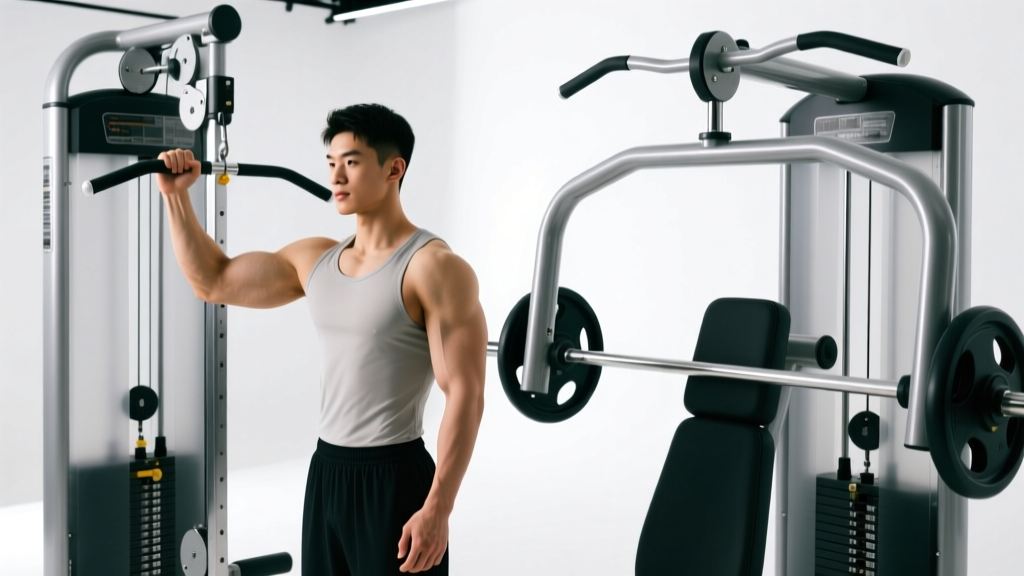
Shoulder Press Machine vs Chest Press Machine: Grip Guide

How To Start a Home Gym Setup: A Practical, Space-Smart Guide for Beginners
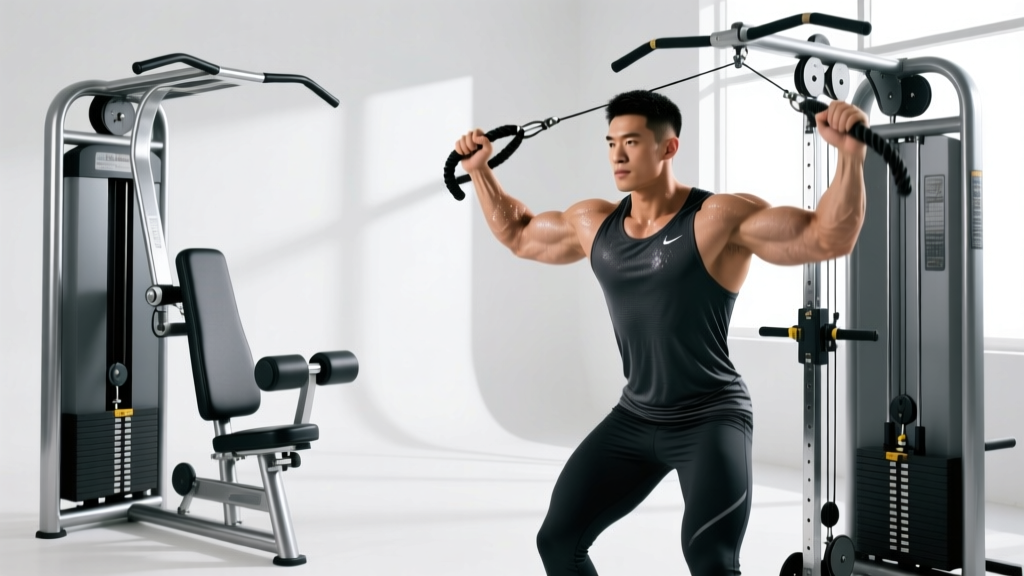
Bicep Curl Machines vs Cable Machine Rope Curls (2026 Guide)

Best Home Gym Space Budget for Router: Optimizing Floor Area, Clearance, and Cost Without Compromising Safety or Functionality

Real Alternatives to Essentials: Performance-Tested, Ethically Sourced, and Built-to-Last Gear for Body Arms Training
