
Sharper Image PowerBoost Deep Tissue Massage Gun vs Vibration Therapy
Optimize your recovery zone layout. We compare the spatial, acoustic, and storage needs of percussion vs vibration therapy for modern home gyms.

The Spatial Reality of Recovery Tech: Percussion vs. Vibration
Designing a functional home gym in 2026 goes far beyond racking dumbbells and folding treadmills. The modern recovery corner requires deliberate spatial planning, especially when choosing between percussive and vibrational modalities. While sports medicine professionals frequently debate the physiological merits of percussion therapy vs vibration therapy for delayed onset muscle soreness (DOMS), fitness facility designers and home-gym owners must also evaluate their physical footprints, acoustic profiles, and storage requirements.
Percussion therapy relies on high-amplitude, low-frequency mechanical strikes to penetrate deep fascial layers. Vibration therapy utilizes low-amplitude, high-frequency oscillations to stimulate surface-level neural receptors and promote local blood flow. These fundamentally different mechanical actions dictate how much physical clearance, shelf space, and acoustic dampening your recovery zone will require.
Deep Dive: The Sharper Image PowerBoost Deep Tissue Massage Gun Footprint
When designing a compact recovery zone, integrating the sharper image powerboost deep tissue massage gun requires understanding its specific spatial and acoustic profile. Retailing typically between $99 and $149, this mid-tier percussive device is a popular choice for budget-conscious athletes who need deep tissue relief without the premium $599 price tag of a Theragun PRO.
Physical Dimensions and Swing Clearance
The Sharper Image PowerBoost unit measures approximately 9.5 x 7.2 x 3.1 inches and weighs around 2.1 lbs. From a storage perspective, its T-shaped ergonomic handle allows it to slide easily into a standard 10-inch deep drawer or rest on a narrow floating shelf. However, spatial planning must also account for usage clearance.
- Self-Administration Radius: Because percussion requires the user to hold the device at an angle against the body, you need a minimum 3-foot radial clearance around your body to maneuver the device across your glutes, hamstrings, and lats without striking nearby walls or equipment racks.
- Attachment Storage: The PowerBoost includes multiple EVA foam and hard-plastic heads. A dedicated 6x6 inch acrylic bin or a small wall-mounted pegboard is required to keep these attachments organized and dust-free.
Vibration Therapy Layouts: Rollers, Pads, and Plates
Unlike the concentrated, handheld nature of percussion guns, vibration therapy tools often demand a larger physical footprint. The spatial requirements scale dramatically depending on the specific vibration tool you select.
Vibrating Foam Rollers (e.g., Hyperice Vyper 3)
Vibrating rollers combine the myofascial release of traditional rolling with high-frequency oscillation (up to 3,200 RPM). The Hyperice Vyper 3, for instance, measures 12.5 inches long and 5.5 inches in diameter.
Storage Impact: Rollers cannot be easily tucked into shallow drawers. They require either deep open shelving (at least 14 inches deep) or vertical storage bins. If you are utilizing a vertical wall-mounted rack, you must allocate a 6x6x14 inch column of space per roller.
Localized Vibration Pads and Whole-Body Plates
Targeted vibration pads (like the TheraFlow Pro) require minimal storage space (roughly 12x12x3 inches) but require a dedicated floor zone or a sturdy, low-profile bench for use. Whole-body vibration plates demand a permanent 3x3 foot floor footprint. In a space-optimized home gym, a vibration plate often doubles as a step-up box or a platform for kettlebell swings to justify its permanent floor real estate.
Acoustic Zoning: Managing the Decibel Spread
One of the most overlooked aspects of recovery space design is acoustic management. According to occupational noise guidelines, prolonged exposure to high decibel levels causes fatigue and stress, which is entirely counterproductive to a recovery environment.
| Modality | Average dB Output | Acoustic Profile | Layout Recommendation |
|---|---|---|---|
| Percussion (Sharper Image PowerBoost) | 60 - 72 dB | Staccato, high-impact mechanical clicking | Keep away from shared drywall; use near sound-absorbing gym mats |
| Vibration (Handheld/Rollers) | 45 - 55 dB | Continuous, low-frequency hum | Can be used in tighter spaces, apartments, or near shared walls |
| Whole-Body Vibration Plates | 55 - 65 dB | Deep structural resonance and rattling | Must be placed on thick rubber matting to prevent structural floor transfer |
The sharper image powerboost deep tissue massage gun generates a sharp, percussive noise that easily travels through standard 1/2-inch drywall. If your recovery zone shares a wall with a bedroom or a home office, you should position your seating area so the device points away from the shared wall, or install acoustic foam panels directly behind the primary recovery chair.
Power Management and Charging Station Design
A cluttered recovery zone defeats the psychological purpose of relaxation. Cable management is a critical component of spatial optimization.
Percussion Gun Charging
Most percussion guns, including the PowerBoost, utilize proprietary DC barrel plugs or standard USB-C charging. They do not typically feature wireless charging docks. To optimize space, install a concealed power strip inside a nearby drawer or behind a floating shelf, routing only the final USB-C cable up through a grommet hole. This keeps the visual footprint limited to just the device and a single wire.
Vibration Tool Power Draw
Vibrating rollers and pads often require higher amperage to sustain their internal motors under heavy body weight. Ensure your dedicated recovery zone circuit can handle the continuous draw of a vibration plate (often 300W-500W) alongside other equipment. Unlike percussion guns, many vibration plates require a bulky AC power brick. Allocate a 12x6x4 inch hidden cubby near the floor to hide these power bricks and prevent tripping hazards in your layout.
"The most common failure mode in home recovery zones isn't equipment breakdown; it's spatial friction. If a vibrating roller takes 45 seconds to dig out of a cluttered closet, or a percussion gun's cord is tangled, the athlete will simply skip their recovery protocol entirely. Visibility and accessibility dictate adherence."
— 2026 Home Gym Ergonomics Report
Decision Framework: Which Fits Your Space?
Choosing between percussion and vibration shouldn't rely solely on your muscle soreness; it must align with your spatial constraints.
- Choose Percussion (Sharper Image PowerBoost) if: You have limited floor space but ample drawer/shelf space. You need a tool that can be deployed quickly in a standard armchair or on a yoga mat without rearranging the room. You can manage the 65+ dB acoustic output.
- Choose Localized Vibration (Rollers/Pads) if: You have deep shelving or vertical wall racks available. You live in an apartment with strict noise ordinances (low-frequency hums are less disruptive to neighbors than percussive striking). You prefer passive recovery where the tool rests on the floor and you manipulate your body weight over it.
- Choose a Hybrid Layout if: Space permits. Mount a shallow shelf for the PowerBoost gun to target specific trigger points (like the TFL or pec minor), and allocate a 2x4 foot floor zone with a high-density EVA mat for a vibrating roller to handle broad sweeps of the IT band and thoracic spine.
Final Layout Takeaways
Optimizing your recovery space requires treating your tools as architectural elements. The sharper image powerboost deep tissue massage gun offers an incredibly dense therapeutic output in a highly storable, handheld form factor, making it the undisputed champion of micro-recovery zones and tight layouts. Vibration therapy, while offering superior surface-level neural dampening, demands a more generous physical and spatial commitment. By mapping out your clearances, managing your acoustics, and hiding your power delivery, you can build a 2026 recovery corner that is as frictionless as it is therapeutic.
More gear to consider
All reviews
Space-Saving Cold Plunge Layouts & Trakk Beast Massage Gun Zones
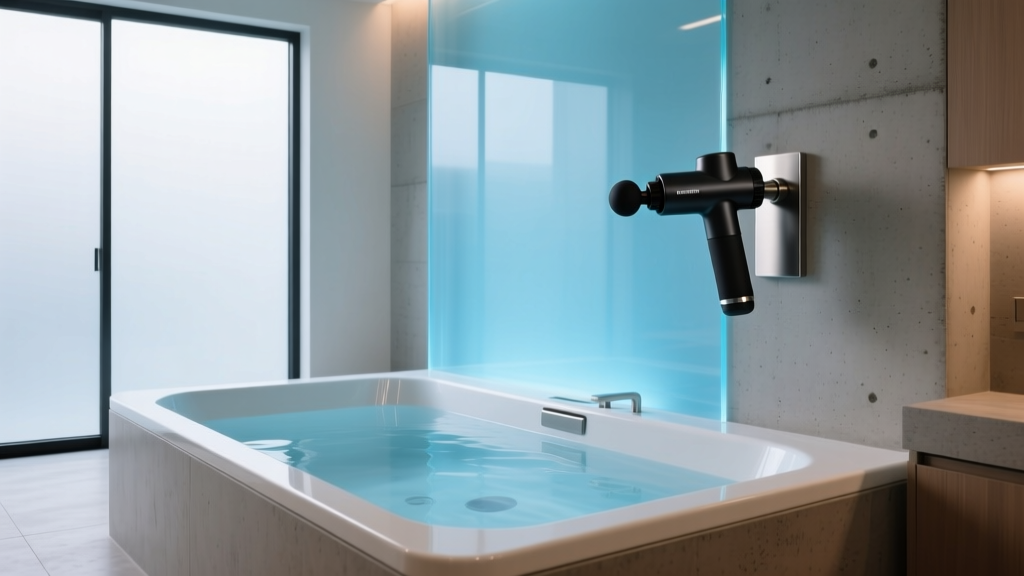
2026 Home Recovery Trends: Cold Plunges & Massage Gun Wall Mounts

Ice Bath & Cold Plunge Tub Budget Breakdown vs. Cholas Massage Gun

Compression Boot & Recovery Review: Infinity Massage Gun Charger
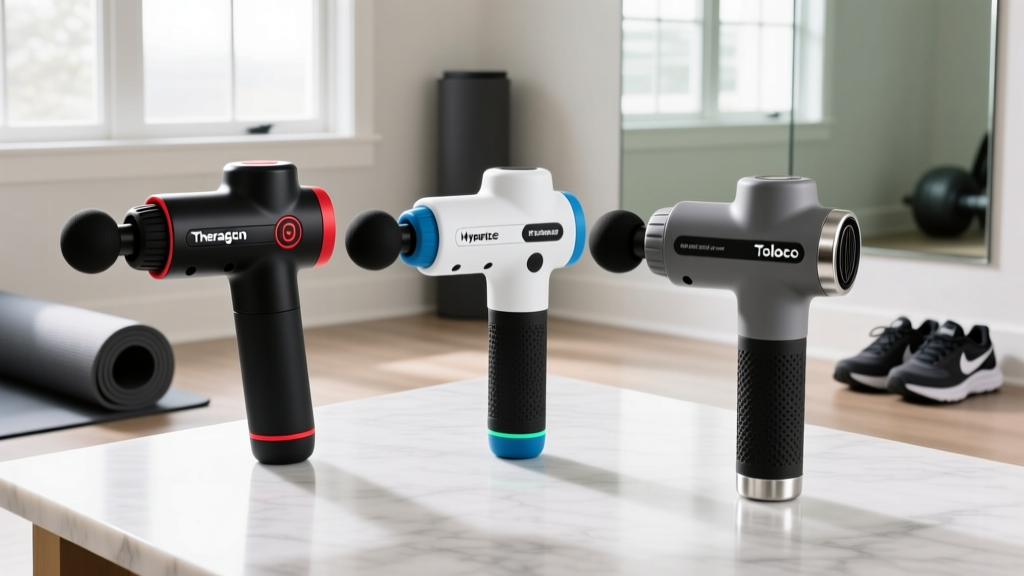
Theragun vs Hyperice & Toloco Massage Gun Review: Longevity Tips
