Rubber vs Urethane Dumbbells: Best Value for the Dumbbell Bench Row
Compare rubber hex vs urethane dumbbells for your dumbbell bench row. We break down 2026 pricing, durability, and long-term value for home gyms.

The True Cost of Your Back Day: Rubber vs. Urethane
When building a home gym, the dumbbell bench row is a non-negotiable staple for latissimus dorsi and rhomboid development. But the repetitive torque, heavy loads, and sweat exposure inherent to this exercise place unique stresses on your equipment. In 2026, the market is flooded with options, leaving lifters to debate the ultimate value proposition: budget-friendly rubber hex dumbbells versus premium urethane dumbbells. While the upfront price difference is stark, a true value analysis requires looking beyond the initial receipt. This guide breaks down the material science, depreciation rates, and long-term ROI of both options specifically through the lens of high-volume rowing.
Biomechanics of the Dumbbell Bench Row & Equipment Stress
According to exercise databases like ExRx.net, the single-arm dumbbell bench row is a unilateral compound movement that demands significant grip strength and core stabilization. When you pull a 70 lb dumbbell through the concentric phase, you are not just lifting dead weight; you are managing rotational torque.
This creates three specific points of failure for dumbbells:
- Handle Junction Stress: The connection point between the steel handle and the weighted head experiences immense shearing force.
- Sweat & pH Degradation: The acidic nature of sweat breaks down cheap vulcanized rubber over time, leading to a slick, degraded handle.
- Impact Resistance: Dropping heavy hex dumbbells after a grueling set of rows chips the sharp corners, eventually exposing the cast iron core to rust.
Expert Insight: During a heavy dumbbell bench row, your grip is the limiting factor. If your dumbbell handle features shallow knurling (common in budget rubber sets), you will expend excess energy squeezing the handle, prematurely fatiguing your forearms before your lats reach true failure.
Rubber Hex Dumbbells: The Budget Baseline
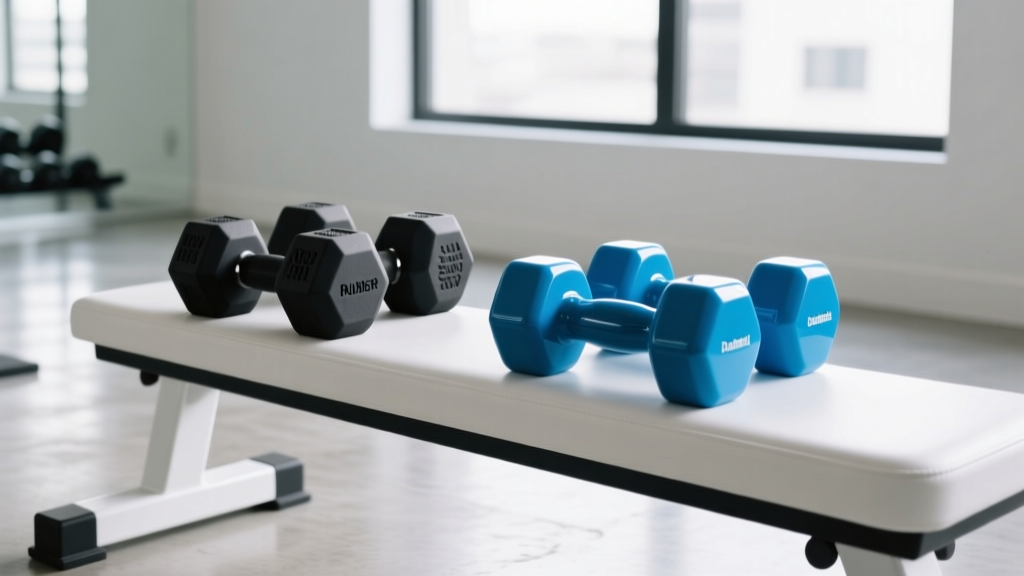
Rubber hex dumbbells, such as the ubiquitous CAP Barbell cast iron models, have been the default for budget home gyms for decades. The heads are coated in a vulcanized rubber compound designed to protect floors and reduce noise.
Pricing & Market Position (2026)
As of early 2026, rubber hex dumbbells average between $1.50 and $2.20 per pound. For a standard pair of 50 lb dumbbells, you are looking at an initial investment of roughly $150 to $220.
The Hidden Costs & Failure Modes
While the entry price is attractive, rubber hex sets carry hidden depreciation costs. The vulcanization process uses sulfur and carbon black, which results in the notorious 'new tire' odor. This off-gassing of Volatile Organic Compounds (VOCs) can take months to dissipate in a poorly ventilated garage gym. Furthermore, the rubber used in budget tiers typically sits around a 75A Shore hardness rating. It is relatively soft, meaning the sharp hexagon edges are prone to tearing when dropped on concrete. Once the rubber tears away from the steel core, moisture enters, and the iron rusts, permanently ruining the weight's balance and aesthetics.
Urethane Dumbbells: The Premium Investment
Urethane (polyurethane elastomer) is a synthetic polymer that has become the gold standard for commercial gyms and serious home setups. Brands like Rogue Fitness and Rep Fitness utilize high-grade urethane that is odorless, UV-resistant, and vastly superior in impact absorption.
Pricing & Market Position (2026)
Urethane commands a premium, typically ranging from $3.80 to $5.50 per pound depending on the brand and handle knurling quality. A pair of 50 lb urethane dumbbells will cost between $380 and $550. As noted by equipment authorities at Garage Gym Reviews, this price reflects not just the material, but the superior manufacturing processes, such as overmolded steel cores and deep volcano knurling.
Why Urethane Wins on Durability
Urethane boasts a Shore A hardness rating of 85A to 90A. It is dense, rigid, and virtually impervious to sweat, UV light, and extreme temperature fluctuations. When you finish a heavy set of dumbbell bench rows and drop the weights onto rubber matting, urethane absorbs the shock without chipping or deforming. Furthermore, premium urethane sets feature handles with 1.2mm to 1.5mm deep knurling, providing the aggressive grip needed for heavy unilateral pulling movements without tearing your calluses.
5-Year Cost & Value Breakdown Matrix
To determine true value, we must calculate the Cost-Per-Use (CPU) and factor in replacement rates over a 5-year period, assuming a dedicated lifter performing back-focused workouts 3 times per week.
| Metric | Rubber Hex (50lb Pair) | Urethane (50lb Pair) |
|---|---|---|
| Initial Upfront Cost | $180.00 | $450.00 |
| Expected Lifespan (Heavy Use) | 2.5 - 4 Years | 10 - 15+ Years |
| 5-Year Replacement Cost | $180.00 (1 Replacement) | $0.00 |
| Total 5-Year Spend | $360.00 | $450.00 |
| Maintenance Required | High (Cleaning, Rust Prevention) | Low (Wipe down with damp cloth) |
| Resale Value (Year 5) | ~$40 (Degraded) | ~$250 (High Demand) |
The ROI Verdict: When factoring in the inevitable replacement of budget rubber and the strong resale value of urethane on the secondary market, the actual 5-year net cost of urethane is remarkably close to rubber. You are essentially paying a $90 premium over 5 years for a vastly superior grip, zero odor, and commercial-grade aesthetics.
Real-World Edge Cases: Making Your Decision
While the math leans toward urethane for long-term value, specific environmental and budgetary constraints might make rubber hex the smarter immediate choice.
When to Buy Rubber Hex
- The Temporary Setup: If you are outfitting a college dorm or a temporary apartment gym and plan to upgrade or sell within 18 months, the low barrier to entry of rubber hex makes financial sense.
- Strict Budget Ceilings: If your total free weight budget is under $300 and you need a full spectrum of weights (e.g., 15 lbs to 50 lbs) to perform progressive overload on your dumbbell bench row, rubber hex allows you to buy the entire rack rather than just two pairs of urethane.
When Urethane is Mandatory
- Indoor / Shared Spaces: If your gym is in a basement or spare bedroom, the VOC off-gassing of cheap rubber is a health and comfort hazard. Urethane is completely odorless.
- Heavy, High-Volume Rowing: If your dumbbell bench row working sets exceed 60 lbs per hand, the aggressive knurling and structural integrity of a urethane overmolded handle are critical for safety and performance.
- Unclimate-Controlled Garages: Urethane does not crack in freezing winter temperatures or melt/degrade in humid summer heat, unlike vulcanized rubber.
Expert Verdict: Maximizing Your Home Gym ROI
If your primary goal is to build a massive back through heavy, unilateral dumbbell bench rows, your equipment must facilitate a secure grip and withstand rotational abuse. Rubber hex dumbbells serve a purpose for beginners and strictly constrained budgets, acting as a functional stepping stone. However, from a pure value analysis perspective in 2026, urethane dumbbells are the undisputed champions of long-term ROI. The elimination of replacement costs, combined with the ergonomic benefits of premium knurling and zero off-gassing, makes urethane a 'buy once, cry once' investment that will outlast your lifting career.
Frequently Asked Questions
Can I just buy rubber hex dumbbells and wrap the handles in athletic tape for better grip?
While athletic tape or tennis grip tape can temporarily improve the shallow knurling of budget rubber hex handles during a dumbbell bench row, it does not solve the structural vulnerabilities at the handle junction or the issue of rubber degradation from sweat. It is a band-aid solution that requires frequent maintenance.
Does urethane smell at all when first unboxed?
High-quality urethane from reputable fitness brands is virtually odorless. You may notice a very faint, sterile 'factory' scent upon unboxing, but unlike the sulfuric VOC off-gassing of vulcanized rubber, this dissipates entirely within 24 to 48 hours in a normal room.
Are neoprene dumbbells a good alternative for the dumbbell bench row?
No. Neoprene is a soft, fabric-like coating designed for light aerobic work and high-rep endurance movements. For a heavy, compound pulling movement like the dumbbell bench row, neoprene will compress under your grip, causing severe forearm fatigue and offering zero structural protection if dropped.
More gear to consider
All reviews
Dumbbell Lateral Lifts: Beginner Guide for Neoprene Weights
EZ Bar vs Straight Bar & the One Dumbbell Row: 2026 Trends

Bumper vs Iron Plates: 2026 Trends & Flat Dumbbell Press Form
Rubber Hex vs Urethane: 2026 Preacher Curl Dumbbell Market Trends
TSA Dumbbell Travel Rules & Home Gym Mistakes: Olympic vs Standard Plates
