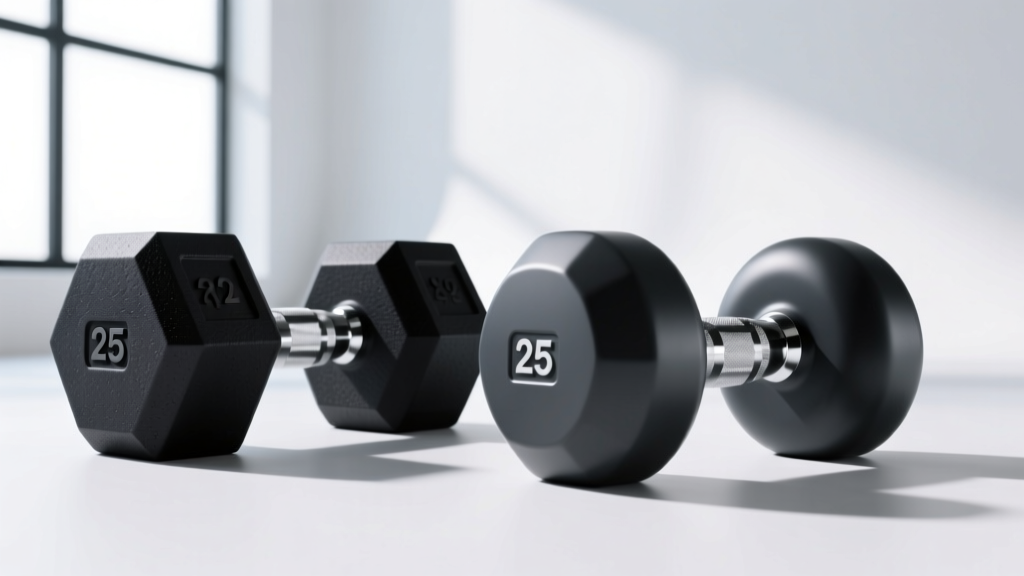
Rubber Hex vs Urethane: Best Gear for a 25 Pound Dumbbell Workout
Compare rubber hex vs urethane dumbbells for your 25 pound dumbbell workout. We break down 2026 pricing, durability, and value to find the best gear.

The 25-Pound Dumbbell Workout: Why Material Matters for Mid-Weight Circuits
When building a home gym or upgrading a commercial facility, the 25-pound dumbbell is an undisputed workhorse. It sits at the perfect intersection of metabolic conditioning, high-rep hypertrophy, and unilateral leg work. However, executing a high-volume 25 pound dumbbell workout means this specific weight class endures a unique brand of punishment. Unlike heavy 80-pound dumbbells that are picked up and set down with deliberate care, 25-pounders are frequently dropped during renegade rows, tossed aside during burpee complexes, and constantly exposed to sweat and floor friction.
This brings us to a critical purchasing dilemma in 2026: do you invest in budget-friendly rubber hex dumbbells, or do you pay the premium for urethane? As a domain expert analyzing free weight equipment, I have tracked the failure modes, cost-per-pound metrics, and long-term value of both materials. Below is a comprehensive budget breakdown and value analysis to help you choose the right gear for your training environment.
Budget Breakdown: Rubber Hex vs. Urethane Pricing
To understand the true value, we must look beyond the initial price tag and evaluate the cost-per-pound, expected lifespan, and hidden replacement costs. The table below outlines the current market averages for a pair of 25-pound dumbbells from reputable manufacturers.
| Material Type | Avg Cost Per Pound | 25lb Pair Cost (2026) | Expected Lifespan | Acoustic & Odor Profile |
|---|---|---|---|---|
| Virgin Rubber Hex | $1.60 - $1.90 | $80 - $95 | 2 - 5 Years | Moderate Odor, Loud Drops |
| Premium Urethane | $3.80 - $4.50 | $190 - $225 | 10+ Years | Odorless, High Dampening |
At first glance, the rubber hex option appears to be the clear winner for budget-conscious lifters. However, when you factor in the degradation rate of recycled rubber and the mechanical failure of cheaper handle collars, the long-term value proposition shifts dramatically.
Failure Modes: How High-Rep Circuits Destroy Cheap Gear
To accurately assess value, we must examine how these dumbbells fail during a rigorous 25 pound dumbbell workout. The 25 lb weight class is heavily utilized in movements that involve floor contact and dynamic transitions.
The Rubber Hex Reality: CAP Barbell and Generic Imports
Most budget rubber hex dumbbells, such as those found in big-box sporting goods stores or entry-level Garage Gym Labs' expert dumbbell roundup, are encased in recycled tire rubber. While the hexagonal head prevents rolling—a vital safety feature—the material itself is prone to several failure modes:
- VOC Off-Gassing: Recycled rubber releases volatile organic compounds (VOCs). In a poorly ventilated home gym, a new set of 25s can make the room smell like a tire shop for up to six months.
- Edge Chipping and Tearing: Rubber has a lower Shore A durometer (hardness) than urethane but lacks structural cohesion. When you drop a 25 lb rubber hex dumbbell onto a rubber mat during a renegade row, the sharp hex edges eventually chip, flake, and leave black scuff marks on your flooring.
- Collar Spin-Out: Budget models often use press-fit or threaded collars to secure the cast iron head to the chrome handle. After 1,000 reps of goblet squats and floor presses, the torque causes the collar to loosen, resulting in a dangerous 'spin-out' where the handle rotates freely inside the weight head.
The Urethane Premium: Rogue and Rep Fitness
Urethane is a high-density, synthetic polymer that has become the gold standard for commercial gyms and premium home setups. According to the manufacturing specs of Rogue Fitness Urethane Dumbbells, this material offers distinct advantages that justify the higher upfront cost:
- Impact Resistance: Urethane is virtually impervious to chipping. It absorbs kinetic energy, meaning you can drop a 25 lb urethane dumbbell from chest height onto a standard horse-stall mat without damaging the weight or the floor.
- Acoustic Dampening: If your 25 pound dumbbell workout is done in a garage with sleeping family members upstairs, urethane is mandatory. It drastically reduces the high-pitch 'clank' of metal-on-mat, replacing it with a dull, quiet thud.
- Welded Handle Integrity: Premium urethane sets typically feature internally welded handles or heavy-duty snap-ring assemblies. The handle will never spin out, ensuring your grip remains secure during high-fatigue unilateral movements.
Expert Insight: The Break-Even Point
Many lifters buy a $85 pair of rubber hex 25s, only to replace them three years later when the rubber degrades and the handles loosen. Over a 10-year training cycle, you will spend roughly $255 replacing budget rubber dumbbells. A $210 pair of urethane dumbbells is a true 'buy-it-for-life' investment that actually saves you money by year seven.
Value Proposition Matrix: Which Should You Buy?
Your purchasing decision should be dictated by your specific training environment, budget, and volume. Use this decision framework to finalize your choice:
- Buy Rubber Hex If: You are on a strict sub-$100 budget for this weight class, you train in a well-ventilated outdoor or garage space where odor is not an issue, and you strictly control your eccentric lowering phases (i.e., you do not drop the weights).
- Buy Urethane If: You perform high-impact metabolic circuits (like the workout below), you train in an indoor/apartment environment where noise and odor are critical factors, and you want a commercial-grade aesthetic that resists UV fading and sweat corrosion.
The Ultimate 25 Pound Dumbbell Workout (Metabolic Hypertrophy)
To properly test the durability and ergonomics of your new 25 lb dumbbells, run this high-volume metabolic circuit. This routine is designed to challenge your grip, tax your cardiovascular system, and subject the dumbbell heads to repetitive floor contact. Perform this as a continuous circuit, resting only 90 seconds between rounds. Complete 4 total rounds.
- A1. Dumbbell Goblet Squat: 15 Reps. (Hold one 25 lb dumbbell vertically. Focus on depth and a 2-second pause at the bottom. Tests handle ergonomics and knurling grip).
- A2. Renegade Row: 10 Reps per side. (Assume a push-up position on the dumbbell handles. Row the weight to your hip while stabilizing with the opposite arm. Tests the anti-roll hex/polygon shape and floor durability).
- A3. Dumbbell Floor Press: 12 Reps. (Lie on your back, press the weights up, and lower until your triceps touch the floor. Tests the acoustic dampening and impact resistance of the dumbbell heads).
- A4. Alternating Reverse Lunge: 12 Reps per leg. (Hold both 25s at your sides. Step backward into a lunge. Tests grip endurance and overall weight distribution).
Final Verdict
When analyzing the budget breakdown and long-term value, urethane emerges as the superior choice for serious lifters executing a demanding 25 pound dumbbell workout. While the initial capital requirement is more than double that of rubber hex, the elimination of VOC odors, the prevention of edge chipping, and the guaranteed structural integrity of the handle make urethane the undisputed champion of mid-weight free weights. If your budget allows, skip the disposable rubber options and invest in a premium urethane pair that will outlast your fitness journey.
More gear to consider
All reviews
Aldi Dumbbells vs Top Adjustables: 2026 Buying Guide

Olympic Barbell Knurling: Rogue vs REP & Dumbbell Fly Machine Pairings

Space Layout: Cast Iron vs Competition Kettlebells & 1090 Dumbbells
EZ Curl Bar vs Straight Bar & PowerBlock Dumbbells Space Guide

Bowflex Dumbbells vs PowerBlock: 2026 Head-to-Head Review