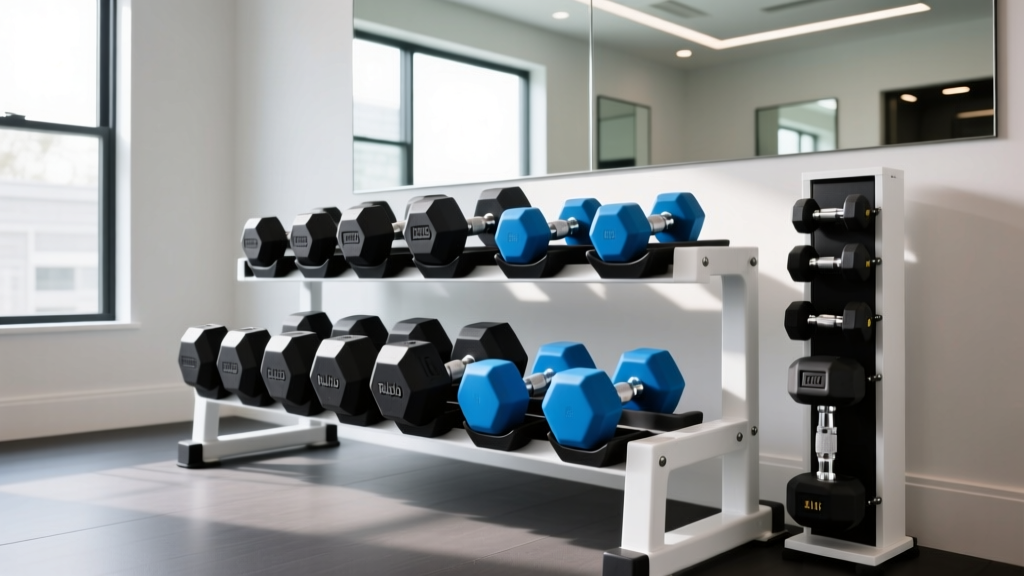
Optimizing Gym Space: Rubber Hex vs Urethane & 1lb Dumbbell Storage
Maximize your home gym footprint. Compare rubber hex vs urethane dumbbells for rack density, and learn space-saving storage for 1lb dumbbells.

The Geometry of Dumbbell Heads: Rubber Hex vs. Urethane
When designing a space-optimized home gym, the physical dimensions of your free weights dictate your entire floor plan. While most lifters focus solely on weight increments, the spatial geometry of the dumbbell heads—specifically the debate between rubber hex dumbbell vs urethane dumbbell profiles—determines how much linear wall space your storage rack will consume. In a compact 10x10 or 12x12 training area, saving six inches of wall space can be the difference between fitting a functional cable tower or being forced to abandon it.
Rubber hex dumbbells, such as the widely used Rogue Rubber Hex line, are manufactured by encasing a cast iron core in a thick layer of recycled rubber and binding agents. Because rubber is less dense than polyurethane, the heads must be physically thicker to achieve the target weight. A standard 50lb rubber hex dumbbell features a head thickness of approximately 3.6 inches per side.
Conversely, urethane dumbbells (like the REP Fitness U-Force series) utilize cast polyurethane, a highly dense synthetic elastomer. This density allows manufacturers to create significantly thinner, more compact heads. A 50lb urethane dumbbell typically measures just 2.8 inches thick per side. When you multiply this 0.8-inch difference across a 3-tier rack holding 10 pairs of dumbbells, the spatial savings become massive.
Footprint Comparison Matrix: 5lb to 50lb Sets
| Feature | Rubber Hex Dumbbells | Urethane Dumbbells |
|---|---|---|
| Average Head Thickness (50lb) | 3.6 inches | 2.8 inches |
| Required Rack Width (10 pairs) | 48 to 52 inches | 36 to 42 inches |
| Cost Per Pound (2026 Avg) | $1.60 - $1.90 / lb | $2.80 - $3.50 / lb |
| Odor / Off-Gassing | High (requires ventilation) | None (odorless) |
| Rack Wear & Tear | High (rubber degrades and sticks) | Low (smooth glide) |
According to comprehensive equipment analyses by Garage Gym Reviews, upgrading from rubber hex to urethane can reduce your dumbbell rack footprint by up to 22%, allowing you to push your storage unit flush into tighter corners or alcoves.
Material Degradation and Spatial Shifts
Space optimization is not just about the initial layout; it is about maintaining that layout over time. Rubber hex dumbbells are notorious for spatial shifting due to material degradation. The recycled rubber compound reacts to UV light, temperature fluctuations, and the acidic pH of human sweat. Over a 24-month period, the rubber begins to break down, becoming tacky.
⚠️ Rack Friction Warning: As rubber hex heads degrade, they create immense friction against metal rack rails. Lifters are forced to drag the weights, which eventually bends the rack's steel tier pins. Urethane remains structurally inert, ensuring weights slide smoothly on and off tiered racks without warping the storage unit's geometry.Furthermore, rubber hex bells often suffer from weight calibration variances. A 40lb rubber hex bell might actually weigh 38.5lbs due to air pockets in the molding process. Urethane is precision-cast, guaranteeing exact weight tolerances, which is critical for lifters tracking progressive overload in tight spatial setups where swapping weights must be seamless.
The Micro-Weight Dilemma: Storing 1lb Dumbbells and Rehab Gear
A truly comprehensive home gym layout must account for the entire weight spectrum, not just the heavy compound lifters. This brings us to a unique spatial challenge: integrating micro-weights, specifically 1lb dumbbells, into a space-optimized environment.
While 1lb dumbbells are essential for rotator cuff rehabilitation, physical therapy, and high-rep shadow boxing warmups, they are a nightmare for standard tiered storage. Most 1lb dumbbells are coated in neoprene or vinyl and feature abbreviated, narrow handles. If you place a pair of 1lb dumbbells on a standard 3-tier hex rack designed for 5lb to 50lb bells, they will either slip through the tier gaps or occupy the same linear space as a 5lb pair, wasting valuable rack density.
Space-Saving Solutions for Micro-Weights
To maintain a clean, optimized floor plan, remove 1lb dumbbells (along with 2lb and 3lb pairs) from the main freestanding tiered rack entirely. Instead, utilize vertical or hidden storage:
- Under-Bench Sliding Drawers: Mount a shallow, 4-inch deep sliding drawer beneath your primary adjustable weight bench. This utilizes "dead space" and keeps rehab weights exactly where you need them during warmups.
- Wall-Mounted Pegboards: Install a heavy-duty steel pegboard on the wall directly above your main rack. Use 4-inch steel pegs to hang 1lb dumbbells by their handles. This draws the eye upward, making the room feel larger while keeping the floor clear.
- Magnetic Wall Strips: For bare cast-iron or steel-handled micro-weights, heavy-duty magnetic tool strips mounted to the side of your power rack offer a zero-footprint storage solution.
Studies published in the National Center for Biotechnology Information (NCBI) highlight the importance of low-load, high-velocity micro-weight movements for joint longevity and tendon rehab. Keeping these 1lb dumbbells accessible but off the main floor rack ensures your primary training zone remains uncluttered and optimized for heavy loads.
Step-by-Step Layout Blueprint for a 10x10 Room
If you are outfitting a compact 100-square-foot room, combining urethane dumbbells with strategic micro-weight storage is your best path to a functional layout. Follow this spatial blueprint:
- Establish the Anchor (Wall 1): Place a 3-tier, 36-inch wide urethane dumbbell rack flush against the longest uninterrupted wall. Because you chose urethane, the 36-inch width comfortably holds 5lb to 50lb pairs (10 pairs) without overhang.
- Vertical Integration (Wall 2): Mount a foldable wall-mounted squat rack or a slim-profile functional trainer. This keeps the center of the room entirely open for floor work and dumbbell movements.
- Dead Space Utilization (Center): Position an adjustable FID (Flat/Incline/Decline) bench in the center. Mount the aforementioned sliding drawer underneath for your 1lb dumbbells and resistance bands.
- Overhead Clearance Check: Ensure your dumbbell rack is positioned at least 18 inches away from any ceiling fans or low-hanging lighting to prevent accidental strikes during lateral raises or overhead presses.
"The hallmark of an elite home gym isn't how much equipment you can cram into a room, but how efficiently the equipment serves the lifter's movement patterns without creating spatial bottlenecks." — FitGearPulse Layout Methodology
Frequently Asked Questions
Can I mix rubber hex and urethane dumbbells on the same rack?
Yes, but it ruins spatial symmetry. Because rubber hex heads are thicker, mixing them on a tiered rack will cause uneven weight distribution and visual clutter. If you must mix, place the thicker rubber hex bells on the bottom tier where the wider base footprint provides better stability, and reserve the top tiers for the slimmer urethane bells.
Do 1lb dumbbells have any use in muscle building?
Strictly speaking, 1lb dumbbells do not provide enough mechanical tension for hypertrophy in large muscle groups. However, they are highly effective for isolating small stabilizer muscles, performing physical therapy protocols, and adding slight resistance to cardiovascular shadow-boxing routines without altering your biomechanical form.
Is the higher cost of urethane worth it for small apartments?
Absolutely. In a small apartment gym, spatial real estate is your most expensive asset. Paying a premium of $1.50 extra per pound for urethane buys you a 20% reduction in rack width. This reclaimed space can be used for a rowing machine, a yoga mat zone, or simply left empty to improve airflow and psychological comfort in a tight room.
More gear to consider
All reviews
Best Adjustable Dumbbells for Dumbbell Shoulder Exercises (2026)

Best Neoprene Dumbbells for a Women's Dumbbell Workout (2026)

Olympic Barbell Knurling vs Pool Dumbbell Exercises: 2026 Comparison

Best Adjustable Dumbbells for Bigger Arms: 2026 Guide & Review

Barbell Collars Compared: Heavy Squats vs Split Squat with Dumbbell
