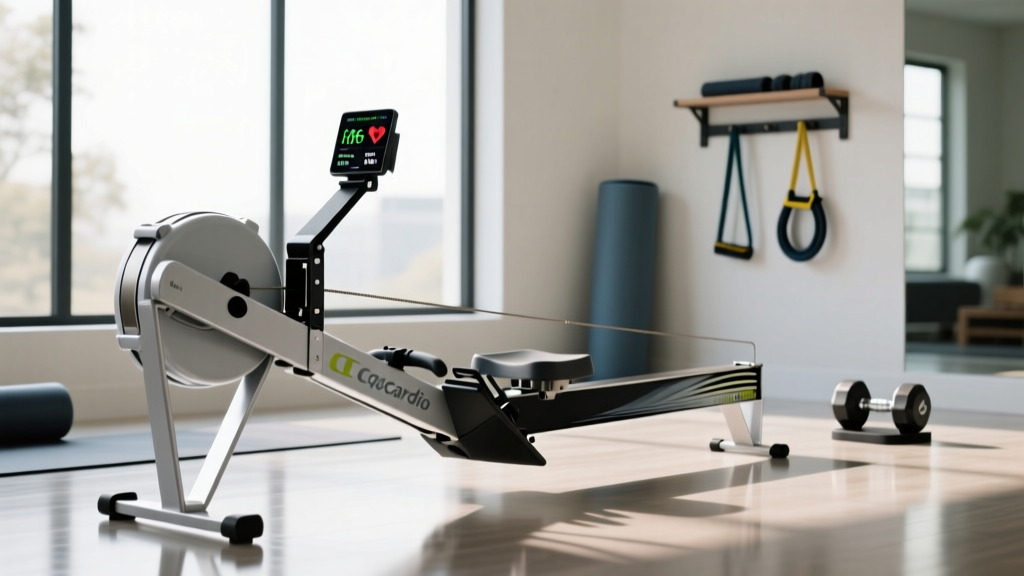
Rowing Machine Guide: Ergometer Console vs Treadmill Monitor Metrics
Master rowing machine buying and technique. Compare ergometer console metrics against standard treadmill monitor data to optimize your 2026 cardio setup.

The Paradigm Shift: Ergometer Consoles vs. Treadmill Monitor Data
When transitioning from running to rowing, the most jarring shift isn't just the biomechanics—it is the data feedback loop. A standard treadmill monitor feeds you familiar, linear metrics: pace (min/mile), incline percentage, and total distance. However, an indoor rowing ergometer operates on an entirely different physics paradigm. Instead of moving a belt beneath your feet, you are accelerating a flywheel mass through a lever system. Understanding how to read a rowing console—and how it fundamentally differs from a treadmill monitor—is the first critical step in making an informed purchasing decision and mastering your technique in 2026.
While a treadmill monitor calculates speed based on motor RPMs, a rowing ergometer calculates work based on the deceleration rate of its flywheel. This means your output is entirely self-generated. If you stop pulling, the machine stops immediately. Below, we break down the exact metrics you need to look for when buying a rower, contrast them with traditional treadmill data, and provide a masterclass in rowing biomechanics.
Console Data Showdown: What Actually Matters?
To buy the right machine, you must understand the telemetry it provides. Many budget rowers mimic the simplistic calorie/distance displays of entry-level treadmills, but serious ergometers offer deep biomechanical feedback. Here is how the data stacks up.
| Metric Category | Rowing Ergometer Console | Standard Treadmill Monitor |
|---|---|---|
| Primary Pace Metric | Split Time (/500m) | Pace (min/mile) or Speed (MPH) |
| Resistance Indicator | Drag Factor (110-130+) | Incline Percentage (0-15%+) |
| Cadence/Rate | Stroke Rate (strokes/min) | Cadence (steps/min) or Belt RPM |
| Power Output | Watts & Force Curve Graph | Calculated METs or Horsepower |
| Biomechanical Feedback | Drive vs. Recovery Ratio | Ground Contact Time (on premium models) |
Expert Insight: The /500m Split Explained
On a treadmill monitor, a lower pace number (e.g., 8:00/mile vs 10:00/mile) means you are moving faster. On a rower, your primary metric is the /500m split. This represents how long it would take you to row 500 meters at your current power output. Therefore, a lower split time (e.g., 1:45/500m) means you are pulling harder and moving faster than a higher split (e.g., 2:15/500m). When evaluating a machine's monitor, ensure it displays split time prominently, not just total calories.
2026 Rowing Machine Buying Framework
The indoor rowing market has segmented heavily over the last few years. You now have traditional air ergometers, silent magnetic resistance models, and immersive smart-rowers. Here are the non-negotiable specifications to evaluate before spending your money.
1. Drive Mechanism & Resistance Profiles
- Air Resistance (e.g., Concept2 RowErg): The gold standard for competitive rowers. The harder you pull, the more resistance the fan generates. It is loud, but it offers infinite, dynamic resistance curves.
- Magnetic Resistance (e.g., Echelon Row, NordicTrack RW900): Utilizes electromagnets to create drag on the flywheel. Virtually silent and excellent for apartment living, but the resistance curve feels slightly more artificial than air.
- Water Resistance (e.g., WaterRower): Uses a water-filled tank. Provides a soothing swoosh sound and a highly realistic catch feel, but lacks the precise digital telemetry required for structured interval training.
2. Rail Length & Ergonomic Clearance
One of the most common buying mistakes is ignoring rail length. If you are 6'2" or taller, a standard 54-inch rail may cause your shins to hit the flywheel cage at the catch, or you may run out of slide before your legs are fully compressed. Look for machines offering at least a 54-inch inseam clearance, or purchase extended rail kits (available from Concept2 for an additional ~$50) if you exceed 6'3".
3. Footprint and Storage Mechanics
Unlike treadmills, which often fold vertically on hydraulic hinges, rowers typically separate into two pieces or stand upright on their front casters. The Concept2 RowErg separates into two 25-inch pieces, making it easy to store in a closet. Smart rowers like the Hydrow Pro (retailing around $2,495) do not separate and require a dedicated 86-inch length footprint, though they can be stored vertically with a specialized wall-anchor kit.
The Biomechanics of the Stroke: Technique Guide
According to the official Concept2 technique guidelines, rowing is not an upper-body pulling exercise; it is a lower-body pushing exercise. A proper stroke consists of four distinct phases. Mastering these is crucial for preventing lumbar strain and maximizing wattage output.
- The Catch: Shins are vertical (or as close to vertical as your ankle mobility allows). Arms are straight, shoulders are relaxed and slightly in front of your hips. You are coiled like a spring.
- The Drive: The sequence is strictly Legs → Core → Arms. You push the footplate away explosively with your legs. As the legs approach full extension, the core swings open (hinging at the hips), and finally, the arms draw the handle to the lower sternum.
- The Finish: Legs are fully extended, torso is leaned back slightly (about 11 o'clock), and the handle is resting just below the pectoral line. Elbows are drawn back past the ribcage.
- The Recovery: The exact reverse of the drive. Arms → Core → Legs. Arms extend first, the torso hinges forward past the hips, and only then do the knees bend to slide back to the catch.
The Golden Ratio: Your drive should be explosive and take roughly 1 second, while your recovery should be controlled and take roughly 2 seconds. This 1:2 ratio allows your muscles to recover and prepares the flywheel for the next catch. Rushing the slide is the #1 mistake beginners make.
Top Tier Models & Real-World Pricing
Based on current 2026 market availability, here are three distinct category leaders that offer superior console telemetry and build quality.
Concept2 RowErg (Standard & Tall)
Price: ~$1,195
Best For: Purists, competitive athletes, and CrossFitters.
Monitor: The PM5 monitor is arguably the most accurate fitness console on the market. It features Bluetooth and ANT+ connectivity, allowing you to pair heart rate monitors and sync directly with third-party apps. It displays your force curve in real-time, allowing you to identify biomechanical leaks in your stroke.
NordicTrack RW900
Price: ~$1,199 (plus IFIT subscription)
Best For: Users who want a quiet, magnetic resistance machine with guided programming.
Monitor: A massive 22-inch HD touchscreen that overrides the raw data experience. Instead of staring at a split time, you are rowing through global waterways with auto-adjusting magnetic resistance controlled by the instructor.
Hydrow Pro
Price: ~$2,995
Best For: Tech-forward homes with dedicated gym space.
Monitor: Features a 24-inch sweat-proof monitor with a patented electromagnetic drag system that perfectly mimics the feel of a carbon-fiber racing shell on water. The telemetry is heavily gamified, focusing on split times and live leaderboards.
Common Form Mistakes & Biomechanical Fixes
Even with the best equipment, poor technique will lead to injury. Sports medicine experts at the Cleveland Clinic note that lower back pain in rowers is almost always a result of form degradation, not the exercise itself. Watch out for these specific failure modes:
- Shooting the Slide: This occurs when your legs push the footplate away, but your torso doesn't move, causing your hips to drop and placing massive shear force on the lumbar spine. Fix: Ensure your hips and shoulders move backward at the exact same rate during the first half of the drive.
- Early Arm Pull: Bending the elbows before the legs are fully engaged. This isolates the biceps and lats, robbing you of 60% of your power potential. Fix: Think of your arms as meat hooks or ropes; they simply connect your torso to the handle until the legs are nearly straight.
- Rushing the Recovery: Sliding forward too quickly crashes your momentum into the flywheel at the catch. Fix: Focus on the 1:2 ratio. Breathe in during the recovery, and exhale sharply on the drive.
Final Verdict: Making the Transition
Upgrading from a treadmill to a rowing machine is one of the most effective cardiovascular decisions you can make. According to Harvard Health Publishing, vigorous rowing burns calories at a rate comparable to running at a 6-minute-mile pace, but with zero impact on the patellofemoral joint. However, to reap these benefits, you must abandon the passive mindset fostered by a standard treadmill monitor. Rowing demands active engagement, an understanding of split times, and a relentless focus on the sequencing of the kinetic chain. Choose a machine with an accurate telemetry console, respect the drag factor, and prioritize your stroke ratio over raw stroke rate.
More gear to consider
All reviews
Beyond the Better Me Treadmill Challenge: Beginner Rowing Guide

Nautilus Treadmill vs Air Bike: The Assault Bike Guide

NordicTrack C 850s Treadmill Care & Under Desk Office Review

Treadmill Weight Limit & Motor HP: A Troubleshooting Guide
2026 Trend Report: Portable Cardio vs Dedicated Outlet for Treadmill
