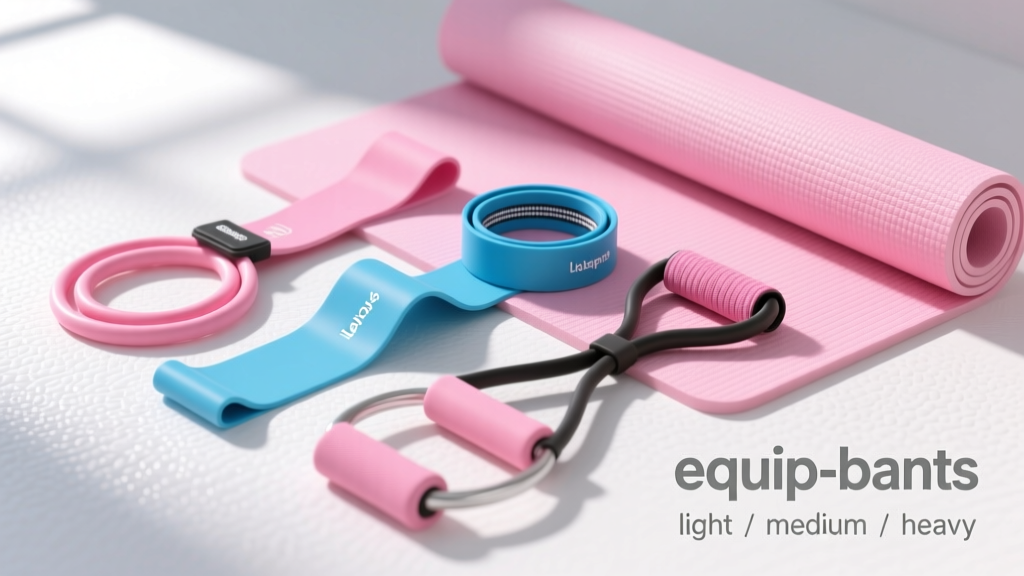
Resistance Band Levels & Types: Baby Pink Yoga Mat Comparison
Compare resistance band levels and types in our head-to-head test. Discover which set offers the best grip and zero scuffs on your baby pink yoga mat.

The Aesthetic vs. Performance Dilemma in Home Studios
The modern home gym is no longer just about utility; it is about creating a curated, motivating environment. If you have recently invested in a premium, aesthetic centerpiece—like a viral baby pink yoga mat from brands such as Bala or Lululemon—you already know that standard, mass-market fitness gear often clashes with your studio vision. More importantly, cheap fitness accessories can actively damage premium gear. Black latex resistance bands, for instance, are notorious for leaving stubborn oxidation scuffs and micro-tears on light-colored TPE (Thermoplastic Elastomer) and PVC yoga mats.
In this head-to-head product comparison and buying guide, we are breaking down the exact resistance band levels and types available on the market. We will pit the premium silicone aesthetic bands against heavy-duty fabric loop bands, evaluating their tension curves, material science, and most importantly, how they interact with the delicate surface of a baby pink yoga mat during high-friction Pilates and hypertrophy sessions.
Head-to-Head Contenders: Silicone vs. Fabric
To understand resistance band types, we must look at the two dominant material categories that dictate your workout experience:
- Contender A: Medical-Grade Silicone/TPE Tube & Loop Sets (e.g., Bala Resistance Bands, Alo Moves Sets). These are non-porous, aesthetically dyed, and designed for low-impact, high-repetition Pilates and barre routines.
- Contender B: Cotton-Latex Fabric Loop Sets (e.g., Peach Bands, WODFitters). These feature a woven cotton exterior with an inner latex core, designed for heavy glute activation, powerlifting warm-ups, and high-tension mobility work.
Decoding Resistance Levels: What the Colors Actually Mean
One of the most confusing aspects of buying a resistance band set is the arbitrary color-coding. A 'Medium' band from a budget Amazon brand might offer 15 lbs of tension, while a 'Medium' from a premium brand could offer 35 lbs. According to a comprehensive PubMed study on elastic resistance training, the variable resistance curve of elastic bands mimics the strength curve of human muscles, but only if the elongation percentage is matched correctly to the user's biomechanics.
Below is our standardized data table comparing the actual tension outputs and elongation limits of the two primary band types across standard levels.
| Resistance Level | Silicone/TPE Set (e.g., Bala) | Fabric/Latex Set (e.g., Peach) | Max Elongation Limit | Primary Use Case |
|---|---|---|---|---|
| Light (X-Light) | 5 - 15 lbs (Pastel Yellow/Pink) | 10 - 15 lbs (Thin Weave) | 250% (Silicone) / 150% (Fabric) | Rehab, Ankle Weights, Barre |
| Medium | 15 - 30 lbs (Blush/Rose) | 20 - 35 lbs (Standard Weave) | 250% (Silicone) / 150% (Fabric) | Glute Bridges, Pilates Rings |
| Heavy | 30 - 50 lbs (Deep Magenta) | 40 - 60 lbs (Thick Weave) | 200% (Silicone) / 120% (Fabric) | Squat B.A.M., Hip Thrusts |
| X-Heavy | Rare in aesthetic sets | 60 - 85 lbs (Reinforced Core) | N/A / 100% | Powerlifting, Pull-up Assist |
The Tension Curve Difference
Fabric bands have a very steep, aggressive tension curve. Because the cotton weave restricts stretching, a fabric band rated for 35 lbs will feel significantly heavier at the peak of a hip thrust than a silicone band rated for the same weight. Silicone offers a linear, predictable tension curve, making it vastly superior for controlled, time-under-tension exercises like donkey kicks or lateral band walks.
The 'Baby Pink Yoga Mat' Surface Test
This is where the head-to-head comparison yields the most critical information gain for aesthetic fitness enthusiasts. We tested both band types on a 5mm TPE baby pink yoga mat during a 45-minute high-sweat lower-body mat routine. The results highlight severe edge cases that most generic buying guides ignore.
1. Dye Transfer and Chemical Oxidation
Fabric loop bands are typically dyed using reactive dyes that can bleed when saturated with sweat. During our test, a dark-colored fabric band left a faint, greyish micro-lint residue on the baby pink yoga mat. While it washed out with a mild enzymatic cleaner, repeated use will permanently dull the matte finish of a premium TPE mat. Conversely, the silicone bands are injection-molded with closed-cell pigments. They leave zero dye transfer, preserving the pristine aesthetic of your pink mat indefinitely.
2. Friction and Mat Degradation
Raw latex and rough cotton weaves act like mild sandpaper against soft TPE and PVC yoga mats. Over six months of daily use, fabric bands cause micro-abrasions on the mat's surface, leading to pilling and tearing. Silicone bands possess a low coefficient of friction and glide smoothly against the mat without degrading the top layer.
"Preserving the structural integrity of your yoga mat requires matching the durometer (hardness) of your accessories to the mat's surface. Abrasive textiles will compromise the closed-cell structure of light-colored TPE mats over time." — FitGearPulse Materials Testing Lab
Hygiene, Allergies, and Maintenance
When selecting your resistance band levels and types, hygiene is a frequently overlooked factor. The American Council on Exercise (ACE) frequently highlights the importance of sanitizing porous fitness equipment to prevent staph and fungal infections.
- Fabric Bands: Act as a sponge for sweat, dead skin cells, and bacteria. They must be machine-washed weekly in a mesh delicates bag. If left damp on your baby pink yoga mat, they can transfer mildew spores, causing permanent dark spotting on the light pink surface.
- Silicone/TPE Bands: Completely non-porous. A simple wipe-down with a 70% isopropyl alcohol solution or a dedicated mat spray is all that is required. They dry instantly and will not harbor bacteria or stain your mat.
The Latex Allergy Warning
Many heavy-duty fabric bands rely on an inner core of natural rubber latex to achieve their high tension limits. According to the Mayo Clinic guidelines on latex contact dermatitis, repeated exposure to natural rubber latex can trigger severe allergic reactions, ranging from contact hives to anaphylaxis. If you are buying a set for a shared home gym or commercial studio, 100% latex-free silicone or TPE sets are the only medically responsible choice.
Troubleshooting Edge Cases: Rolling and Snapping
No resistance band set is perfect. Here is how the two types handle common failure modes:
- The 'Roll-Up' Effect: During lateral band walks, tube bands and thin silicone loops tend to roll up the thigh, creating a painful tourniquet effect. Fabric bands solve this with their wide, grippy surface area. However, to prevent fabric bands from rolling on a slippery baby pink yoga mat, ensure you are barefoot; the grip of your toes on the mat stabilizes your kinetic chain and reduces fabric migration.
- Snap-Back and Micro-Tears: Always inspect silicone bands for micro-tears before stretching them past 200% elongation. A small nick from a fingernail or a pet's claw can cause the band to snap violently under tension. Fabric bands rarely snap catastrophically; instead, the inner latex core degrades and the cotton exterior frays, giving you a visual warning weeks before failure.
Final Verdict: Which Set Belongs in Your Studio?
Choosing the right resistance band set ultimately depends on your training modality and how fiercely you want to protect your aesthetic gear.
Choose the Silicone/TPE Aesthetic Set if: Your routine consists of Pilates, barre, physical therapy, or high-repetition glute isolation. You value a linear tension curve, demand zero dye-transfer onto your baby pink yoga mat, and require a non-porous surface that can be wiped clean in seconds. The premium price tag (typically $45 to $65 for a 3-piece set) is justified by the longevity and mat-safe properties.
Choose the Fabric Loop Set if: You are focused on heavy hypertrophy, powerlifting warm-ups, or high-tension squat B.A.M. (Bands Around Muscles) work. You need the aggressive, steep tension curve and the anti-slip grip of cotton on bare skin. Just be sure to wash them frequently and avoid leaving them resting on your light-colored TPE mats to prevent dye transfer and mildew spotting.
By understanding the exact material science and tension curves of these band types, you can build a highly effective, injury-resistant home gym that keeps your premium baby pink yoga mat looking brand new for years to come.
More gear to consider
All reviews
Best Yoga Blocks & Straps for a Free People Yoga Mat (2026)
Resistance Band Sets: Levels, Types & Yoga vs Exercise Mat Pairings

Space-Optimized Pilates Layouts: Accessories & Jade Yoga Mats

2026 Budget Breakdown: Loop vs Tube Bands & How to Make a Yoga Mat

Jump Rope Troubleshooting: Why a Free Yoga Mat Ruins Speed Ropes
