Should You Rent a Treadmill or Buy a Space-Saving Stationary Bike?
Deciding whether to rent a treadmill or optimize your home gym layout? Compare spin, upright, and recumbent bike footprints for maximum space efficiency.

The Dilemma: Why Rent a Treadmill When Space is Tight?
When designing a home gym in a compact apartment or a multi-purpose room, the sheer footprint of traditional cardio equipment often forces a compromise. Many fitness enthusiasts initially decide to rent a treadmill to avoid the spatial commitment and high upfront cost of a massive machine. In 2026, the average cost to rent a treadmill ranges from $150 to $350 per month, which seems like a logical short-term fix for small spaces. However, treadmills—even folding models—demand significant floor space and strict safety clearances that can ruin the flow of a small room.
The superior space-optimization strategy is pivoting to stationary bikes. By understanding the distinct spatial profiles of spin, upright, and recumbent bikes, you can reclaim up to 60% of your floor plan while achieving equal or superior cardiovascular metrics. This guide breaks down the exact dimensions, layout frameworks, and ergonomic considerations to help you design the ultimate micro-footprint home gym.
The Spatial Math: Equipment Footprints and Safety Clearances
According to safety guidelines established by the American Council on Exercise (ACE), cardio equipment requires specific clearance zones to prevent injury, ensure proper ventilation, and allow for mounting and dismounting. A standard treadmill requires a minimum of 24 inches on both sides and a massive 36-inch safety clearance behind the deck to prevent injury in case of a fall.
| Equipment Type | Average Machine Footprint | Required Safety Clearance | Total Functional Area |
|---|---|---|---|
| Standard Treadmill | 78' L x 36' W (19.5 sq ft) | 24' sides / 36' rear | ~45 sq ft |
| Spin Bike (Indoor Cycle) | 48' L x 24' W (8 sq ft) | 12' all sides | ~14 sq ft |
| Upright Stationary Bike | 50' L x 22' W (7.6 sq ft) | 12' all sides | ~13 sq ft |
| Recumbent Bike | 65' L x 28' W (12.6 sq ft) | 12' all sides | ~20 sq ft |
As the data illustrates, choosing to buy a stationary bike instead of deciding to rent a treadmill frees up a massive amount of functional square footage, allowing you to incorporate stretching zones, weight racks, or simply maintain an open-concept living area.
Spin Bikes: The Ultimate Micro-Footprint Solution
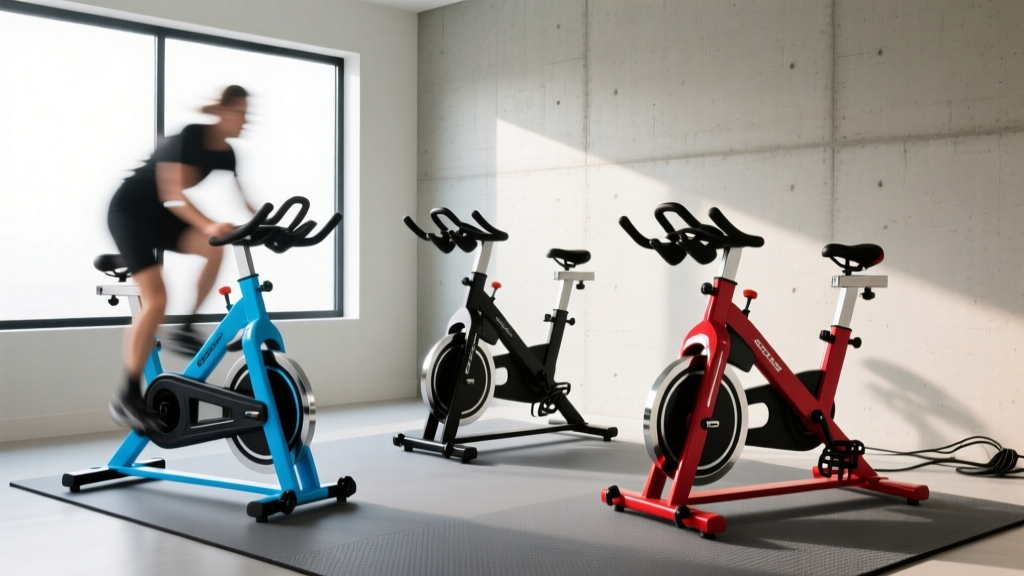
Spin bikes, or indoor cycles, are the undisputed champions of space optimization. Their design mimics a traditional road bicycle, resulting in a narrow, elongated footprint that easily tucks into corners, alcoves, or even walk-in closets.
Space-Optimized Model Spotlight
Schwinn IC4: Measuring just 48.7 inches long by 21.2 inches wide, the IC4 features a compact magnetic resistance flywheel that eliminates the need for the bulky belt guards found on older friction bikes. Priced around $999, it offers a fraction of the footprint of a treadmill at a fraction of the annual rental cost.
Peloton Bike+: At 48 by 24 inches, the Bike+ features a rotating screen, allowing you to place the bike facing a wall and swivel the screen 180 degrees for off-bike floor workouts, effectively turning a 14-square-foot equipment zone into a full-body studio.
Layout Tip: Place a spin bike perpendicular to a window or mirror. Because the handlebars are narrow and the user profile is leaned forward, spin bikes create minimal visual bulk, making small rooms feel larger than they actually are.
Upright Stationary Bikes: Vertical Space Utilization
Upright bikes feature a wider seat and a more relaxed, vertical riding posture. While their base footprint is nearly identical to a spin bike, their vertical profile and console design require different spatial considerations.
- Pros for Small Spaces: Many upright models, like the Echelon Ex-5s, feature a smaller console and lower handlebars, keeping the upper visual space clear. They are also generally lighter, making them easier to roll onto a heavy-duty equipment mat and stash away if necessary.
- Cons for Small Spaces: The wider, plush seats and broader pedal stance (Q-factor) mean you need slightly more lateral clearance for your knees compared to the narrow profile of a spin bike.
- Ergonomic Note: Upright bikes engage the core and upper body slightly more than recumbent models, making them an excellent middle-ground for users who want a traditional cycling feel without the aggressive forward lean of a spin bike.
Recumbent Bikes: Optimizing Elongated and Narrow Rooms
Recumbent bikes feature a bucket seat with a backrest and pedals positioned in front of the user. This design inherently creates a longer, lower footprint. While they consume more length than a spin bike, they are the ultimate solution for narrow, rectangular rooms, hallways, or sunrooms where width is restricted but length is available.
'For patients with lumbar spine issues or those recovering from lower extremity joint replacements, the recumbent bike provides essential back support and reduces shear forces on the knees, making it the safest home cardio option.' - Cleveland Clinic Physical Therapy Guidelines.
Model Deep Dive: The Schwinn 270 Recumbent measures 65.5 by 29 inches. While long, its low center of gravity means it doesn't visually clutter the room. If you are severely space-constrained but medically require a recumbent, the Sunny Health & Fitness SF-RBE5361 offers a highly condensed 53-inch length, sacrificing some stride length for vital square footage.
Layout Design Framework: Matching Bike Type to Room Geometry
To finalize your home gym layout, map your room geometry to the correct bike type using this decision framework:
- The Square Corner (e.g., 5x5 ft alcove): Choose a Spin Bike. The narrow handlebars and forward-leaning posture allow you to push the bike deep into a corner while maintaining safe knee clearance from adjacent walls.
- The Wide Open Wall (e.g., 6 ft wide, shallow depth): Choose an Upright Bike. The vertical posture and centered center of gravity make it an excellent anchor piece against a wide wall, especially when paired with a wall-mounted TV.
- The Narrow Corridor or Sunroom (e.g., 3 ft wide, 8 ft long): Choose a Recumbent Bike. The elongated footprint perfectly matches the room's geometry, and the low seat height ensures it doesn't block sightlines to windows or doorways.
Financial Breakdown: Renting vs. Buying in 2026
Before signing a 12-month lease to rent a treadmill, consider the long-term financial and spatial ROI. According to Consumer Reports home fitness testing, mid-tier treadmills require significant maintenance, belt lubrication, and eventual motor servicing, which is often excluded from standard rental agreements.
| Cost Metric | Treadmill Rental (12 Months) | Premium Spin Bike Purchase |
|---|---|---|
| Upfront / Delivery Cost | $150 - $250 | $0 - $100 |
| Monthly / Annual Cost | $2,400 - $3,600 / yr | $1,000 - $2,500 (One-time) |
| Space Required (Functional) | 45 sq ft | 14 sq ft |
| Resale Value (After 1 Yr) | $0 (Rented) | $600 - $1,500 |
By abandoning the idea that you must rent a treadmill to accommodate a small space, and instead investing in a high-quality spin, upright, or recumbent bike tailored to your room's specific geometry, you save thousands of dollars, eliminate spatial clutter, and create a sustainable, ergonomic home fitness environment.
More gear to consider
All reviews
Treadmill Versus Elliptical Machine: Space Layouts & Belt Care

ProForm 525 CT Treadmill vs Bikes: Home Gym Space Layout Guide

ProForm Treadmill Performance 400 Setup & Feature Comparison
Quiet Incline Treadmill for Beginners: Noise Guide 2026

Elliptical vs Treadmill: The 7 Incline Treadmill Trend for 2026
