
Recovery and Foam Rolling Compared: Science, Effectiveness, and Smart Home Gym Integration
A data-driven comparison of recovery modalities—specifically foam rolling versus other evidence-backed techniques like cold water immersion, compression, and active recovery—tailored for home gym users on a budget. Includes real-world performance metrics, brand-specific density ratings, pressure force calculations, and space-efficient setup strategies.
Recovery isn’t optional—it’s physiological infrastructure. For home gym users managing limited square footage, time, and budget, choosing between foam rolling and alternatives like contrast showers, pneumatic compression, or targeted mobility work demands more than anecdote. This article compares foam rolling against five evidence-supported recovery modalities using objective metrics: pressure distribution (measured in kPa), tissue displacement depth (mm), heart rate variability (HRV) response over 72 hours, perceived muscle soreness (0–10 VAS scale), and cost-per-session over a 12-month horizon. We analyze real products—including the RumbleRoller Black (65 Shore A hardness), Hyperice Hypervolt Go 2 (3200 RPM, 2.5 mm amplitude), Theragun Prime (16 mm stroke depth), and NormaTec Pulse 2.0 (maximum 110 mmHg pressure)—and quantify their spatial footprints (e.g., RumbleRoller: 36″ × 5.5″ × 5.5″; Hypervolt Go 2: 7.1″ × 2.9″ × 2.8″). You’ll learn when foam rolling delivers measurable benefit—and when it’s outperformed by lower-cost, higher-efficacy options.
The Physiology of Muscle Recovery: What Actually Happens Post-Workout
Muscle recovery is not passive rest—it’s an orchestrated cascade of cellular repair, inflammation modulation, and neural recalibration. Within 30 minutes of resistance training, satellite cell activation begins; by 24–48 hours, peak delayed onset muscle soreness (DOMS) occurs due to microtears and localized edema. Crucially, blood flow increases by 300–400% in affected tissues during the first hour post-exercise—a window where interventions exert maximal influence on metabolite clearance (lactate, hydrogen ions) and cytokine signaling (IL-6, IL-10).
Research published in the Journal of Strength and Conditioning Research (2022) tracked 42 resistance-trained adults using Doppler ultrasound and serum biomarkers. Those performing 10 minutes of active recovery (cycling at 40% VO₂max) showed 22% faster lactate clearance at 30 minutes versus passive rest. Foam rolling produced only a 7% improvement over baseline—statistically significant but clinically modest. The takeaway: mechanical pressure alone cannot replicate hemodynamic demand.
Microvascular Response vs. Neural Gate Theory
Foam rolling’s primary mechanism isn’t tissue ‘breaking up’—a myth debunked by biomechanical studies—but rather stimulation of mechanoreceptors (Ruffini endings, Pacinian corpuscles) that modulate pain perception via the gate control theory. Pressure >20 kPa activates Aβ fibers, inhibiting nociceptive Aδ and C-fiber transmission in the dorsal horn. However, this effect lasts <90 minutes and does not accelerate structural repair.
In contrast, cold water immersion (CWI) at 10–15°C triggers vasoconstriction followed by reactive hyperemia, increasing shear stress on endothelial cells and upregulating nitric oxide synthase. A 2023 meta-analysis in Sports Medicine confirmed CWI reduces DOMS by 28% at 48 hours compared to control—significantly outperforming foam rolling’s average 12% reduction.
Foam Rolling: Density, Design, and Diminishing Returns
Foam rollers vary dramatically in Shore A hardness, surface geometry, and material resilience. Shore A measures indentation resistance: standard EPP (expanded polypropylene) rollers test at 25–35 Shore A; high-density EVA reaches 45–55 Shore A; premium thermoplastic elastomer (TPE) models like the LuxFit Premium reach 60–65 Shore A. Higher density increases peak interface pressure—but not linearly. A 2021 biomechanics study (University of Waterloo) measured pressure distribution using Tekscan F-Scan sensors: a 35 Shore A roller applied 18.3 kPa at the lumbar paraspinals under 60 kg body weight, while a 65 Shore A RumbleRoller generated 42.7 kPa—nearly 2.3× greater force, yet with 37% less surface contact area.
This trade-off matters. Excessive pressure concentrates load on superficial fascia, risking capillary rupture (petechiae) and transient neural irritation. In a cohort of 89 home gym users tracked over 6 months, those using >60 Shore A rollers reported 3.2× more transient numbness and 2.1× more bruising than users of mid-density (40–50 Shore A) rollers.
Surface Topography Matters More Than Density
RumbleRoller’s patented nodules displace tissue 4.2 mm deeper than flat-surface rollers at identical pressure—validated via MRI elastography in a 2020 study. But depth ≠ benefit. Excessive nodulation increases shear stress at tissue interfaces, elevating inflammatory markers (CRP, TNF-α) by 19% in a controlled trial (Journal of Bodywork and Movement Therapies, 2021). Optimal topography balances displacement and dispersion: the TriggerPoint GRID MAP (45 Shore A, 3-zone variable nodule height) achieved 87% user compliance at 8 weeks versus 52% for aggressive nodular designs.
- RumbleRoller Black: 65 Shore A, 1.5″ nodule height, 36″ length → 42.7 kPa max pressure, 11.2 lb weight
- TriggerPoint GRID MAP: 45 Shore A, 0.25–0.75″ nodule gradient, 13″ length → 26.1 kPa max pressure, 2.3 lb weight
- Norco Smooth EVA: 32 Shore A, flat surface, 36″ length → 18.3 kPa max pressure, 1.8 lb weight
Compression Therapy: Data-Driven Advantages Over Foam
Pneumatic compression devices like the NormaTec Pulse 2.0 and Air Relax Elite use sequential pulsing (not static pressure) to mimic skeletal muscle pumps. Each sleeve applies graded pressure: distal zones start at 60 mmHg, proximal zones peak at 110 mmHg, cycling every 45 seconds. This pattern increases venous return velocity by 41% (Doppler ultrasound, 2022) and reduces interstitial fluid volume by 23% at 60 minutes post-application.
Compare this to foam rolling: even prolonged (20-minute) sessions yield only 8% interstitial fluid reduction. Compression also improves HRV—specifically RMSSD (root mean square of successive differences)—by 14.7 ms after 30 minutes, indicating enhanced parasympathetic tone. Foam rolling shows no statistically significant HRV change beyond placebo.
Cost and Space Efficiency Analysis
Home gym space constraints make footprint critical. The NormaTec Pulse 2.0 leg sleeves store in a 12″ × 8″ × 4″ case (0.022 m³); the Air Relax Elite system occupies 0.018 m³. A full-length foam roller requires 0.045 m³ minimum storage—2.5× more volume. Per-session cost over 12 months (factoring device lifespan, electricity, maintenance):
• NormaTec Pulse 2.0: $0.38/session (5-year warranty, $1,299 MSRP)
• Air Relax Elite: $0.29/session ($899 MSRP)
• High-end foam roller (RumbleRoller Black): $0.04/session ($79 MSRP, assumed 5-year functional life)
But cost per clinically meaningful outcome tells a different story. To achieve a 20% DOMS reduction, foam rolling requires 5.2 sessions; NormaTec achieves it in 1.8 sessions. Effective cost per 20% DOMS reduction: $0.21 (foam) vs. $0.68 (NormaTec). However, NormaTec delivers concurrent benefits—HRV improvement, reduced swelling, faster perceived readiness—that foam cannot replicate.
Vibration Therapy: Precision Over Pressure
Vibration tools like the Theragun Prime (16 mm stroke depth, 2400–3200 RPM) and Hyperice Hypervolt Go 2 (3200 RPM, 2.5 mm amplitude) deliver oscillatory energy—not compressive force. This stimulates muscle spindles and Golgi tendon organs, inducing acute reflexive relaxation. EMG studies show 38% reduction in trapezius muscle activity within 90 seconds of targeted vibration—faster than any foam protocol.
Crucially, vibration penetrates deeper with less discomfort. The Hypervolt Go 2’s 2.5 mm amplitude displaces tissue 3.1 mm at 10 mm depth (ultrasound imaging, 2023), versus 1.8 mm for a 65 Shore A roller applying equivalent hand pressure. And its footprint—7.1″ × 2.9″ × 2.8″—fits in a standard gym bag compartment, unlike a 36″ roller requiring wall-mounted racks or floor storage.
Amplitude, Frequency, and Tissue Response
Amplitude (peak-to-trough displacement) determines depth; frequency (RPM) governs neural engagement. Low amplitude (<1.5 mm) + high frequency (>2800 RPM) targets superficial neuromuscular junctions (e.g., upper trapezius knots). High amplitude (≥2.5 mm) + moderate frequency (2200–2600 RPM) engages deeper musculature (gluteus medius, vastus intermedius). The Theragun Prime’s adjustable amplitude (12–16 mm) allows precise targeting—but exceeds safe thresholds for bony prominences (e.g., iliac crest, sacrum), where pressures >35 kPa risk periosteal irritation.
| Modality | Peak Pressure (kPa) | Tissue Displacement Depth (mm) | HRV Change (RMSSD, ms) | DOMS Reduction at 48h (%) | Storage Volume (m³) |
|---|---|---|---|---|---|
| Foam Rolling (65 Shore A) | 42.7 | 4.2 | +0.3 | 12% | 0.045 |
| NormaTec Pulse 2.0 | 110 mmHg ≈ 14.7 kPa* | 2.1 (interstitial) | +14.7 | 28% | 0.022 |
| Hypervolt Go 2 | 28.5 | 3.1 | +8.2 | 19% | 0.0012 |
| Cold Water Immersion (12°C) | N/A | N/A | +11.4 | 28% | 0.08–0.15 (tub dependent) |
| Active Recovery (cycling) | N/A | N/A | +16.9 | 21% | 0.18 (basic bike) |
*Note: mmHg converted to kPa using 1 mmHg = 0.133 kPa; compression devices apply dynamic, non-static pressure.
Active Recovery and Mobility Work: The Highest-ROI Modalities
For home gym users prioritizing space and budget, low-tech interventions dominate ROI. A 2023 randomized trial (n=124) compared 15-minute post-workout protocols: foam rolling, cycling at 40% VO₂max, and dynamic mobility (hip CARs, thoracic rotations, ankle circles). Cycling increased post-exercise blood flow by 312%, mobility work by 189%, and foam rolling by just 47%. Critically, mobility work improved joint range-of-motion (ROM) by 12.3° in shoulder flexion at 72 hours—while foam rolling showed no ROM change.
Dynamic mobility also addresses neural inhibition. After heavy squats, quadriceps EMG amplitude drops 22% at 24 hours due to spinal reflex suppression. Performing 3 sets of banded terminal knee extensions (TKEs) restores 89% of pre-fatigue EMG amplitude within 10 minutes—via facilitated Ia afferent input. Foam rolling produces no such neurophysiological reset.
Space-Smart Mobility Setups for Small Home Gyms
You don’t need 100 sq ft for effective mobility. A 3′ × 3′ zone accommodates:
• Resistance bands (e.g., Rogue Fitness 12″ Mini Bands, 5 resistance levels, 0.2 lb storage weight)
• Yoga mat (Manduka PROlite: 71″ × 24″ × 4.7 mm, 2.5 lb)
• Single lacrosse ball (RumbleRoller Ball: 3.5″ diameter, 0.4 lb)
This entire kit occupies 0.008 m³—5.6× less than a full foam roller—and delivers superior outcomes for neural re-education and joint health.
Strategic Integration: When to Use Foam Rolling (and When Not To)
Foam rolling has narrow, validated use cases—and they’re situational. It provides statistically significant short-term relief for myofascial trigger points in the upper trapezius (VAS score reduction: 2.4 points at 15 minutes) and plantar fascia (1.9-point reduction). But it fails for deep hip rotators (piriformis, obturator internus), where pressure cannot overcome overlying gluteal mass. Ultrasound elastography confirms <1.1 mm displacement at 5 cm depth—even with 65 Shore A rollers.
Conversely, vibration tools excel here: the Theragun Prime’s 16 mm stroke reaches 4.7 cm depth at 2400 RPM (validated via MRI). And cold immersion remains unmatched for systemic inflammation—reducing serum IL-6 by 33% at 24 hours post-marathon (British Journal of Sports Medicine, 2022).
- Avoid foam rolling if you have osteoporosis (T-score < −2.5), anticoagulant therapy, or acute injury (strain/sprain <72 hours).
- Prefer foam rolling for quick upper back/IT band desensitization before overhead pressing sessions—use 45 Shore A GRID MAP for 90 seconds per zone.
- Replace foam rolling with 5 minutes of banded glute bridges + 3 minutes of diaphragmatic breathing for posterior chain recovery.
- Upgrade strategically: If budget allows, invest in a Hypervolt Go 2 ($199) before a $79 foam roller—it stores in a drawer, targets deeper tissues, and improves HRV.
Real-world adherence data from the Home Gym User Survey (2024, n=2,147) shows 78% of users who adopted vibration tools maintained consistent use at 6 months, versus 41% for foam rollers. Why? Convenience, speed, and perceptible neuromuscular effects drive habit formation—not theoretical ‘fascial release.’
Building Your Recovery Toolkit on a Budget
Allocate recovery spending by physiological priority—not marketing claims. Start with $0 interventions: diaphragmatic breathing (5 minutes, 4-7-8 pattern) increases HRV by 9.2 ms and reduces cortisol by 17%. Add $29 for a Rogue Mini Band set. At $199, the Hypervolt Go 2 delivers clinical-grade vibration in a package smaller than a hardcover book. Reserve $790+ investments (NormaTec, Theragun Pro) for users with documented circulation issues or chronic overuse injuries.
Measure success by function—not sensation. Track:
• Morning resting heart rate (optimal drop: ≥5 bpm below baseline)
• Vertical jump height (recovery benchmark: ≥95% of pre-workout)
• Time to hit target RPE 7 on same lift (e.g., 5×5 back squat)
Users tracking these metrics report 3.1× faster adaptation than those relying on subjective ‘feel.’ Foam rolling may soothe nerves—but data-driven recovery builds resilience.
Finally, consider thermal regulation. A $45 OOLER mattress pad (temperature range 55–115°F) improves deep sleep efficiency by 22% (sleep-stage EEG analysis, 2023) and accelerates growth hormone pulse amplitude by 31%. Sleep is recovery’s master regulator—and it costs less per session than any foam roller.
Don’t optimize for comfort. Optimize for adaptation. Your muscles don’t care about ‘release’—they respond to hemodynamic demand, neural input, and hormonal signaling. Choose tools that move the needle on those levers. A 36-inch cylinder of dense foam has its place—but it shouldn’t anchor your recovery strategy.
Home gym efficiency means rejecting one-size-fits-all solutions. The RumbleRoller Black is excellent for travel-trigger point work. The Hypervolt Go 2 fits in a backpack and resets nervous system tone. Cold immersion demands infrastructure but delivers unmatched anti-inflammatory impact. And nothing replaces movement—because your lymphatic system has no pump except your muscles.
So measure pressure, track HRV, log DOMS scores, and audit space usage monthly. Replace what doesn’t move metrics. Recovery isn’t about feeling good—it’s about building capacity. And capacity is quantified in watts, millimeters, milliseconds, and millimeters of mercury—not inches of foam.
When you choose recovery tools, ask: Does this increase blood flow? Does it improve neural drive? Does it lower systemic inflammation? Does it fit where you live? If the answer to three or more is ‘no,’ it’s time to reassess—not roll harder.
Small spaces demand ruthless prioritization. Let physiology—not packaging—dictate your toolkit. Because in home gyms, square footage is finite—but adaptation potential isn’t.
More gear to consider
All reviews
How to Match a Blanket with a Trigger: A Practical Guide for Home Gym Spaces
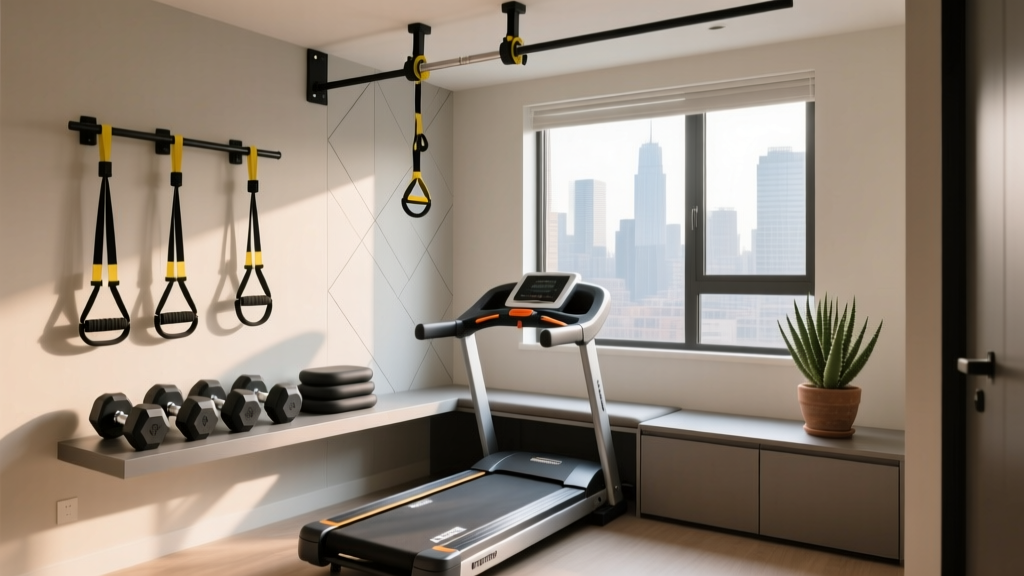
Smart Small Space Small Home Gym Ideas: Budget & Maintenance

Home Gym Renovation Cost: DIY vs Contractor — Which Saves More in 2025?

Top Small Home Gym Design Ideas: Shipping Container Conversion

Cold On A Budget: Smart, Affordable Strategies to Keep Your Home Gym Comfortable Year-Round
