Maintaining Your Rear Deltoid Workout Dumbbell: Rubber Hex vs Urethane
Discover how to maintain your rear deltoid workout dumbbell. We compare rubber hex vs urethane longevity, cleaning tips, and drop-test durability.

The Hidden Toll of Rear Deltoid Isolation Work
When selecting the ideal rear deltoid workout dumbbell, most lifters focus purely on weight increments and grip ergonomics. However, the specific biomechanics of posterior shoulder training place unique, often overlooked stressors on your equipment. Exercises like bent-over lateral raises, chest-supported rear delt flyes, and seated face pulls typically utilize lighter weights (ranging from 15 to 35 pounds) but demand high repetition ranges (12 to 20+ reps). This high-volume environment leads to excessive sweat accumulation, frequent adjustments, and the common habit of hastily dropping or rolling the dumbbells onto the floor between intense drop-sets.
Over time, this specific usage pattern accelerates the degradation of the dumbbell's outer coating. If you are building a home gym or managing a commercial fitness space, understanding the material science behind your equipment is critical for long-term cost management. In this comprehensive maintenance guide, we break down the two most common coated dumbbell materials—rubber hex and urethane—analyzing their failure modes, longevity, and the exact care protocols required to maximize their lifespan.
Material Matrix: Rubber Hex vs. Urethane
Before diving into maintenance routines, it is essential to understand the physical properties that dictate how these materials age. The durability of a coated dumbbell is largely determined by its Shore A Durometer (hardness rating) and its molecular resistance to environmental factors like UV light, ozone, and the acidic pH of human sweat.
| Feature | Rubber Hex Dumbbells | Urethane Dumbbells |
|---|---|---|
| Material Base | Natural/Synthetic Rubber Blend | Polyurethane (Synthetic Polymer) |
| Shore A Durometer | 75A - 80A (Softer) | 85A - 90A (Harder) |
| Sweat/Acid Resistance | Moderate (Degrades over time) | Exceptional (Non-porous) |
| UV & Ozone Resistance | Poor (Prone to dry rot/cracking) | Excellent (Highly stable) |
| Odor (VOC Off-gassing) | High (Sulfur smell initially) | None (Odorless) |
| Average Cost per Pound | $1.50 - $2.00 | $3.50 - $5.00 |
| Expected Lifespan | 2 - 5 Years (Heavy Use) | 10 - 15+ Years (Heavy Use) |
Rubber Hex Dumbbells: Failure Modes and Care
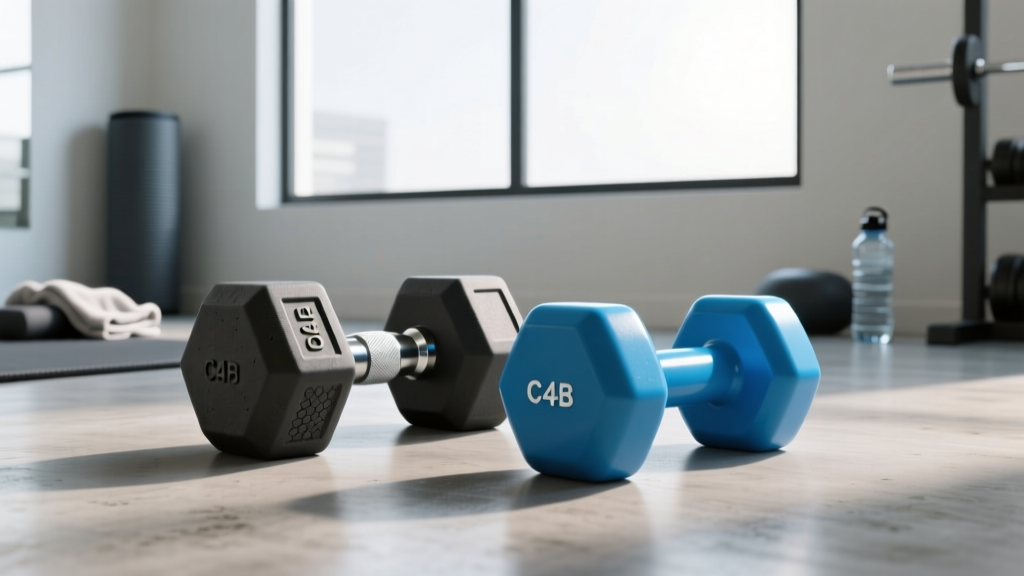
Rubber hex dumbbells, such as the popular budget lines found on Amazon or at big-box sporting goods stores, are the entry-level standard for home gyms. While their low price point ($1.50 to $2.00 per pound) is attractive, their material composition makes them highly susceptible to specific failure modes, especially when used frequently for high-rep rear deltoid workouts.
The "Cheese Wire" Edge Effect
The primary advantage of a hexagonal dumbbell is its anti-roll design. However, natural rubber is relatively soft. When you repeatedly set a 25-pound rubber hex dumbbell down on a concrete garage floor or hard rubber matting after a grueling set of rear delt flyes, the sharp hex edges act like a cheese wire. Over 12 to 18 months, the edges compress, tear, and eventually round off. Once the edges round, the dumbbell loses its anti-roll property, creating a safety hazard if placed on an uneven surface.
Handle Junction Tearing
The most catastrophic failure point on a rubber hex dumbbell is the flange junction where the rubber head meets the steel handle. Because rubber relies on mechanical adhesion and vulcanization to bond to steel, the constant torque applied during isolation exercises can cause microscopic tearing at this seam. Once sweat and moisture penetrate this tear, the steel core oxidizes, expanding and pushing the rubber further away from the handle.
Warning: Never use bleach, ammonia, or alcohol-based cleaners on rubber hex dumbbells. These harsh chemicals strip the natural oils from the rubber, accelerating dry rot and causing the surface to become chalky and brittle within weeks.
Urethane Dumbbells: The Premium Longevity Standard
Urethane (polyurethane) is the undisputed king of commercial gym equipment. Brands like Rogue Fitness and Rep Fitness utilize high-grade urethane for their premium lines, and for good reason. Urethane is a synthetic polymer that offers superior abrasion resistance and structural integrity compared to natural rubber.
Why Urethane Wins for Isolation Work
During rear deltoid workouts, grip fatigue often leads to lifters dropping the dumbbells onto the floor rather than bending down to place them gently. Urethane's higher Shore A rating (typically 85A to 90A) means it is significantly harder than rubber. While this means you must use proper drop pads to protect your flooring, the dumbbell itself will virtually never deform, tear, or lose its shape. According to equipment testing by Garage Gym Reviews, premium urethane dumbbells can withstand thousands of drops from shoulder height without suffering structural compromise to the head or the handle junction.
The UV and Sweat Advantage
Urethane is completely non-porous and highly resistant to UV degradation. If your home gym is in a garage with a window, or if you train outdoors, urethane will not succumb to the ozone cracking that destroys rubber hex dumbbells. Furthermore, the acidic nature of human sweat cannot penetrate the urethane surface, preventing the internal steel core from rusting and expanding.
The 3-Step Maintenance Protocol for Coated Dumbbells
Regardless of whether you choose rubber or urethane, implementing a strict maintenance protocol will extend the life of your rear deltoid workout dumbbell set by years. Follow this step-by-step routine:
- The Post-Workout Neutral Wipe (Daily): Immediately after your workout, wipe down the dumbbell heads and handles with a microfiber cloth lightly dampened with a neutral pH cleaner (like Simple Green diluted 10:1 with water, or a dedicated fitness equipment wipe). This removes the acidic sweat and magnesium carbonate (chalk) that can degrade coatings and knurling over time.
- The Flange Junction Inspection (Monthly): Visually inspect the seam where the coating meets the steel handle. If you are using rubber hex dumbbells and notice a gap forming, apply a tiny bead of flexible, waterproof marine-grade silicone sealant into the crack. This prevents moisture from reaching the steel core and halts internal rusting.
- UV and Climate Control (Ongoing): Store your dumbbells away from direct sunlight. If you live in a region with extreme temperature fluctuations (e.g., an uninsulated garage in the Midwest), bring your rubber dumbbells indoors during the winter. Extreme cold causes natural rubber to become brittle, meaning a simple drop could shatter the hex head.
Cost-Benefit Analysis: When to Upgrade Your Set
Deciding when to retire your old dumbbells and invest in a new set requires a pragmatic look at cost versus safety. If your rubber hex dumbbells have developed a persistent, chalky residue that wipes off onto your hands, or if the hex edges are completely rounded, it is time to replace them. The chalky residue is a sign of advanced polymer breakdown, and the off-gassing volatile organic compounds (VOCs) can cause respiratory irritation in poorly ventilated spaces.
While a 50-pound set of rubber hex dumbbells might cost around $85, a comparable set of top-tier urethane dumbbells will cost upwards of $225. However, when amortized over a 15-year lifespan, the urethane set costs roughly $15 per year, whereas you may find yourself replacing the rubber set three or four times in that same window due to tearing and degradation.
Final Verdict for the Home Gym Owner
If you are strictly performing low-impact, controlled rear deltoid workouts and always place your weights gently on a rack, a well-maintained rubber hex set can serve you adequately for several years. However, if your training style involves high-intensity drop-sets, outdoor training, or you simply want a "buy it for life" piece of equipment that requires zero edge-case maintenance, urethane is the only logical investment. By understanding the material science and adhering to a simple neutral-pH cleaning routine, you ensure your equipment remains as resilient as your posterior chain.
More gear to consider
All reviews
Rubber Hex vs Urethane Dumbbells for a Space-Saving Dumbbell Circuit

Power Rack vs Squat Rack vs Squat Stand for Leather Dumbbells

Top Adjustable Dumbbells for a Quad Workout With Dumbbells: Setup

Loadable Dumbbells & The Flat Dumbbell Fly Exercise: Space Layouts

Loadable Dumbbell Value: Budgeting for the Heavy Dumbbell Hammer Row