
Power Rack vs Squat Rack: Setup for Contralateral Dumbbell Pickup
Discover how to choose between a power rack, squat rack, and squat stand to optimize floor space for the contralateral dumbbell pickup and heavy lifts.

The Home Gym Dilemma: Beyond Just the Barbell
Building a functional home gym in 2026 requires more than just buying the heaviest barbell and a stack of iron plates. Beginners often make the mistake of selecting a rack based solely on its weight capacity for back squats, completely ignoring the peripheral floor space required for functional, unilateral movements. If your programming includes anti-rotation core work, unilateral hinges, or specifically the contralateral dumbbell pickup, your choice of rig will make or break your workout flow.
Choosing between a full power rack, an open squat rack, or minimalist squat stands is a decision rooted in spatial geometry and biomechanics. In this beginner-friendly, step-by-step guide, we will break down the structural differences of the 'Big Three' rack types and show you exactly how to configure your space to safely execute complex functional movements without bashing your elbows on 3x3 steel uprights.
Step 1: Decoding the Big Three Rack Configurations
Before we map out movement patterns, you need to understand the physical footprint and safety profiles of the three primary rack categories available on the market today. According to equipment specifications from Rogue Fitness, the difference between a 2x2-inch and 3x3-inch steel upright isn't just about load capacity; it drastically alters the attachment ecosystem and spatial awareness required when lifting near the frame.
| Feature | Power Rack (Full Cage) | Squat Rack (Open Frame) | Squat Stand (Independent) |
|---|---|---|---|
| Typical Footprint | 48' x 48' or 53' x 53' | 48' x 24' to 48' x 36' | 48' x 48' (Base) / Open Top |
| Average 2026 Price | $599 - $950+ | $450 - $650 | $295 - $425 |
| Peripheral Clearance | Low (Enclosed by 4-6 posts) | Medium (Open front, closed back) | High (Only 2 posts) |
| Safety Spotting | Internal straps/pin-pipes | External flip-down arms | External catch arms (varies) |
| Best For | Heavy barbell work, kipping, bands | Mixed barbell and moderate floor work | Maximal floor space, functional flows |
Step 2: Why Floor Clearance Dictates Your Choice
Why does a functional movement like the contralateral dumbbell pickup matter when buying a rack? The answer lies in the swing path and stabilization radius. The contralateral dumbbell pickup is a highly effective anti-rotation and unilateral hinge exercise. You are essentially performing a single-leg or offset-stance deadlift, reaching across the body's midline to pick up a load with the opposite hand. This forces the obliques, quadratus lumborum, and transverse abdominis to fire aggressively to prevent spinal rotation.
According to the National Strength and Conditioning Association (NSCA), unilateral and contralateral loading significantly increases core stabilizer activation compared to bilateral lifts. However, to perform this movement safely, you need a lateral clearance radius of at least 3 to 4 feet from the center of your lifting zone.
The Problem with Full Power Racks for Functional Flow
If you purchase a 6-post power rack with a lat-pulldown attachment and safety spotter arms left in the low position, you create an obstacle course. When you hinge at the hips and reach laterally for a 50lb dumbbell during a contralateral pickup, your elbow or the dumbbell head can easily clip a safety strap or a rear upright. This not only disrupts the neurological groove of the lift but poses a serious injury risk to your joints.
The Squat Stand Advantage
Squat stands (like the Rogue SML-1 or Titan T-2) consist of only two front uprights. By placing your lifting platform slightly in front of the stands, you create an open 'arena' behind and beside you. This allows for seamless transitions from heavy barbell squats (using the spotter arms) to open-floor dumbbell flows without moving equipment around.
Expert Callout: The Mat Thickness Variable
When setting up for floor pickups, remember that 3/4-inch horse stall mats elevate your floor. If your rack sits on the mats, the bottom of the uprights is flush. If your rack sits on bare concrete and you lift on mats, you create a 3/4-inch trip hazard and alter the biomechanical depth of your dumbbell pickup. Always build your platform first, then bolt your rack into or onto the unified surface.
Step 3: Step-by-Step Execution in Your Rack Zone
Now that you understand the spatial requirements, here is how to safely integrate the contralateral dumbbell pickup into your home gym routine, utilizing your rack as a spatial anchor rather than a cage.
- Zone Setup: Stand approximately two feet in front of your squat stands or outside the open side of your squat rack. Place a single hex or urethane dumbbell (start with 15-25 lbs for beginners) on the floor, positioned slightly outside your right foot.
- The Staggered Stance: Adopt a kickstand (B-stance) position. Your left foot bears 80% of your weight, while your right foot rests softly on the toes just behind your left heel. This mimics a single-leg hinge while maintaining a safe base of support.
- The Hinge and Reach: Push your hips back toward the wall behind you. Keep your spine neutral. Reach down with your left hand (the contralateral side to the working leg) to grasp the dumbbell handle.
- The Anti-Rotation Drive: As you grip the dumbbell, your torso will naturally want to twist to the right. Engage your left obliques and right glute to violently resist this rotation. Your chest should remain square to the floor.
- The Lockout: Drive through the left mid-foot, squeezing the glute to stand tall. Hold the lockout for two seconds, ensuring your shoulders remain perfectly level, before hinging back down for the next rep.
For a complete biomechanical breakdown of hinge and anti-rotation patterns, refer to the ExRx Exercise Directory, which remains the gold standard for kinesiological mapping of joint torques during offset loading.
Step 4: 2026 Equipment Recommendations & Pricing
If you are ready to pull the trigger on a rig that supports both heavy barbell work and functional dumbbell flows, here are the top-tier models dominating the home gym market this year.
1. The Minimalist Choice: Rogue SML-1 Monster Lite Squat Stand
- Price: ~$395.00
- Uprights: 3x3-inch 11-gauge steel
- Why it wins: The SML-1 provides massive 1000lb+ stability with a minimal footprint. Because there is no rear crossmember, you can perform contralateral dumbbell pickups, Turkish get-ups, and kettlebell swings directly in the center of the rig's footprint without obstruction. Add the Monster Lite Safety Spotter Arms ($85) only when squatting.
2. The Hybrid Compromise: REP Fitness PR-4000 Power Rack
- Price: ~$599.00 - $749.00 (depending on depth)
- Uprights: 3x3-inch steel with 5/8-inch holes
- Why it wins: If you absolutely need a full cage for heavy bench pressing alone, the PR-4000 allows you to remove the rear uprights or leave the back completely open (using just the 4-post configuration). By utilizing flip-down safety spotter arms rather than internal straps, you keep the interior floor space relatively clear for your dumbbell work.
3. The Space-Saver: Titan Fitness T-2 Folding Squat Stand
- Price: ~$299.99
- Uprights: 2x2-inch steel
- Why it wins: For garage gyms where the car still needs to park, the T-2 folds flat against the wall. When folded down, you have an entirely empty floor space, perfect for laying out a full circuit of contralateral pickups, lunges, and mobility work. Note that 2x2 steel is slightly less stable for heavy kipping pull-ups, but more than adequate for static barbell lifts and floor dumbbell work.
Summary: Designing for Movement, Not Just Maxes
The ultimate mistake a beginner can make in 2026 is buying a power rack that turns their garage into a claustrophobic steel cage. By evaluating your equipment through the lens of functional movements like the contralateral dumbbell pickup, you force yourself to prioritize floor clearance, safety arm configurations, and spatial flow. If your goal is pure, heavy powerlifting, buy the 6-post cage. But if you want a versatile, athletic home gym that supports unilateral core stability and dynamic dumbbell flows, the open-air squat stand or 4-post open rack is your undisputed champion.
More gear to consider
All reviews
EZ Bar vs Straight Bar: Gym Layouts & Deadlift Dumbbell Technique

Bumper vs Iron Plates: Dumbbell Bench Braced Wrist Extension Trends
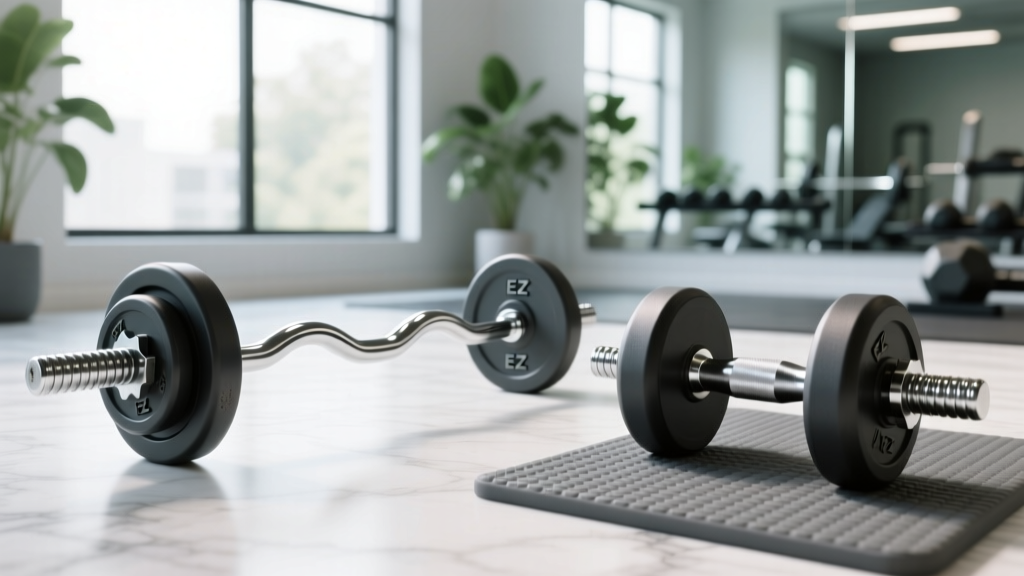
EZ Curl Bar vs Straight Bar & Front Loaded Dumbbell Squats
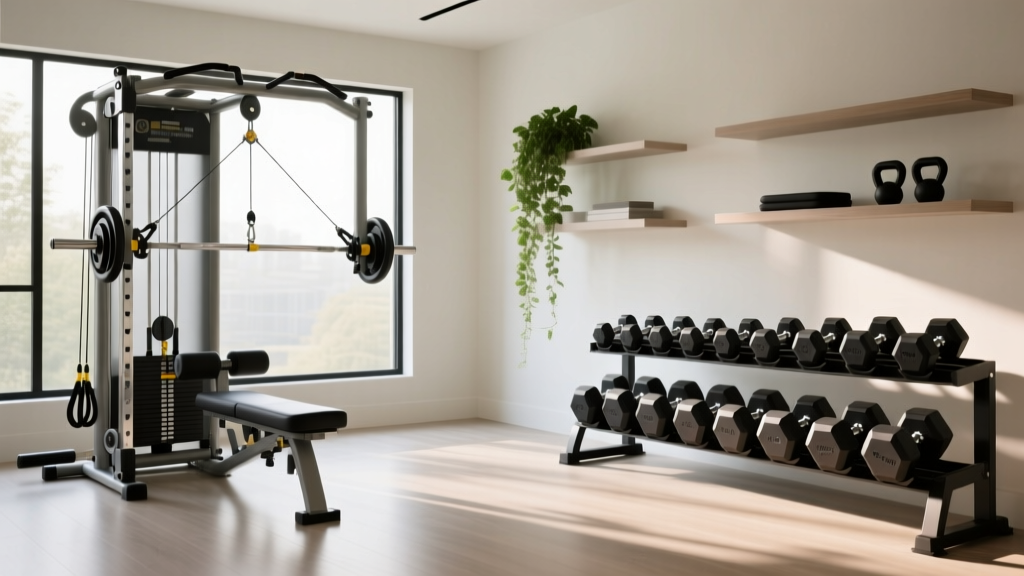
Cable Lateral Raises vs Dumbbell Space: Rubber Hex vs Urethane Guide

Dumbbells Bench & Rack Budget: Bumper vs Iron Plate Value
