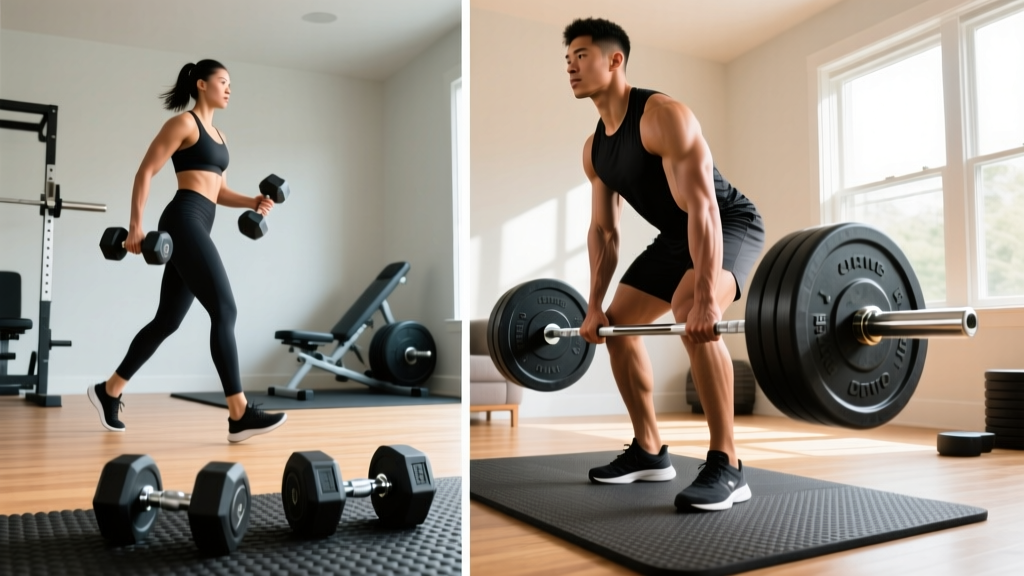
Power Rack vs Squat Rack vs Stand: Cable or Dumbbell Rear Delt Fly
Compare power rack vs squat rack vs squat stand setups. Learn how your choice impacts the cable or dumbbell rear delt fly and avoid costly home gym mistakes.

The Hidden Cost of Ignoring Accessory Biomechanics
When outfitting a home gym, most lifters obsess over a rack's capacity for heavy squats and bench presses. While structural integrity for compound lifts is non-negotiable, neglecting isolation movements is a frequent and costly error. If your programming includes high-volume posterior chain accessory work—specifically the cable or dumbbell rear delt fly—your choice of rack dictates whether the movement is biomechanically optimal or physically obstructed.
Choosing between a power rack, a squat rack, and squat stands is not just about footprint and budget; it is about attachment compatibility, interior working depth, and bench integration. In this troubleshooting guide, we break down the most common hardware mistakes lifters make regarding rear deltoid training and how to select or adapt your equipment in 2026.
⚠️ Common Buyer Warning: Never assume a rack's listed 'width' translates to usable interior space for dumbbell flyes. A standard 49-inch exterior width often yields only 43 inches of interior clearance, which drastically alters your bench placement for rear delt isolation.Mistake #1: Assuming Squat Stands Support Cable Pulleys
Squat stands, such as the highly popular Rogue SML-2C or Titan T-3 Series Stands, are essentially two independent uprights connected only by the barbell resting on them. They are phenomenal for saving space and executing squats and bench presses. However, they completely fail the cable rear delt fly test.
The Structural Limitation
To perform a proper cable rear delt fly, you need a low-to-mid pulley system that provides continuous horizontal tension. A standard weight stack pulley attachment (like the Rogue Monster Lat/Low Pulley) weighs upwards of 150 lbs on its own and requires a rigid, enclosed frame with rear crossmembers to prevent tipping when the weight stack is loaded and pulled laterally. Squat stands lack this rear stabilization. Attempting to mount a heavy cable stack to standalone uprights is a severe tipping hazard.
- Squat Stands: Zero native cable pulley compatibility. Unsafe for lateral cable pull attachments.
- Squat Racks (Open Front): Limited compatibility. Some models with deep rear stabilizers can accept low pulleys, but lateral flyes may still cause frame torque.
- Power Racks (Enclosed): Full compatibility. The 4-point or 6-point grounded base easily handles the torque of heavy cable rear delt flyes.
Mistake #2: The 24-Inch Depth Trap for Dumbbell Flyes
If you prefer the dumbbell rear delt fly (often performed seated on an incline or flat bench), the interior depth of your rack is the most critical, yet overlooked, specification. Many budget-friendly power racks, such as the Titan T-2 Short Power Rack, feature an exterior depth of 24 inches.
The Clearance Problem
When you place a standard 45-inch flat bench inside a 24-inch deep rack, the bench extends beyond the uprights. If you attempt a seated dumbbell rear delt fly, your elbows and the dumbbells will strike the rear uprights at the bottom of the eccentric phase, completely ruining the stretch-mediated hypertrophy stimulus. According to biomechanical analyses published by ExRx.net, the posterior deltoid requires a full range of motion, including a deep stretch across the torso, for maximal motor unit recruitment.
Expert Rule of Thumb: To execute an unobstructed seated dumbbell rear delt fly inside an enclosed rack, you need a minimum interior depth of 30 inches. For taller lifters (over 6'0") with longer wingspans, a 43-inch deep rack (like the REP Fitness PR-4000 or Rogue RM-490) is mandatory to allow the bench to sit fully inside the cage without the uprights interfering with your elbow path.
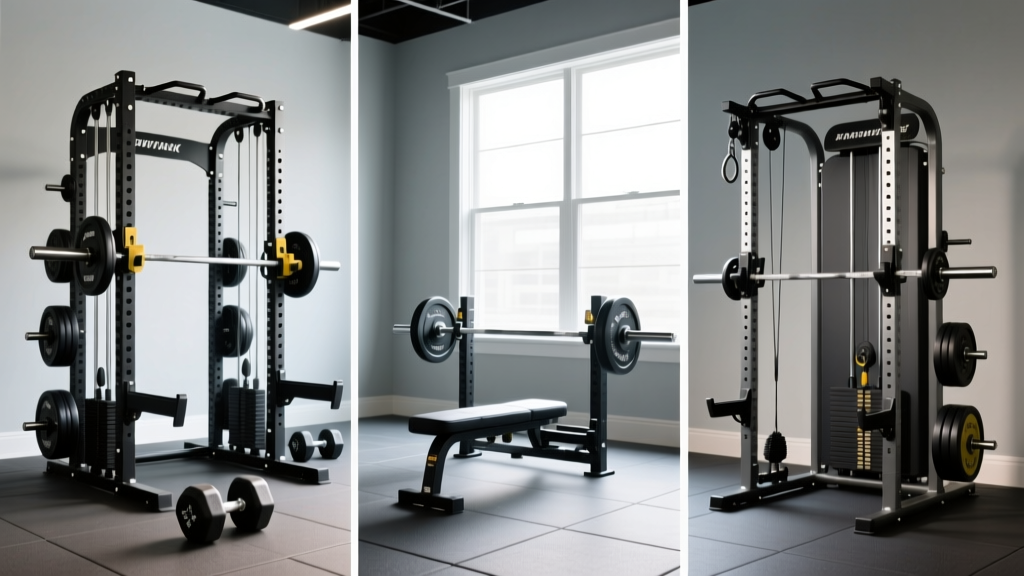
Hardware Breakdown: Power Rack vs Squat Rack vs Squat Stand
Below is a 2026 comparison matrix focusing specifically on how each rack type accommodates rear deltoid isolation work, alongside general home gym metrics.
| Feature | Power Rack (43" Depth) | Squat Rack (Open Front) | Squat Stands |
|---|---|---|---|
| Cable Pulley Integration | Excellent (Full weight stacks supported) | Moderate (Band pegs or light attachments only) | Poor (Tipping hazard for lateral pulls) |
| Dumbbell Fly Clearance | Perfect (Bench fits entirely inside) | Good (Open front allows elbow overflow) | Excellent (No cage restrictions) |
| Bench Alignment | Easy (Uprrights act as visual guides) | Moderate (Requires manual centering) | Difficult (No frame of reference) |
| Avg. 2026 Cost | $800 - $1,600+ | $500 - $900 | $350 - $550 |
For a comprehensive look at the structural differences between these frames, BarBend's equipment guides highlight that while squat racks save floor space, the enclosed nature of a power rack is what unlocks true modular attachment versatility.
Biomechanics: Cable vs. Dumbbell Rear Delt Tension Profiles
Why does the rack matter so much for this specific muscle group? It comes down to the resistance curve. The rear deltoid functions primarily to horizontally abduct the shoulder and assist in external rotation.
The Dumbbell Profile
When performing a bent-over or chest-supported dumbbell rear delt fly, gravity only pulls straight down. This means maximal tension occurs at the very top of the concentric contraction (when the arm is fully abducted and parallel to the floor), while tension drops to near-zero at the bottom of the movement when the dumbbell hangs toward the floor. To maximize this, lifters often use an incline bench set to 30-45 degrees inside a power rack to alter the gravity vector relative to the torso.
The Cable Profile
A cable rear delt fly provides continuous, linear tension throughout the entire range of motion. Because the cable pulls horizontally (or at a slight upward angle from a low pulley), the posterior deltoid is under load even in the fully stretched position. This stretch-mediated hypertrophy is highly effective, but it requires the low pulley to be positioned exactly at the lifter's midline or slightly below, a setup only achievable with a dedicated rack-mounted pulley system or a freestanding functional trainer.
Troubleshooting Guide: Fixing Your Current Setup
If you have already purchased a rack that doesn't perfectly align with your rear delt training goals, use these troubleshooting protocols before spending thousands on a new frame.
💡 Troubleshooting Scenario A: You own Squat Stands but want Cable FlyesThe Fix: Do not attempt to rig a pulley to your stands. Instead, invest in a freestanding Lat/Low Row tower (such as the Titan Fitness Lat Tower, approx. $350). Place it behind your workout area. Alternatively, utilize heavy-duty resistance bands looped around the base of your squat stands and crossed over your torso to simulate horizontal cable tension.
💡 Troubleshooting Scenario B: You own a 24" Power Rack and keep hitting the uprights on Dumbbell FlyesThe Fix: Stop trying to sit perfectly square inside the cage. Offset your adjustable bench so the backrest is angled diagonally across the interior space, buying you an extra 8-10 inches of diagonal clearance. Alternatively, abandon the seated fly inside the rack and switch to chest-supported T-bar rows or face-pulls using band pegs on the exterior of the rack.
Expert Decision Framework
Use this rapid-fire logic tree to finalize your equipment purchase based on your rear delt training preferences:
- Do you require heavy, stack-loaded cable rear delt flyes for rehabilitation or continuous-tension hypertrophy?
Verdict: You must buy a full Power Rack (minimum 30" depth) or a Squat Rack with a dedicated rear-stabilizer pulley attachment. - Do you exclusively use dumbbells for rear delts and have a tight garage footprint (under 80 sq ft)?
Verdict: Buy heavy-duty Squat Stands. The open-air environment guarantees zero elbow obstruction during dumbbell flyes, and you save massive amounts of floor space. - Do you want the safety of an enclosed cage for solo benching, but also need dumbbell fly clearance?
Verdict: Purchase a 43-inch deep Power Rack. The 43-inch depth ensures any standard flat or incline bench fits entirely within the uprights, allowing unobstructed dumbbell flyes while keeping the safety spotter arms engaged.
Frequently Asked Questions
Can I do a cable rear delt fly on a squat rack?
Yes, but only if the squat rack features a rear crossmember stabilizer and you purchase a compatible low-pulley attachment. Without the rear stabilizer, the lateral pulling force of a cable fly can cause an open-front squat rack to twist or tip.
What is the best bench angle for dumbbell rear delt flyes inside a power rack?
An adjustable bench set to a 30-degree or 45-degree incline is ideal. This angle positions the torso so that the resistance curve of gravity aligns better with the horizontal abduction path of the rear deltoid, while also keeping your head and shoulders safely within the interior depth of most 30-inch to 43-inch power racks.
Are band pegs a viable alternative to cable pulleys for rear delts?
Band pegs mounted to the lower rear uprights of a power rack are an excellent, budget-friendly alternative. By looping a resistance band through the pegs and pulling horizontally, you mimic the continuous tension profile of a cable rear delt fly without the $600+ investment of a weight stack attachment.
More gear to consider
All reviews
Beyond a Dumbbell Only Workout: Cast Iron vs Competition Kettlebells

Beginner Guide: Dumbbell Shoulder Press with Neoprene Weights

Dumbbells vs Barbells: Rubber Hex vs Urethane Dumbbell Care
How to Curl Dumbbells Correctly: Rubber Hex vs Urethane Budget Guide
Olympic Barbell Guide: Knurling, Weight & Shoulder Rows Dumbbell