ProForm XP 590s Treadmill vs Curved Manual: Cardio Showdown
We compare the classic ProForm XP 590s treadmill against modern curved manual models. Discover which cardio machine fits your biomechanics and budget.

When outfitting a home gym in 2026, the cardio aisle presents a stark dichotomy: the traditional motorized flat-deck machine versus the self-powered curved manual treadmill. To understand the real-world implications of this divide, we are putting the benchmark entry-level motorized unit—represented by the legacy ProForm XP 590s treadmill profile—head-to-head against modern curved manual competitors like the TrueForm Trainer and AssaultRunner Pro.
This is not just a comparison of price tags; it is a deep dive into biomechanics, joint loading, caloric expenditure, and long-term maintenance failure modes. Whether you are a casual walker or a high-performance athlete, understanding the mechanical differences between a motor pulling your feet and a curve demanding your power will dictate your next equipment purchase.
The Contenders: Motorized Baseline vs. Curved Innovation
The Motorized Benchmark: ProForm XP 590s Treadmill Profile
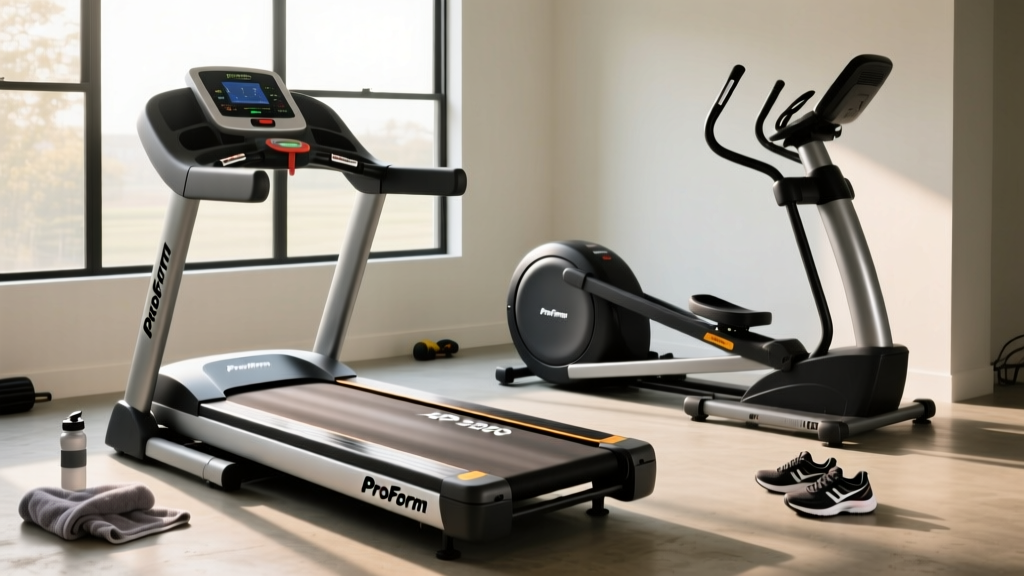
The ProForm XP 590s treadmill represents the quintessential entry-level, flat-deck motorized category. While specific stock of the original XP 590s fluctuates on the secondary and refurbished markets in 2026, its architectural blueprint—a 2.0 Continuous Horsepower (CHP) DC motor, an 18-inch by 55-inch tread belt, and a 10 MPH top speed—remains the standard for budget motorized units (typically priced between $300 and $500). It relies on a motorized roller system that pulls the belt beneath the user, requiring the user only to keep up with the predetermined pace.
The Curved Manual Challenger
Curved manual treadmills feature a non-motorized, concave running surface made of individual rubber or urethane slats. Priced significantly higher (ranging from $2,500 to $4,500 for premium models), these machines are entirely self-powered. The 15-to-20-degree downward curve at the front of the deck uses gravity and the user's body weight to drive the belt. You dictate the speed instantly by shifting your center of mass forward or backward.
Biomechanics and Foot Strike: What Happens to Your Joints?
The most critical difference between the ProForm XP 590s treadmill and a curved manual deck lies in human biomechanics. According to research highlighted by the National Strength and Conditioning Association (NSCA), the mechanics of foot strike change drastically depending on the belt's power source.
Expert Insight: The Hamstring DeficitOn a motorized treadmill like the XP 590s, the belt pulls your foot backward. This artificially reduces the recruitment of your posterior chain (hamstrings and glutes) during the stance phase. Conversely, a curved manual treadmill requires you to actively push the belt down and back, resulting in up to 20% greater hamstring and glute activation per stride.
Joint Loading and Impact Forces
Flat motorized treadmills often encourage a heel-strike running pattern due to the moving belt and the cushioned deck. Over time, repetitive heel-striking sends shockwaves directly through the tibia to the knee joint. Curved treadmills naturally force a mid-foot or forefoot strike because landing on your heel on a curved slat belt is biomechanically awkward and unstable. Forefoot striking engages the calf and Achilles tendon as natural shock absorbers. The Cleveland Clinic notes that while forefoot striking reduces knee impact, it shifts the load to the lower leg, meaning transition periods must be managed carefully to avoid Achilles tendinopathy.
Caloric Expenditure and Muscle Activation
If your primary goal is metabolic conditioning and fat loss, the physics of the machine matter immensely. Studies referenced by the American Council on Exercise (ACE) demonstrate that running on a curved manual treadmill burns approximately 30% more calories than running at the exact same speed on a standard flat motorized treadmill.
| Metric (at 6.0 MPH) | Motorized (XP 590s Profile) | Curved Manual Treadmill |
|---|---|---|
| Caloric Burn (160 lb user) | ~720 kcal / hour | ~936 kcal / hour |
| Perceived Exertion (RPE) | Moderate (5-6/10) | High (7-8/10) |
| Posterior Chain Activation | Baseline | +20% to +30% |
| Top Speed Limitation | 10 MPH (Motor restricted) | Unlimited (User restricted) |
Maintenance, Durability, and Long-Term Costs
Cardio machines are high-wear items. Evaluating the ProForm XP 590s treadmill against a curved manual deck requires looking past the initial purchase price and examining the 5-year cost of ownership.
Motorized Treadmill Failure Modes
Budget motorized treadmills with 2.0 CHP motors and narrow 18-inch belts are prone to specific failure points:
- Deck Warping and Belt Friction: If the user neglects to apply 100% silicone lubricant to the deck every 150 miles, friction increases. This forces the DC motor to draw excess amperage, eventually tripping the thermal breaker or frying the motor control board.
- Motor Overheating: The XP 590s profile carries a 300 lb weight capacity. Users near this limit running at high inclines will cause the 2.0 CHP motor to overheat, degrading the internal copper windings over time.
- Electronic Console Failures: LCD screens and motor control boards are highly susceptible to power surges and sweat corrosion.
Curved Manual Treadmill Maintenance
Curved treadmills eliminate the motor, control board, and drive belt, but they introduce mechanical wear points:
- Bearing Degradation: The slat belt rides on dozens of small ball bearings. Dust and pet hair can infiltrate these bearings, causing them to seize. Regular vacuuming and annual bearing replacement are required.
- Slat Belt Tension: Over 1,000+ miles, the urethane slats and the underlying drive belt can stretch, requiring manual tensioning via the rear roller adjustment bolts.
The 5-Year Verdict: A curved manual treadmill costs significantly more upfront but virtually eliminates the risk of catastrophic electronic or motor failure. A motorized unit like the ProForm XP 590s is cheaper to buy but carries a higher risk of requiring a $250+ motor or board replacement within five years of heavy use.
Head-to-Head Spec Matrix
| Feature | ProForm XP 590s (Motorized) | Curved Manual (e.g., TrueForm) |
|---|---|---|
| Power Requirement | 120V AC Outlet | None (100% Human Powered) |
| Running Surface | 18' x 55' (Flat PVC Belt) | 17' x 63' (Curved Slat Belt) |
| Incline / Decline | Manual 3-Position Incline | Fixed Curve (Simulates 3-5% grade) |
| Footprint | ~68' L x 28' W (Folding capable) | ~70' L x 32' W (Non-folding) |
| Ideal User Profile | Walkers, light joggers, budget-conscious | Runners, HIIT athletes, CrossFitters |
The Verdict: Which Machine Belongs in Your Home Gym?
Choosing between a motorized unit in the class of the ProForm XP 590s treadmill and a curved manual treadmill ultimately comes down to your training intent, spatial constraints, and budget.
Choose the Motorized Flat-Deck if:
- You are primarily a walker or light jogger. The 10 MPH speed limit and 18-inch belt width of the XP 590s profile are perfectly adequate for walking while watching TV or completing Zone 2 steady-state cardio.
- You need a folding mechanism. Most curved treadmills are heavy, rigid steel frames that cannot be folded. If you need to stash your machine in a closet, a folding motorized deck is mandatory.
- Your budget is strictly under $600.
Choose the Curved Manual Treadmill if:
- You perform High-Intensity Interval Training (HIIT). The ability to instantly sprint from 0 to 15 MPH without waiting for a motor to spool up makes curved treadmills the ultimate tool for Tabata and sprint intervals.
- You want to correct your running form. The curve forces a mid-foot strike and upright posture, actively rehabilitating poor running mechanics developed from years of heel-striking on flat, motorized belts.
- You want a zero-electricity, low-maintenance lifespan. If you are placing the gym in a garage, basement, or off-grid location, the lack of a motor and control board ensures the machine will outlast its electronic counterparts by a decade.
In 2026, the fitness industry recognizes that no single machine is universally superior. The motorized treadmill remains a staple for accessible, steady-state movement, while the curved manual treadmill has cemented its place as the premier tool for athletic performance and metabolic conditioning. Evaluate your specific biomechanical needs and choose the tool that will keep you moving consistently.
More gear to consider
All reviews
Acoustic Test: 6 incline on treadmill vs. Quiet Ellipticals & Rowers
Home Stair Climber Guide: Is a Treadmill Good for Weight Loss?

Bicycle Machine vs Treadmill: Under Desk Office Review 2026

Curved vs Motorized Treadmill: How Long to Walk 10000 Steps?
LifeSmart TM4500 Treadmill Steering Gear E9 Fails? Try Compact Bikes
